
United States / 1965 / DISPUTED
1965 Kecksburg UFO incident
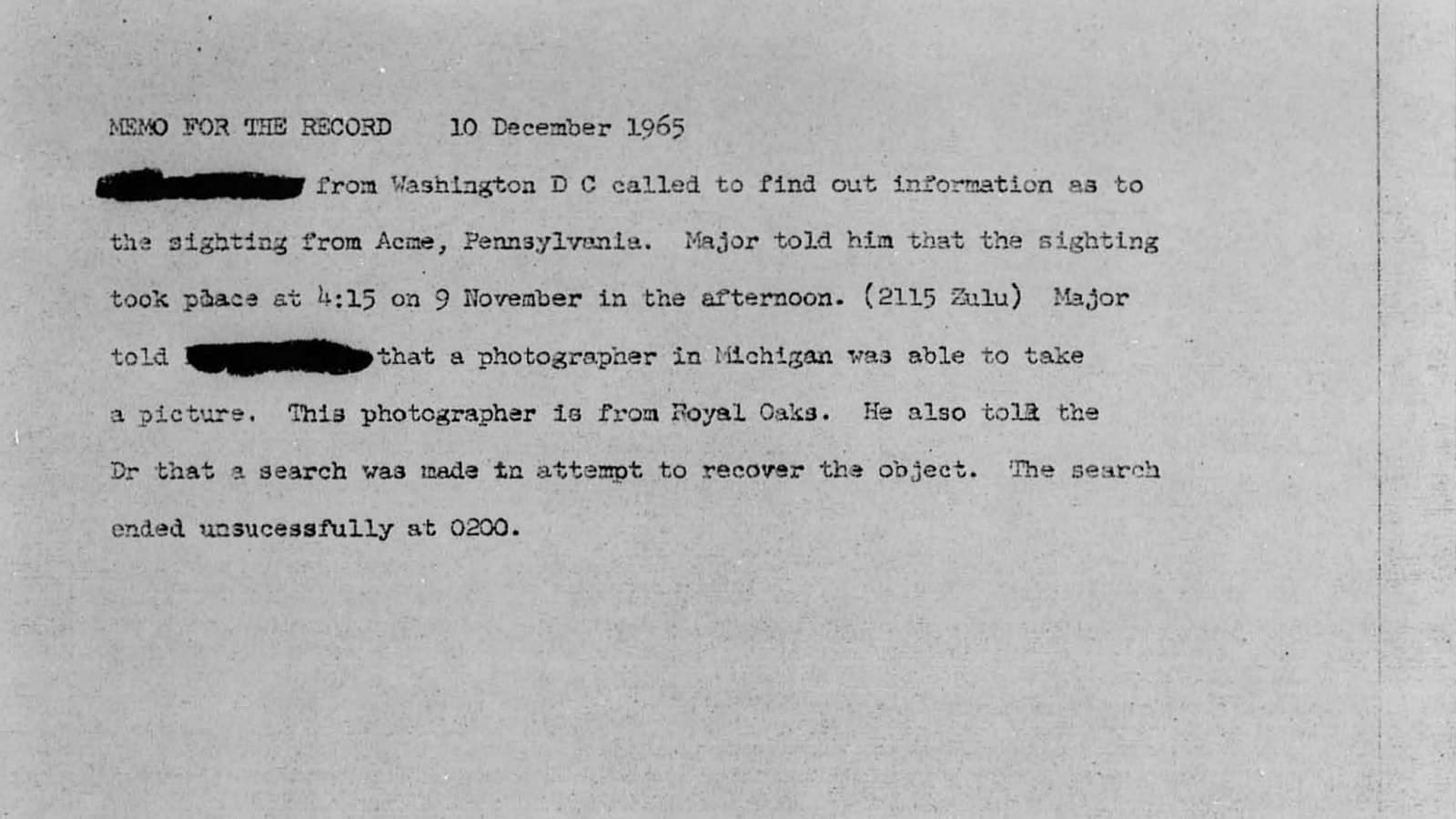
On 9 December 1965, a bright fireball crossed parts of Canada and the northeastern United States. Near Kecksburg, Pennsylvania, some residents later described a luminous object descending toward woods, an acorn-shaped object on the ground and military removal of it. The contemporaneous Project Blue Book file instead records that state police and local searchers found no object and ended the search around 2 a.m.; another memorandum favored a bolide or meteor. Scientific reconstruction of the regional fireball also supports a natural meteoric event. The more specific landing and recovery account remains disputed because no authenticated event photograph, artifact, radar record, inventory or public chain of custody verifies it. NASA's later FOIA litigation concerned the adequacy of its record search, not confirmation that it possessed a recovered object.
This case is disputed. The archive preserves the claims while separating evidence from interpretation.
- Documentation
- High documentation
- Primary location
- Kecksburg, Pennsylvania
- Source base
- 10 linked records
- Research use
- Comparison case
What the public record supports
- Confirmed regional event
- A bright fireball was independently reported across Ontario and several northeastern U.S. states on 9 December 1965.[1][2]
- Official search record
- The Blue Book file says the Kecksburg-area search ended unsuccessfully around 2 a.m.; state police and local personnel found no object.[1]
- Disputed local claim
- An acorn-shaped object, roadblocks and military removal come from later witness accounts and lack a public physical or administrative chain of custody.[1][6]
Later model and cultural context
Case dossier
During the late afternoon of Thursday, 9 December 1965, witnesses from Ontario through Michigan, Ohio and Pennsylvania reported a brilliant fireball moving generally eastward. The Air Force file contains reports, press clippings and a Sky & Telescope reconstruction of what became known as the Great Lakes fireball. The breadth of the observations matters: the well-supported event was not confined to Kecksburg, and it began as an astronomical phenomenon seen across a large region.
The Kecksburg narrative concerns what may have happened near the end of that display. Residents reported that the light seemed to change direction or descend toward a wooded ravine southeast of the village. Later accounts described a metallic, acorn-shaped object with a raised rim and markings. These details came from witness recollections and subsequent interviews; they were not preserved in a publicly available photograph, instrument record or contemporaneous object inventory.
Police, volunteer firefighters and local searchers entered the area that night. A memorandum dated 10 December in the Project Blue Book file says the recovery search was terminated unsuccessfully at about 2 a.m. Another entry records that Oakdale personnel and Pennsylvania State Police found nothing. Those documents establish a real response and a negative search result. They do not support later claims that the same official search recovered and removed an object.
The regional evidence points in a different direction from the crash-retrieval story. A reconstruction published by Donald Chamberlain and David Krause used photographs and observations of the Great Lakes fireball. Material reproduced in the Blue Book file described a steep atmospheric path and placed the likely endpoint near western Lake Erie. That analysis supports a natural bolide and does not trace a solid body into the Kecksburg woods.
The most dramatic version developed through later interviews and television. Witnesses said uniformed personnel sealed roads, guarded the ravine and carried an acorn-shaped object away on a flatbed truck. No publicly released loading photograph, transport order, property receipt, laboratory report or named receiving facility connects those claims into a verifiable chain. Fire chief Ed Myers and other residents told United Press International in 1990 that no object was found and challenged the televised reconstruction, demonstrating that local testimony is itself divided.
Kosmos 96 is often proposed because the failed Soviet Venus probe reentered Earth's atmosphere on the same date. The calendar match is not enough. Air Force tracking placed its decay earlier, and the trajectory reconstructed for the Great Lakes fireball was too steep to fit an orbital reentry. Kosmos 96 is useful historical context, but the available timing and geometry make it a poor identification for the observed fireball and do not validate the separate recovery story.
Decades later, journalist Leslie Kean used the Freedom of Information Act to seek NASA records associated with the event. In 2007, a federal court held that NASA had not adequately documented how it searched and ordered a more defensible response. This was an administrative finding about FOIA compliance. It did not find that NASA recovered a craft, concealed extraterrestrial technology or possessed records proving the local account. NASA's expanded search ended without the requested decisive file, while questions remained about missing or destroyed records.
Kecksburg belongs in the archive because it shows how one documented natural event can accumulate a second, much less documented narrative. The Great Lakes fireball, local emergency response, later witness claims, contradictory testimony, archival gaps and FOIA litigation are all real parts of the history, but they carry different evidentiary weight. The case is best retained as disputed: a natural bolide explains the regional display, while the alleged landed object and military recovery remain unverified.
Later documentary coverage
PBS revisits the Kecksburg story in a later documentary. It is historical and cultural reporting, not original footage of the 1965 object or independent proof of recovery.
Related checks and records
- Carbondale: what the pond search actually recovered
Separate the sky-light report, the lantern recovery and later claims about concealed evidence.
Timeline
- The Soviet Union launched Kosmos 96, a failed Venus mission later proposed as a Kecksburg explanation.
- A brilliant fireball was reported across Ontario and several northeastern U.S. states.
- Residents and emergency personnel searched wooded terrain near Kecksburg after local descent reports.
- The Project Blue Book memorandum records that the search ended unsuccessfully at about 2 a.m.
- An Air Force file memorandum favored a bolide or meteor as the likely explanation.
- Chamberlain and Krause published a photographic and observational reconstruction of the Great Lakes fireball.
- UPI reported that fire chief Ed Myers and other residents disputed the television crash-recovery version.
- A federal court ruled that NASA had not adequately documented its FOIA search and required a better-supported response.
- NASA's expanded record search ended without a decisive Kecksburg file or evidence of a recovered object.
Frequently asked questions
What happened at Kecksburg in 1965?
A regional fireball crossed the Great Lakes area, and people near Kecksburg reported a light descending toward woods. An official search found no object; later accounts described a landed acorn-shaped object and military removal.
Did an object crash in Kecksburg?
No public evidence confirms a crash. The Blue Book file records an unsuccessful search, while the crash account rests on later recollections without an authenticated artifact or recovery record.
Was the Kecksburg object Kosmos 96?
Probably not. Although the failed Soviet probe reentered on the same date, tracking placed its decay earlier and the Great Lakes fireball's steep path did not fit an orbital reentry.
Did the military remove an acorn-shaped object?
Witnesses later said so, but the public record contains no authenticated loading image, transport order, inventory, laboratory report or receiving facility. Other local witnesses disputed that any object was found.
Did the NASA lawsuit prove a UFO cover-up?
No. The court found that NASA had not adequately explained its FOIA search and required a better response. It did not rule that NASA possessed a recovered craft or extraterrestrial records.
Are the famous Kecksburg UFO photos authentic event images?
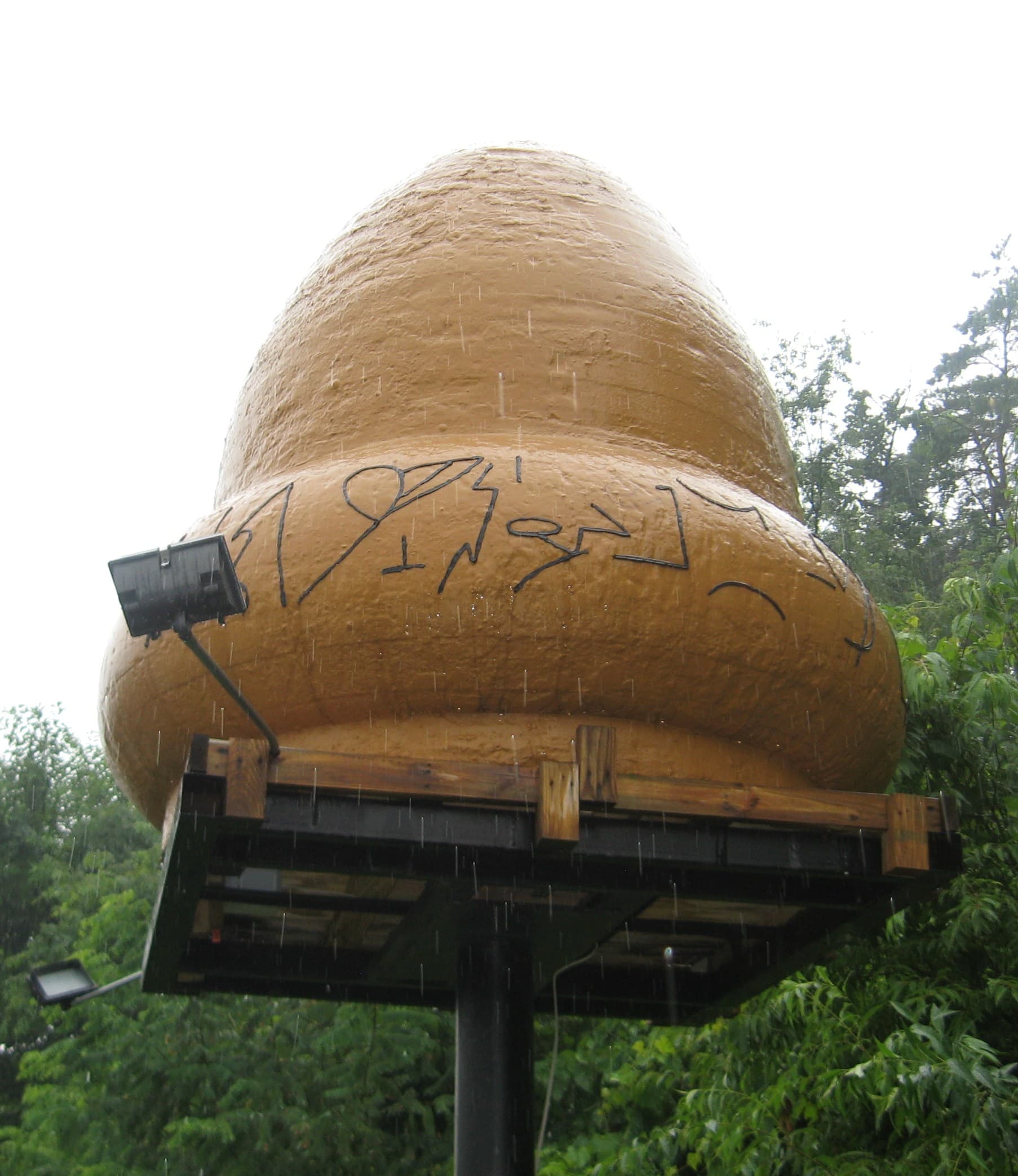
No authenticated photograph of the reported 1965 object is known. The familiar acorn-shaped display is a later model connected to a television reconstruction and local memorial, not event evidence.
What is the best explanation for the Kecksburg incident?
A natural bolide best explains the well-documented regional fireball. The separate claim that an acorn-shaped object landed and was recovered remains unverified because it lacks a public evidence and custody chain.
Sources
- [1] Official fileProject Blue Book Kecksburg case fileU.S. Air Force / Project Blue Book
- [2] ResearchThe Fireball of December 9, 1965, Part IJournal of the Royal Astronomical Society of Canada
- [3] Official fileNational Archives guide to Project Blue Book recordsU.S. National Archives
- [4] Official fileNASA history of Venus exploration and Kosmos 96NASA
- [5] Official fileKean v. NASA FOIA decisionU.S. District Court for the District of Columbia
- [6] News reportResidents dispute the televised Kecksburg recovery storyUnited Press International
- [7] News reportNASA ordered to document its search for Kecksburg recordsCBS News / Associated Press
- [8] News reportOutcome of NASA's expanded Kecksburg record searchSpace.com
- [9] News reportA Falling Mystery: later documentary coveragePBS
- [10] ArchiveKecksburg acorn-shaped model photograph and licenseRyright / Wikimedia Commons
The main image is a crop of the official Project Blue Book memorandum dated 10 December 1965. It records that the recovery search ended unsuccessfully around 2 a.m.; it is an archival document, not a photograph of the reported object. No authenticated event photograph or original video of a landed object is known in the public record.