
United States / 1947 / EXPLAINED
1947 Roswell incident
The Roswell incident is a documented debris-recovery and public-information reversal, not a documented recovery of an extraterrestrial craft. On 8 July 1947, Roswell Army Air Field announced possession of a “flying disc”; the next day, senior officers presented light balloon and radar-reflector material. A 1995 GAO search found only two surviving government records created in 1947, both consistent with a balloon. The U.S. Air Force later linked the debris to Project Mogul and treated later body stories as memories of separate 1950s activities. The exact balloon train cannot be proved from every missing record, but no contemporary public file supports alien bodies or extraterrestrial material.
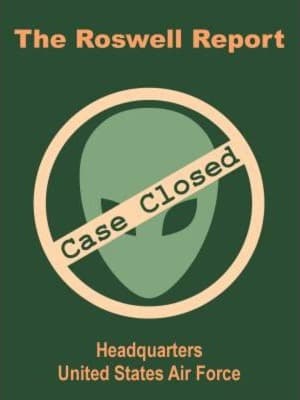
This archive treats the case as explained or substantially resolved by conventional evidence.
- Documentation
- High documentation
- Primary location
- Roswell and Corona, New Mexico
- Source base
- 8 linked records
- Research use
- Comparison case
What the public record supports
- Confirmed record
- The Army recovered lightweight debris, issued a “flying disc” release on 8 July 1947 and replaced it with a balloon explanation within a day.[1][2][5]
- Best-supported explanation
- The surviving physical descriptions, balloon work and later official review make Project Mogul the strongest explanation for the original debris.[1][3]
- Unsupported claim
- No contemporary public record documents an extraterrestrial craft, alien bodies, an intact cabin or exotic material.[1][2][3][5]
- Archive gap
- Some base administrative records and outgoing messages were destroyed without a complete disposition history, limiting reconstruction but not proving a cover-up.[1]
Later official explanatory material
Case dossier
Debris on the Foster ranch. In late June or early July 1947, ranch foreman William “Mac” Brazel found a wide scatter of lightweight foil-like, rubber and structural material northwest of Roswell. He later informed Chaves County sheriff George Wilcox, and personnel from the 509th Bomb Group at Roswell Army Air Field collected the debris. Surviving records establish a recovery operation, but no authenticated photograph shows an intact craft, crater, engine, cabin or body at the ranch.
The 8 July announcement. The base public-information office issued a release saying that personnel had recovered a “flying disc.” Newspapers quickly transmitted the wording nationwide. The release proves that the term entered an official statement; it does not describe technical examination, dimensions, propulsion or occupants. It was withdrawn almost immediately, creating the contradiction that later became the center of the Roswell narrative.
The Fort Worth explanation. Brigadier General Roger Ramey, commanding the Eighth Air Force, told reporters that the material was a weather balloon with a radar reflector. Newspaper photographs show Ramey, Colonel Thomas Dubose and Major Jesse Marcel with light debris in Fort Worth. Those photographs document what the military presented to the press; they cannot by themselves establish that every photographed fragment came from the Foster ranch or reconstruct the full chain of custody.
What survives from 1947. The GAO identified only two government records created in 1947 that directly bear on the incident: a combined history of the 509th Bomb Group and Roswell Army Air Field, and an FBI teletype dated 8 July. The history says the “disc” proved to be a radar-tracking balloon. The teletype describes a roughly hexagonal disc suspended from a large balloon by cable and resembling a high-altitude weather balloon with a radar reflector; the FBI opened no further investigation.
The record gap. GAO reported that Roswell Army Air Field administrative records for March 1945 through December 1949 and outgoing messages for October 1946 through December 1949 had been destroyed. The disposition form did not identify who ordered destruction, when it occurred or under what authority. That unexplained gap limits reconstruction, but it is not affirmative evidence that records of alien material were removed. GAO also found no applicable requirement to file an aircraft-accident report for a weather-balloon crash and no Roswell debris-examination record at Wright Field.
How the crash-retrieval story developed. Roswell attracted little sustained national attention after 1947. The extraordinary narrative revived in 1978, when former intelligence officer Jesse Marcel told interviewer Stanton Friedman that the material was unlike an ordinary weather balloon. The 1980 book The Roswell Incident expanded the story. Other witnesses and increasingly elaborate body-and-craft accounts appeared later, often decades after the event. Their lateness does not automatically make every memory false, but it lowers confidence where no contemporary statement, document or physical item corroborates the detail.
Project Mogul and the original debris. The Air Force's 1994 investigation concluded that the recovered material was consistent with a Project Mogul balloon train used in an effort to detect Soviet nuclear tests. Mogul equipment combined balloons, radar reflectors and acoustic instruments, explaining why an ordinary “weather balloon” description concealed the classified purpose. The surviving launch and weather records make Mogul the strongest explanation for the original debris, although the incomplete record does not prove every component or an uncontested flight number.
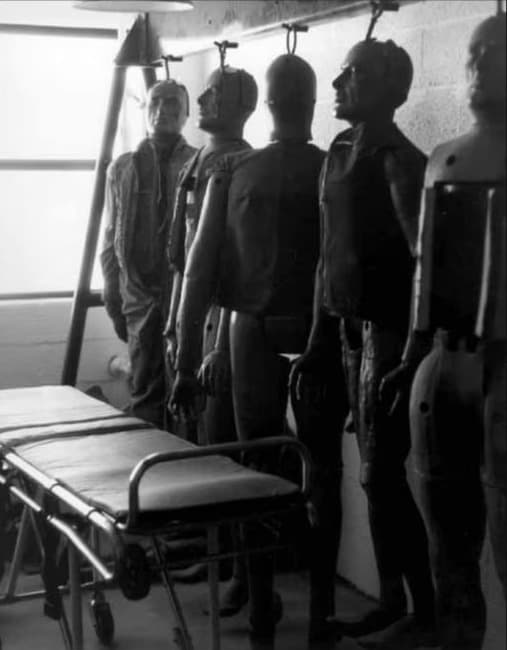
Bodies, later events and the archive judgment. The 1997 Air Force report argued that later “body” stories compressed separate 1950s events: anthropomorphic-dummy drops, a 1956 KC-97 accident and a 1959 balloon mishap. Those events cannot explain the original 1947 debris because they occurred later; their role is narrower, as possible sources for retrospective body narratives. The archive therefore treats the original debris as best explained by Project Mogul, records the missing files and later testimony as real research issues, and finds no public contemporary evidence for an extraterrestrial vehicle or occupants.
Related video
Timeline
- Brazel finds lightweight debris scattered on the Foster ranch northwest of Roswell.
- After contacting Sheriff Wilcox, Brazel accompanies Roswell Army Air Field personnel to the ranch area.
- The base announces recovery of a “flying disc”; the wording is transmitted nationally.
- An FBI teletype records a balloon-and-radar-reflector description and says no further FBI investigation was conducted.
- Ramey presents lightweight debris in Fort Worth and identifies it publicly as balloon and radar-reflector material.
- Jesse Marcel's interview with Stanton Friedman revives the claim that the recovered material was unusual.
- The book The Roswell Incident turns the revived account into a widely known crash-retrieval story.
- The Air Force announces completion of its records search and links the original debris to Project Mogul.
- GAO publishes NSIAD-95-187, documenting its cross-agency records search and the surviving 1947 files.
- The Air Force publishes Case Closed, addressing later body stories with separate 1950s events.
Roswell questions answered
Did something really crash near Roswell in 1947?
Lightweight debris from a balloon-borne system was found and recovered. The surviving record does not document an intact craft, impact crater or occupants.
Why did the Army announce a “flying disc”?
The base public-information office used the phrase in its 8 July release before higher command reviewed the material. The record does not show that the phrase followed a technical determination of an extraordinary craft.
What was Project Mogul?
It was a classified U.S. Army Air Forces effort using high-altitude balloon trains and acoustic instruments to help detect Soviet nuclear tests. Its classified purpose explains why the first public balloon account was incomplete.
Did the FBI confirm a Roswell UFO?
No. Its 8 July teletype relayed a balloon-and-radar-reflector description and states that the FBI conducted no further investigation.
Were alien-body stories reported in July 1947?
No contemporary public record located by GAO or the Air Force documents alien bodies. Detailed body-and-hospital narratives entered public circulation much later.
Do test dummies explain the 1947 debris?
No. Dummy drops began later. The Air Force used them only as a possible source for retrospective body stories; Project Mogul addresses the original debris.
Are there original Roswell crash photos or videos?
No authenticated image shows a crashed craft, bodies or the ranch recovery. Fort Worth press photographs show displayed debris. The video linked here was produced decades later for the official review.
Sources
- [1] Official fileGAO search for records concerning the 1947 Roswell crashU.S. Government Accountability Office
- [2] Official fileNational Archives information on the Roswell incidentU.S. National Archives and Records Administration
- [3] Official fileThe Roswell Report: Fact versus fiction in the New Mexico desertUnited States Air Force
- [4] Official fileThe Roswell Report: Case ClosedUnited States Air Force
- [5] Official fileFBI Vault: Roswell UFO teletypeFederal Bureau of Investigation
- [6] ArchiveThe Roswell Reports: what crashed in the desert?U.S. National Archives and Records Administration
- [7] ArchiveRoswell Reports, official Air Force explanatory filmU.S. National Archives / United States Air Force
- [8] News reportHow Roswell became the center of UFO cultureTIME
The main image is the official 1997 Case Closed report cover, not a photograph of the 1947 debris or alleged object. The dummy photograph shows later Air Force research equipment and cannot explain the original debris. The embedded National Archives video is a later official explanatory film, not original event footage.