
Canada / 1967 / UNRESOLVED
1967 Shag Harbour UFO incident
On the evening of 4 October 1967, witnesses near Shag Harbour, Nova Scotia, reported a row of lights descending toward and apparently entering the water. The Royal Canadian Mounted Police and Canadian Coast Guard responded as though an aircraft might have crashed. A 25 October Department of National Defence letter confirms that the investigation included an underwater search, but says no evidence was found that explained or identified the object. The records document a real search for an unidentified report; they do not establish an extraterrestrial craft, recovered wreckage or authenticated event media.
This case remains unresolved in the public record, with credibility grade B.
- Documentation
- High documentation
- Primary location
- Shag Harbour, Nova Scotia
- Source base
- 9 linked records
- Research use
- Comparison case
What the public record supports
- Confirmed response
- RCMP and Coast Guard personnel responded because a possible aircraft crash was suspected.[1][2]
- Official search
- A 25 October 1967 National Defence letter confirms that the investigation included an underwater search.[4]
- Search outcome
- No evidence was found that explained or established the identity of the reported object; no wreckage was recovered.[1][4]
Case dossier
The report that triggered an emergency response: The official Sky Canada review summarizes the core event as a row of lights seen descending and entering the water near Shag Harbour on 4 October 1967. That wording matters. It records what witnesses said they saw; it does not establish that a solid craft struck the ocean. The observation was serious enough to be treated first as a possible aviation emergency rather than as a conclusion about the object's nature.
Police and Coast Guard response: The Sky Canada report states that the Royal Canadian Mounted Police and the Coast Guard responded because an aircraft crash was suspected. Search activity therefore confirms an operational reaction to the report. It does not, by itself, confirm the reported object's size, construction, path or origin. No aircraft wreckage was found, and the surviving public record does not identify a missing aircraft connected to the sighting.
What National Defence confirmed: A Canadian Forces Headquarters letter dated 25 October 1967 acknowledged additional information about a UFO observed in the Shelburne Harbour area. It states that the Department of National Defence investigated the sighting and that the investigation included an underwater search. The same letter says the search failed to disclose evidence that could explain or establish the identity of the object. This is the strongest public official boundary: an underwater search occurred, but it produced no identifying evidence.
The surviving archive trail: Library and Archives Canada identifies Shag Harbour as a major Canadian UFO case and points researchers to the 1967 Herzberg Institute files, including RG77 records and microfilm T-1744. The collection also preserves dated correspondence and a 7 October newspaper clipping about the search. These materials provide a traceable documentary chain, but the catalogue and clippings must not be mistaken for a complete police, Coast Guard or naval case file.
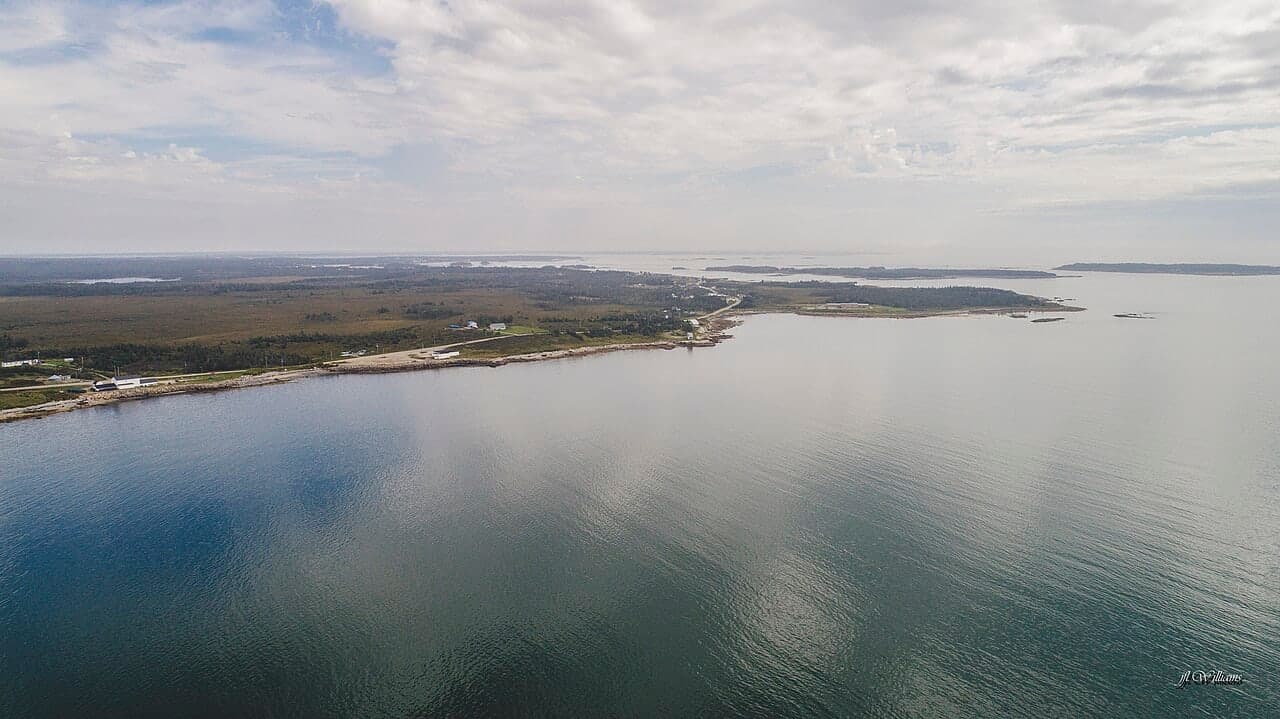
What the media record cannot show: No authenticated photograph or original film of the lights, the water entry or the search was located. The page's aerial photograph was made in 2017 and is geographic context only. CBC's later video and Ocean Entertainment's documentary are useful for studying recollection and public history, but they are retrospective productions. They cannot substitute for contemporaneous photographs, recordings, dispatch logs or physical evidence.
Later claims require separate treatment: Retellings have added a second object, submarine involvement and a prolonged underwater confrontation. The public official records reviewed here do not establish those stronger claims. The 2000 documentary's catalogue description itself presents a developed narrative made more than three decades after the event. Such claims may be discussed as later testimony or folklore, but not promoted into the confirmed chronology without contemporaneous documentation.
Possible conventional explanations: Aircraft or aircraft lights, flares, meteors and unusual viewing geometry over dark water can each account for parts of a report involving distant lights. Witness interpretation under emergency conditions can also convert uncertain motion into an apparent descent or water entry. No public dataset is detailed enough to test one reconstruction against every observation, so these remain hypotheses rather than a demonstrated solution.
Why the case belongs in the archive: Shag Harbour combines witness reports, a documented emergency response, an official underwater search and a surviving government statement that the object remained unidentified. It is therefore stronger than an unsupported legend, yet materially incomplete. The responsible conclusion is unresolved: authorities searched for a possible accident and found no identifying evidence. 'Unidentified' describes the limit of the surviving record, not proof of an exotic origin.
Related video
Timeline
- Witnesses near Shag Harbour report a row of lights descending toward and apparently entering the water.
- The RCMP and Canadian Coast Guard respond on the assumption that an aircraft may have crashed.
- Search activity produces no aircraft wreckage or evidence identifying the reported object.
- A civilian sends additional information about a Shelburne Harbour-area observation to the Royal Canadian Air Force; the letter is preserved in the federal file.
- A contemporary newspaper clipping about the search enters the surviving federal UFO record.
- A Canadian Forces station letter records receipt of the civilian correspondence and refers to recent UFO activity in the Shelburne area.
- Canadian Forces Headquarters confirms that National Defence investigated the sighting, including an underwater search, without finding evidence that explained or identified the object.
- Ocean Entertainment produces a 48-minute television documentary; its later narrative is archived by Library and Archives Canada.
- The federal Sky Canada report summarizes Shag Harbour as a historical case involving witness reports, RCMP and Coast Guard response, and no recovered wreckage.
Frequently asked questions
What happened at Shag Harbour in 1967?
Witnesses reported a row of lights descending toward and apparently entering the water on 4 October. Police and Coast Guard personnel responded as if an aircraft might have crashed.
Did an object definitely crash into the water?
No. Witnesses described an apparent descent and water entry, but no wreckage or identifying physical evidence was recovered. The records confirm the report and response, not a proven impact by a solid craft.
Did Canada's military conduct an underwater search?
Yes. A Canadian Forces Headquarters letter dated 25 October 1967 states that the National Defence investigation included an underwater search.
Was any wreckage recovered at Shag Harbour?
No wreckage is documented in the public official sources reviewed. The National Defence letter says no evidence was found that explained or established the object's identity.
Are there authentic photographs or videos of the 1967 event?
No authenticated event photograph or original video was located. The aerial image is a 2017 location photograph, while CBC and Ocean Entertainment videos are later retrospectives.
What is the best explanation for Shag Harbour?
No single explanation is demonstrated by the public record. Aircraft lights, flares, meteors and viewing geometry over water can explain parts of the report, but missing synchronized observations and operational logs prevent a complete reconstruction.
Do official records confirm a second object or submarine confrontation?
No. Those stronger elements belong to later retellings and documentary narratives. The public official records reviewed here confirm investigation and underwater search, not a second object, submarine involvement or a prolonged underwater encounter.
Sources
- [1] Official fileReport of the Sky Canada ProjectOffice of the Chief Science Advisor of Canada
- [2] Archive1967 Shag Harbour UFO sighting and related researchLibrary and Archives Canada
- [3] ArchiveNon-meteoric sighting reports gathered by the Herzberg InstituteLibrary and Archives Canada
- [4] Official fileCanadian Forces letter confirming the Shag Harbour underwater searchDepartment of National Defence / Library and Archives Canada
- [5] ArchiveContemporary 7 October 1967 clipping about the Shag Harbour searchLibrary and Archives Canada
- [6] News reportCBC retrospective on the Shag Harbour UFO incidentCBC
- [7] ArchiveLibrary and Archives Canada record for The Shag Harbour U.F.O. IncidentLibrary and Archives Canada
- [8] News reportOcean Entertainment documentary: The Shag Harbour UFO IncidentOcean Entertainment
- [9] Reference database2017 aerial photograph of Shag HarbourJ5255 / Wikimedia Commons
The main image is a resized 1280 × 719 derivative of J5255's 14 September 2017 aerial photograph, licensed CC BY-SA 4.0. It shows the Shag Harbour location fifty years later and is not evidence of the 1967 lights, water entry or search. No authenticated event photograph or original video was located. CBC and Ocean Entertainment video sources are later reporting and documentary material, not original sighting footage.