
Canada / 1967 / DISPUTED
1967 Falcon Lake Incident
On 20 May 1967, mechanic and amateur prospector Stefan Michalak said that he watched two glowing objects while examining a quartz vein north of Falcon Lake in Manitoba's Whiteshell Provincial Park. He reported that one landed, that he approached and touched it, and that hot gas from a grid-like opening burned his clothing and torso when it departed. Hospital, police and federal records document his burns, illness, interviews and later site work. They do not independently verify the craft, connect every sample to an undisturbed scene or identify an extraordinary vehicle. The case remains disputed because the physical aftermath is documented more strongly than its alleged cause.
This case is disputed. The archive preserves the claims while separating evidence from interpretation.
- Documentation
- High documentation
- Primary location
- Manitoba
- Source base
- 10 linked records
- Research use
- Comparison case
What the surviving record supports
- Confirmed record
- Michalak received treatment for burns and was interviewed repeatedly by police and other Canadian investigators after 20 May 1967.[1][2][3][4]
- Unverified claim
- No independent witness or authenticated event image confirms the two objects, landing, grid exhaust or exact injury mechanism.[1][2]
- Evidence limit
- The site was disturbed before controlled inspection, and later radioactive samples and silver pieces lack a secure origin chain.[2][4]
Case dossier
The setting and first report
On Saturday, 20 May 1967, Stefan Michalak left a Falcon Lake motel early to prospect in the rocky terrain of Whiteshell Provincial Park, roughly 150 kilometres east of Winnipeg. Near midday, while working at a quartz vein, he said agitated geese drew his attention to two luminous objects descending nearby. No independent witness is known to have seen the objects, so the aerial and landing sequence begins with Michalak's account. [1] · [6]
What Michalak described
In his 1967 manuscript and subsequent interviews, Michalak said one object remained aloft and departed while the other settled on a flat rock about 160 feet away. He described the landed form changing from red to grey, watched it for roughly 40 to 45 minutes, sketched it and eventually approached. Believing it might be a Canadian or American experimental craft in difficulty, he called out in several languages and touched its surface with a gloved hand, reporting heat sufficient to damage the glove. [1] · [3]
The compass account changed during questioning
Craig also compared recordings of an early APRO interview and his later interview. He reported that the compass detail developed after a question: initial uncertainty became a definite claim of a spinning needle, repeated in later accounts. He contrasted that claim with the specific departure bearings Michalak supplied. This is a documented criticism of how the account developed, not a recording from the compass or proof of deliberate invention. No instrument log establishes a magnetic disturbance. [9]
Departure, burns and return
Michalak said a panel or opening exposed a grid and that a blast of hot gas ignited his shirt and undershirt as the object left. He later described nausea, headache and weakness, and said the site contained a circular swept area. He made his way back toward the highway and eventually Winnipeg. These details are witness claims; the independently checkable layer is that burns and illness were observed soon afterward, not that a particular machine caused them. [1] · [6]
Medical and police records
Michalak received treatment at Winnipeg's Misericordia Hospital for first-degree burns and was released. Library and Archives Canada notes that he did not initially tell hospital staff that a flying saucer had caused the injury. RCMP Constable G. A. Solotki reported meeting a man who appeared irrational or intoxicated but did not smell of alcohol; Solotki's account of offering transport and medical assistance differs from Michalak's published narrative. The discrepancies matter because they separate early documentation from later retelling. [1] · [2]
What the medical checks did and did not establish
Roy Craig’s Condon case report says a radiation pathologist found no evidence of radiation effects and regarded the burn as thermal; a later whole-body gamma count did not exceed background. Rutkowski’s 1994 review also records those negative tests, while discussing continuing symptoms and competing interpretations. The reported loss of 22 pounds in a week lacked a verified pre-incident weight, and Craig’s medical review did not regard the two lymphocyte percentages as significant. These are reported examination findings, not a new diagnosis. They neither identify the heat source nor turn illness into a measured radiation dose. [10] PDF 11–12 · [9]
Interviews and site searches
RCMP Corporal J. Davis and Constable Zacharius interviewed Michalak at his home on 23 and 24 May for about two hours, finding him too ill to guide them to the site. The RCMP, Royal Canadian Air Force, Canadian Forces and civilian investigators later examined the report. Michalak located the area with another man before an official visit and removed clothing, a measuring tape and samples despite instructions not to disturb the site. That action weakened the scene's evidentiary value before investigators could document it under controlled conditions. [2] · [4]
Radiation and material claims
Later testing found a very small patch of radium-like contamination and similar readings in samples Michalak had handled. Most of the searched area did not show the same result, and the samples lacked a secure collection chain. In 1968, silver pieces with uranium-bearing material attached by a sticky substance were reportedly recovered from cracks in the rock. Their composition is real and unusual, but their late discovery and uncertain provenance prevent them from demonstrating that a craft deposited them in 1967. [2] · [9]
The silver and its radioactive coating were different materials
Craig’s report separates the 1968 fragments into layers. The analysis attributed to NRC mineralogist R. J. Traill described silver-rich metal with copper and cadmium, and quartz sand attached to it; neither was radioactive. The radioactivity belonged to a removable outer layer containing uranium minerals. Rutkowski reproduces this interpretation but also records differing civilian tests and objections about when material reached the site. These reports do not give the fragments a secure connection to the claimed landing. Radioactive material on metal is not, by itself, evidence that the metal was part of a reactor or an unknown craft. [10] PDF 20–21 · [9]
What the official record means
The preserved files show that Canadian authorities took the injuries, contamination report and site claims seriously enough to investigate. A later RCMP conclusion described the illness, burns and visible circle as unexplained and said the origin of the contamination was undetermined. That language records unresolved findings; it is not an official confirmation of an extraterrestrial vehicle, secret aircraft or even the full landing narrative. [2] · [9]
Why the case belongs in the archive
Falcon Lake combines a named witness, prompt medical attention, police interviews, site photographs, laboratory work and an unusually large surviving government paper trail. It also has decisive limitations: a single object witness, inconsistent early details, a disturbed site, weak sample provenance and no authenticated event photograph or film. The careful conclusion is that Michalak experienced a documented injury and reported a complex encounter, while the source of the burns and the identity of any object remain unproven. [1] · [2] · [9]
CBC archive reporting
CBC's archive segment recounts the Falcon Lake case using later reporting and historical material. It is not original footage of the alleged 20 May 1967 encounter.
Related checks and records
- Ubatuba: testing metal without proving a crash
Compare the sample's laboratory measurements with the unverified recovery story and missing custody records.
- Duhamel: ground traces, sampling and normal radiation
- Florence: filament samples and competing explanations
- Varginha: early reports, military inquiry and later claims
Timeline
- Stefan Michalak leaves a Falcon Lake motel to prospect in Whiteshell Provincial Park.
- Michalak reports seeing two luminous objects; he says one lands on a rock and later departs after emitting hot gas.
- He reaches assistance and is treated at Misericordia Hospital for first-degree burns before being released.
- RCMP Corporal J. Davis and Constable Zacharius interview Michalak at his Winnipeg home; he is considered too ill to guide a site visit.
- The RCMP returns for a second detailed account, preserved in the official interview record.
- Michalak and a companion relocate the alleged site and remove material before the later official inspection, compromising the scene.
- An RCMP continuation report records the investigation, illness, burns and difficulties establishing the location and evidence chain.
- RCMP, military and health-related authorities examine the site, samples and contamination claims; only a tiny area produces a radium-like reading.
- Michalak and an associate report finding silver pieces with radioactive uranium-bearing material in rock cracks at the site.
- Library and Archives Canada publishes a two-part documentary podcast and transcripts based on the preserved government record and later interviews.
Frequently asked questions
What happened in the 1967 Falcon Lake incident?
Stefan Michalak said two luminous objects descended while he prospected near Falcon Lake and that hot gas from one object burned him when it left.
Were Stefan Michalak's injuries documented?
Yes. Hospital and investigative records document burns and illness, but they do not independently identify what caused them.
Did anyone else see the Falcon Lake UFO?
No independent witness is known to have seen the objects. Later officials and civilians examined Michalak, the alleged site and collected material.
Was radiation found at Falcon Lake?
A tiny area and some samples produced radium-like readings, but most of the area did not and the samples had compromised provenance.
Do the metal fragments prove a UFO landed?
No. Silver pieces with uranium-bearing material were found later and were not recovered through a controlled 1967 evidence chain.
Did the Canadian government confirm the encounter?
Canadian authorities investigated and left some findings unexplained. They did not officially confirm an extraterrestrial or extraordinary craft.
Is there original Falcon Lake UFO video?
No authenticated event film is public. The CBC item linked here is later archival reporting, not footage recorded during the 1967 encounter.
Sources
- [1] Official fileLibrary and Archives Canada: Falcon Lake incident, part 1Library and Archives Canada
- [2] Official fileLibrary and Archives Canada: Falcon Lake incident, part 2Library and Archives Canada
- [3] Official fileRCMP interview record with Stefan Michalak, 24 May 1967Royal Canadian Mounted Police / Library and Archives Canada
- [4] Official fileRCMP Falcon Lake continuation report, 26 June 1967Royal Canadian Mounted Police / Library and Archives Canada
- [5] ArchiveUniversity of Manitoba Archives: The Falcon Lake UFO FilesUniversity of Manitoba Archives & Special Collections
- [6] News reportCBC News: Falcon Lake incident at its 50th anniversaryCBC News
- [7] News reportCBC archive video: Canada's famous Falcon Lake encounterCBC Archives
- [8] ArchiveLicensed 2013 photograph of Falcon Lake, ManitobaJd.101 / Wikimedia Commons
- [9] ResearchRoy Craig: Condon field investigation, Case 22University of Colorado / NCAS transcription
- [10] ResearchChris Rutkowski: Falcon Lake investigation and disputed testsJournal of UFO Studies 5 (1994), pp. 1–34 / NICAP copy
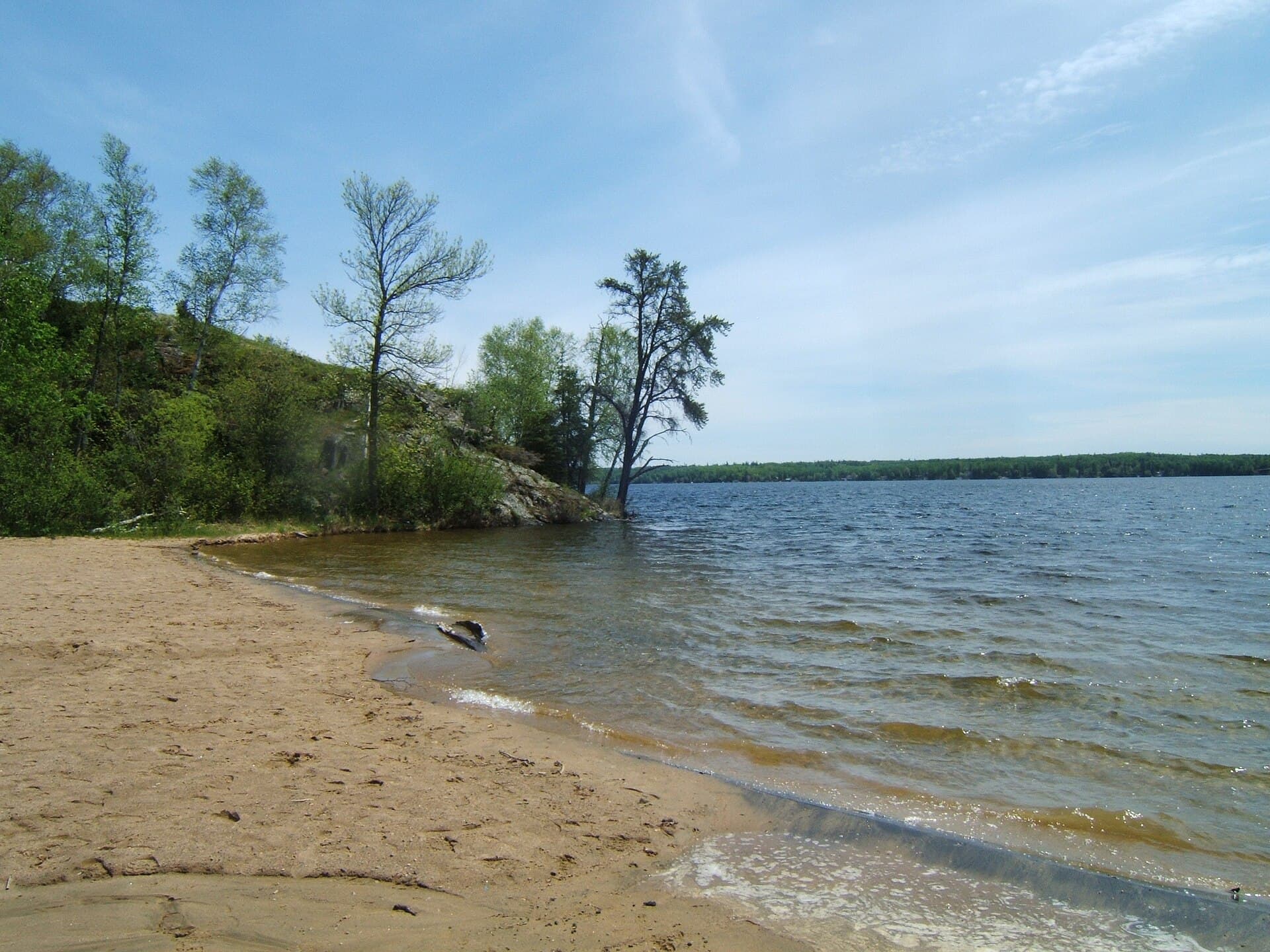
The photograph shows Falcon Lake in June 2013. It is licensed geographic context and does not show the reported 1967 site, object, witness, burns or physical evidence.