
États-Unis / 1957 / NON RÉSOLU
RB-47 radar-visual UFO incident
A long-duration Air Force case involving visual reports, ECM detections and ground-radar discussion. In September 1957, a U.S. Air Force RB-47 reconnaissance aircraft carrying electronic countermeasures equipment reported a prolonged encounter across the Gulf Coast, Texas and Oklahoma. The case is notable because it combines cockpit visual reports, airborne electronic detections and ground-radar context, while still remaining unresolved in the public record.
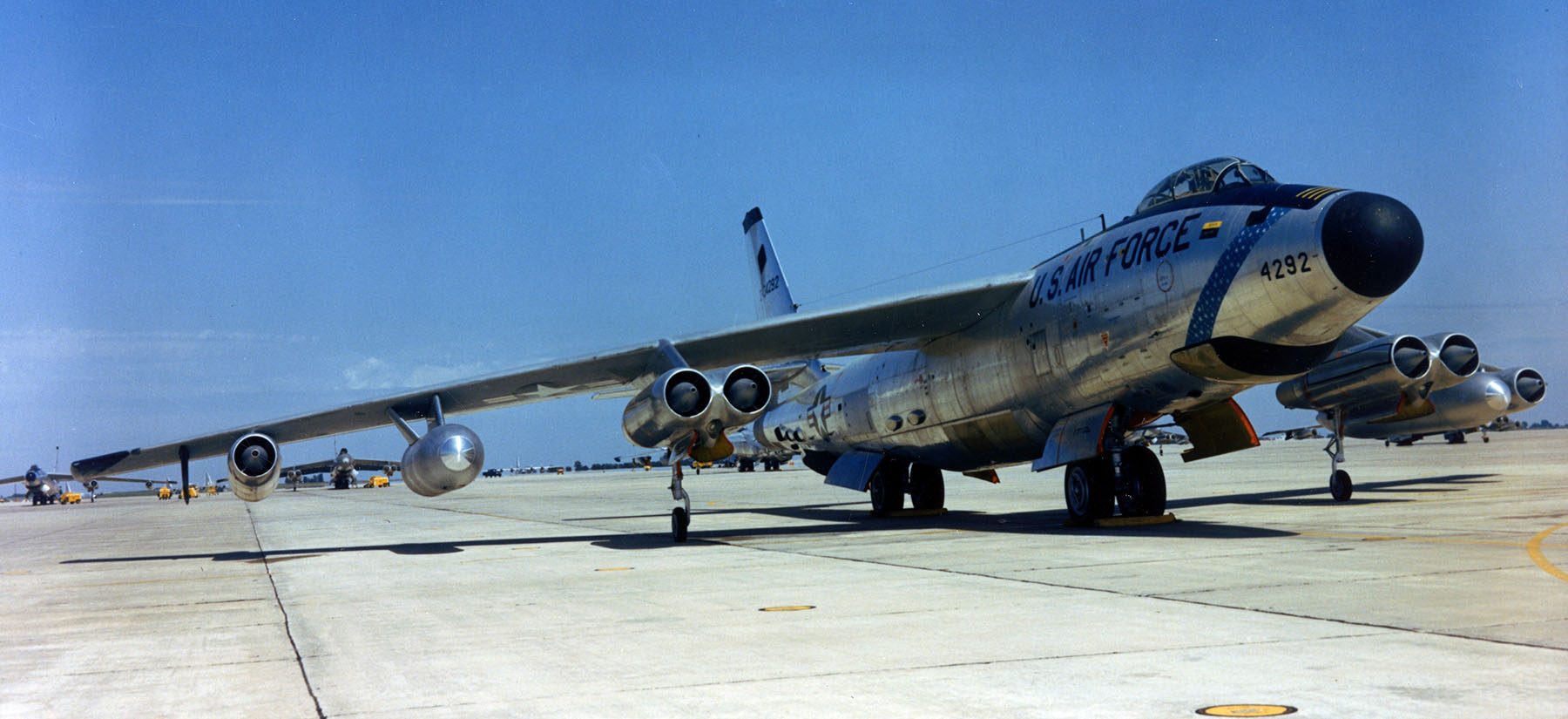
Ce cas reste non résolu dans les archives publiques, avec une crédibilité de niveau B.
- Documentation
- Documentation élevée
- Lieu principal
- Gulf Coast, Texas and Oklahoma
- Base documentaire
- 3 liens documentaires
- Usage de recherche
- Cas de comparaison
Dossier du cas
What happened: During a night training mission, the RB-47 crew reported an intense light that appeared near the aircraft and later seemed to hold position, move abruptly and reappear in different sectors. The aircraft carried electronic countermeasures gear, which made the report more complex than an ordinary visual sighting.
Witness accounts: The witnesses were Air Force officers operating a multi-crew reconnaissance platform. Public reconstructions describe both cockpit observations and electronic-warfare operators noting signals that seemed to correspond with the visual reports, although the complete original technical record is not public.
Timeline: The event occurred during the night of 19-20 September 1957, according to James McDonald's later reconstruction. The account moved from Air Force files into the Condon Report and then into UFO research literature because investigators considered the multi-channel evidence difficult to dismiss.
Evidence analysis: The strongest feature is the combination of trained crew, visual report, airborne ECM context and ground-radar discussion. The weakness is that later summaries and interviews carry much of the public detail, while raw instrument data and complete operational logs are not available to independent readers.
Official background: The case belongs to the Project Blue Book era and was later discussed by the University of Colorado UFO study. The broader Air Force position remained that Blue Book found no evidence of threat, advanced unknown technology or extraterrestrial vehicles.
Possible explanations: Proposed explanations include aircraft or radar confusion, electronic interference, propagation effects, mistaken correlation among separate observations and the possibility of classified activity. None fully closes the public record without the missing technical data.
Careful assessment: The case should be treated as a strong radar-visual dossier but not as proof of exotic origin. Its value is the disciplined setting and the unusual overlap between observers and instruments.
Why this case belongs in the archive: RB-47 is a benchmark for readers comparing witness testimony, military context and sensor claims. It is also a useful reminder that unresolved does not mean identified as non-human or supernatural.
Sources: This entry uses Firecrawl-captured material from James E. McDonald's RB-47 paper, National Archives Project Blue Book information, the U.S. Air Force Blue Book fact sheet and public summaries of the Condon-era discussion.
Chronologie
- Un equipage de RB-47 signale une lumiere anormale et des retours electroniques pendant une mission nocturne.
- Le cas est traite comme un dossier radar-visuel difficile dans les discussions publiques ulterieures.
- James E. McDonald publie une reconstruction detaillee fondee sur des entretiens avec l'equipage.
Matrice des preuves
Catalogué comme piste de recherche. Son poids dépend de la provenance, de la chaîne de conservation et des corroborations indépendantes.
Catalogué comme piste de recherche. Son poids dépend de la provenance, de la chaîne de conservation et des corroborations indépendantes.
Catalogué comme piste de recherche. Son poids dépend de la provenance, de la chaîne de conservation et des corroborations indépendantes.
Catalogué comme piste de recherche. Son poids dépend de la provenance, de la chaîne de conservation et des corroborations indépendantes.
Le rapport Condon est une réévaluation historique, non une nouvelle preuve de terrain.
Analyse des preuves
The evidence is stronger than a casual sighting because it involves trained military personnel and multiple reported channels. It remains limited because independent readers do not have the complete raw radar, ECM and operational record.
Contexte officiel
Project Blue Book and the later Air Force fact sheet provide the official investigative frame, but they do not publish a complete technical resolution of every claim made in the RB-47 literature.
Lecture prudente
A careful skeptical review should test aircraft traffic, radar propagation, electronic interference, timing errors and the risk that later reconstructions aligned separate observations too tightly.
Sources
- rechercheThe 1957 Gulf Coast RB-47 IncidentJames E. McDonald / Princeton-hosted archive
- officielProject BLUE BOOK - Unidentified Flying ObjectsNational Archives
- officielUnidentified Flying Objects and Air Force Project Blue BookU.S. Air Force