
United States / 1950 / DISPUTED
1950 Farmington UFO Armada
The Farmington UFO Armada was a wave of daytime reports over Farmington, New Mexico, in mid-March 1950. A March 18 Farmington Daily Times article called that day the third consecutive day of sightings, while other later sources use March 15-18; the surviving chronology therefore has a one-day uncertainty at its edges. Named residents described formations of silvery discs, with one red object, moving silently at apparently high speed. Contemporary journalism establishes that a broad public reporting episode occurred, but it does not verify the highest object counts or identify the objects. No authenticated event photograph, radar plot, physical trace or complete case-specific official investigation has been located in the public record.
This case is disputed. The archive preserves the claims while separating evidence from interpretation.
- Documentation
- High documentation
- Primary location
- Farmington, San Juan County, New Mexico
- Source base
- 9 linked records
- Research use
- Comparison case
What the record supports
- Confirmed record
- Contemporary local and Associated Press reports document a broad daytime reporting wave in mid-March 1950.[1][2]
- Witness record
- The local paper named numerous residents, but counts, altitude, speed and size were visual estimates rather than measurements.[1]
- Media boundary
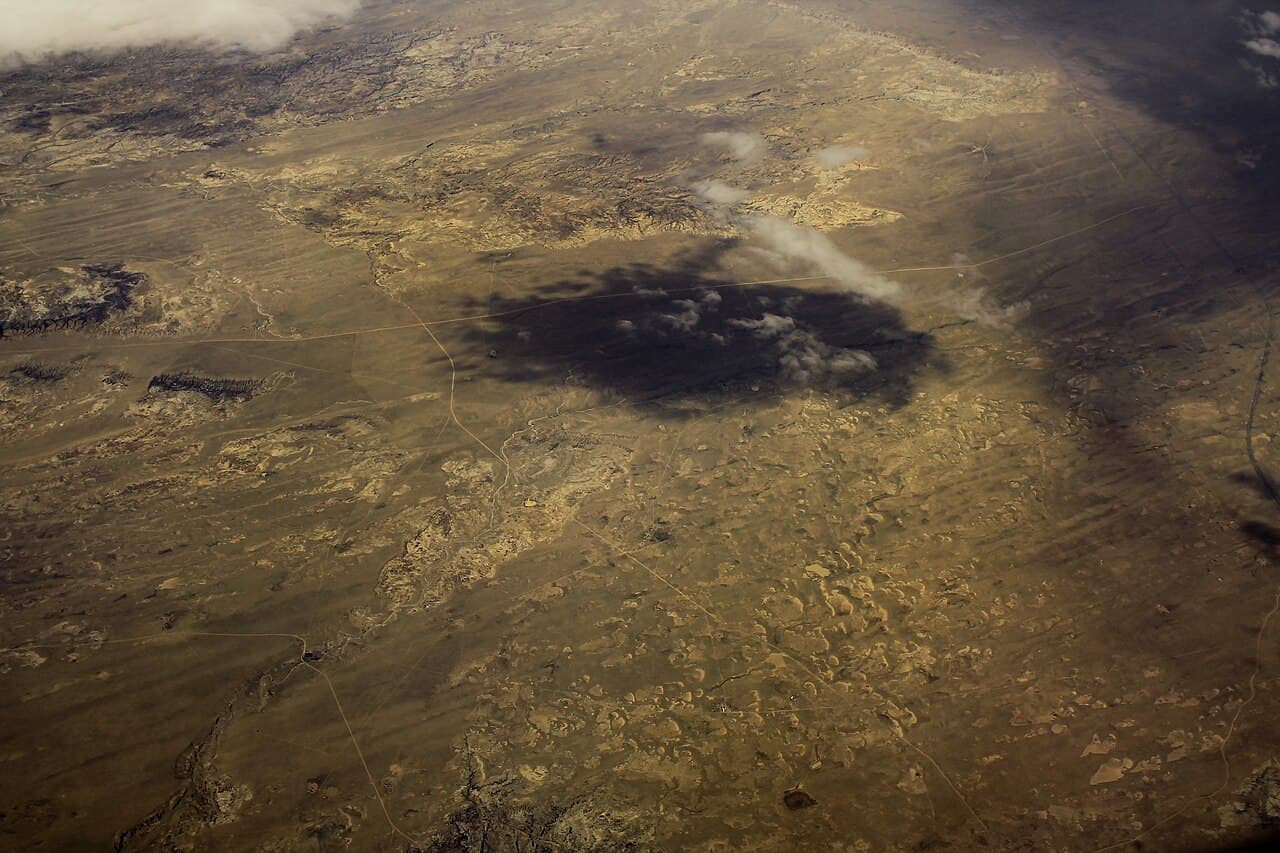
- No authenticated event photograph or original video is public; the displayed image is 2015 geographic context only.[1][2]
Case dossier
Three reported days and uncertain calendar edges
The date range is less tidy than the later three-day label suggests. The March 18 local article said the displays had appeared for a third consecutive day, implying March 16-18. NMPedia and some anniversary accounts extend the sequence to March 15. Edward Ruppelt later wrote that reports began on March 15 and 16 and peaked on March 17. This archive therefore preserves the broader March 15-18 range while identifying March 17-18 as the best documented public phase rather than inventing a single exact start time. [1] · [4] · [5]
Who the newspaper named
The March 18 newspaper account described a community-wide observation rather than one anonymous story. The paper said three callers alerted the newsroom shortly before noon and listed residents including Clayton Boddy, Joseph and Francis Kelloff, Bob Foutz, John Burrell, Harold Thatcher, Johnny Eaton, Edward Brooks, John Bloomfield and Marlow Webb. People watched from Main Street, businesses and nearby properties. The named accounts are valuable because they show who was making the claims and when the paper recorded them, but they remain eyewitness reports gathered during a fast-moving news event. [1] · [2]
Object counts and the claimed triangulation
Descriptions overlapped but were not identical. Witnesses commonly used terms such as silvery disc, saucer or bright object; one red object was said to travel among the lighter ones. Formations reportedly changed shape, split, regrouped and crossed on different headings without audible engines or vapor trails. Object counts ranged from a few dozen to more than 500, while estimates of size, altitude and speed varied widely. Those figures were visual judgments without measured distance, angular size, calibrated photography or synchronized tracking, so they cannot support precise performance calculations. [1] · [2]
The newspaper’s use of “triangulation” does not supply a reproducible measurement. Harold Thatcher’s quoted comparison was conditional: if the object were a B-29, it would have been about 2,000 feet high and moving faster than 1,000 miles per hour. The transcription does not provide the observing baseline, angles, timings or an independently established target size. Without those inputs, the reported calculation cannot determine both distance and speed. The B-29 comparison should therefore be read as an assumption within a witness estimate, not a calibrated flight measurement. [1]
Dust, viewing conditions and pilots who saw nothing
Observation conditions also limit the record. The local paper noted a dust storm that reduced visibility, and different people were looking from different points over an extended interval. An Associated Press dispatch preserved in a later transcript said airline pilots W. E. Hays and Richard Orr departed shortly after noon and neither saw nor heard anything unusual. That negative observation does not cancel reports made at other moments or viewing angles, but it shows that the phenomenon was not continuously obvious to every trained observer in the area. [1] · [2]
A press record without a technical record
The evidence is strongest as a record of reporting. Contemporary newspaper copy, an Associated Press dispatch and multiple names support the conclusion that unusual aerial observations became a substantial local news event. They do not establish that every witness saw the same source, that all estimated objects existed simultaneously, or that the reports described solid craft. No authenticated event photograph or film, original interview audio, radar scope image, recovered material, weather-balloon track or instrument log has been published with a documented chain to the episode. [1] · [2] · [3]
Project Grudge and the limits of archival context
The institutional setting matters, but it is often overstated. The reports occurred during Project Grudge, the U.S. Air Force program then handling flying-saucer reports. A later Air Force declassification page shows that Grudge records included reporting procedures, investigations and planned public responses in early 1950. The National Archives explains how Project Blue Book and related Air Force records are preserved. Neither source supplies a Farmington-specific final report, and no accessible official file has been located that confirms the number, motion or identity of the reported objects. [7] · [8]
Where the Skyhook explanation came from
The best-known conventional proposal is a failed high-altitude Skyhook balloon. In his 1956 book, former Project Blue Book director Edward Ruppelt wrote that a Skyhook launched from Holloman Air Force Base burst near Farmington on March 17; cold, brittle plastic could fragment into many sunlit pieces. Donald Menzel and Lyle Boyd repeated that explanation in 1963. It can account for many bright pieces and exaggerated apparent motion, especially through dust and uncertain range. Yet no launch log, trajectory plot, recovered fragment report or case-specific technical analysis was located in the public sources reviewed here, so the proposal remains plausible rather than demonstrated. [5] · [6]
McDonald’s challenge to the balloon account
James E. McDonald directly disputed the launch premise in his 1968 congressional symposium statement. He reported interviewing seven Farmington witnesses seventeen years after the event and acknowledged confused recollections. He also said that inquiries to Holloman Air Force Base and the Office of Naval Research found no Skyhook or other experimental balloon release on or near the date. This conflicts with Ruppelt’s account; it is not a congressional finding. The statement does not reproduce the underlying launch records or correspondence, so this archive cannot independently settle that disagreement. A balloon-fragment mechanism and proof that a particular balloon was present remain different questions. [9] · [5]
What can be concluded about the reporting wave
Farmington belongs in the archive because it is unusually well documented as an early mass-reporting episode, not because it proves an extraordinary craft. It offers named witnesses, tight contemporaneous press coverage and a later explanatory debate that can be traced across decades. The careful conclusion is that many residents reported visually striking daytime objects, while the available record cannot determine how many independent sources were present or whether one explanation covers every report. The Skyhook-fragment hypothesis currently fits important features, but the missing technical chain prevents a definitive closure. [1] · [2] · [5] · [6] · [9]
Related checks and records
- Michigan 1966: the scope of the swamp-gas explanation
Compare the witness reports, misattributed photograph, Air Force statement and Ford's demand for an inquiry.
- Tombaugh: angular estimates and disputed optical explanations
- Compare flight, satellite and weather records
- Lubbock: separate sightings, photographs and later explanations
Timeline
- Some later summaries place the first Farmington reports on March 15; contemporary day-by-day coverage is incomplete in the accessible archive.
- An Associated Press dispatch reports that several hundred residents watched objects for about twenty minutes; estimates range from twenty to more than one hundred.
- The Farmington Daily Times publishes its detailed account, names numerous witnesses and describes a third consecutive day of reports shortly before noon.
- Edward Ruppelt publishes a retrospective account proposing that a Skyhook balloon burst near Farmington on March 17.
- Donald Menzel and Lyle Boyd repeat the balloon-fragment explanation in The World of Flying Saucers.
- KOAT publishes a retrospective report with a later witness recollection and researcher David Marler's discussion of the event.
- The archive separates contemporary reporting, retrospective explanation and missing technical records in a new source-led review.
Farmington UFO Armada questions
What was the 1950 Farmington UFO Armada?
It was a mid-March wave of daytime reports in which residents described many bright or silvery objects and changing formations over Farmington, New Mexico.
How many objects were reported?
Estimates ranged from a few dozen to more than 500. There was no standardized count, fixed viewing field or instrument record, so the numbers are claims rather than measured totals.
Were the witnesses identified?
Yes. The local newspaper listed multiple residents and businesses, which strengthens the historical reporting record but does not by itself identify the objects.
Are there real photographs or videos of the Farmington objects?
No authenticated event photograph or original video has been located. Later news programs show newspaper material and recollections, not verified footage from March 1950.
Did a Skyhook balloon cause the Farmington sightings?
A burst Skyhook could explain many sunlit pieces and some apparent motion. The public sources reviewed here do not include the launch and trajectory records needed to verify that identification.
Why is the Farmington case still in the archive?
It is a well-documented early mass-reporting episode that shows both the value and the limits of contemporary journalism when technical evidence is absent.
Sources
- [1] ArchiveFarmington Daily Times: Huge saucer armada jolts FarmingtonFarmington Daily Times / Patrick Gross archive
- [2] ArchiveAssociated Press dispatch from Farmington, March 17, 1950Associated Press / Saturday Night Uforia archive
- [3] News reportWitness recalls 1950 Farmington UFO ArmadaKOAT Action 7 News
- [4] ArchiveNMPedia: UFOs in New MexicoAlbuquerque Bernalillo County Public Library
- [5] ResearchEdward Ruppelt: Farmington and the Skyhook explanationThe Report on Unidentified Flying Objects / Wikisource
- [6] ResearchMenzel and Boyd: The World of Flying SaucersProject Gutenberg
- [7] Official fileU.S. Air Force declassification page: Project Grudge documentsU.S. Air Force Declassification Office
- [8] Official fileNational Archives guide to Project Blue Book recordsU.S. National Archives and Records Administration
- [9] ArchiveMcDonald’s 1968 Farmington testimonyU.S. House of Representatives / NCAS transcription
The main image is an aerial landscape southeast of Farmington photographed in 2015, sixty-five years after the reports. It provides geographic context only and does not show the 1950 objects, witnesses or observation sites. No authenticated event photograph or original video was located; later KOAT coverage remains a reporting source and is not reproduced as event evidence.