
United Kingdom / 1964 / DISPUTED
1964 Solway Firth Spaceman Photograph
The Solway Spaceman is a figure in a family photograph taken by Jim Templeton on Burgh Marsh in May 1964, not a witnessed spacecraft. Templeton said he noticed it only after processing. Later accounts disagree over the exact day and repeat laboratory claims without reproducing the original reports. An ordinary photographic appearance or a prank has been proposed; neither missing records nor a figure's resemblance to a spacesuit establishes an extraterrestrial visitor. Stories about official visitors and Woomera require separate evidence.
This case is disputed. The archive preserves the claims while separating evidence from interpretation.
- Documentation
- High documentation
- Primary location
- Burgh Marsh, Solway Firth
- Source base
- 6 linked records
- Research use
- Comparison case
The photograph and the later story
Case dossier
Place and date: the photograph belongs to a family outing on Burgh Marsh near Burgh by Sands, on the English side of the Solway Firth. The precise day is disputed in the published record. Templeton's 2002 letter gives May 23; Andy Murray's 1996 Courier feature pairs that date with Sunday, although May 23, 1964 was Saturday. David Clarke and Andy Roberts, and later Jenny Randles, use May 24. These retrospective accounts do not supply a contemporary document that resolves the conflict. May 1964 is therefore the defensible shared date, and the map marks the general marsh setting, not a verified camera position.
The photographer's account: in his December 13, 2002 Daily Mail letter, Templeton described an SLR loaded with new Kodacolor film, processed by Kodak. He said he took three pictures of his daughter Elizabeth in similar poses and found the figure in the middle picture when the photographs returned. He also reported taking it to Carlisle police, who saw nothing suspicious. This is the photographer's own retrospective account, written 38 years later. It is not the full original film roll, a police case file or a Kodak examination report. A subject discovered in a developed image is also different from a person or craft consciously observed on the marsh.
Witnesses and memory: Murray's May 3, 1996 feature revisited the marsh with Templeton and his adult daughter, Elizabeth Dobson. The daughter said she remembered little and described unwanted attention. Templeton recalled surprise at the returned print and a dismissive response from a forensic laboratory in Preston. The reporter's separate interviews help document how the family understood the affair decades later; they do not make the laboratory remark an independently inspected finding. Nor can the daughter's limited recollection be treated as a second detailed sighting of the figure. The photograph's publicity and its effect on the family are better documented here than the identity of the background subject.
Examination claims: Clarke and Roberts's April 2012 investigation contrasts accounts of Kodak finding no alteration with a reported 1997 opinion by Roger Green at Bradford University favoring a composite. Their article does not reproduce the original signed laboratory reports or a repeatable demonstration. It also acknowledges that a photographic hoax was not proved. These are incompatible reported interpretations, not two established experimental results that can simply be combined. Even an authenticated, unaltered negative would establish a photographic record, not automatically the identity or origin of its subject. Claims of a guaranteed authenticity award or a precise viewfinder-coverage percentage cannot substitute for the missing technical documentation.
Possible explanations: in Northern UFO News 194, dated May 2018, Randles considered an accidental resemblance or a prank played on the photographer, rather than an alien. Clarke and Roberts discussed manipulation but did not establish a culprit or technique. Conrad's later commentary disputes the wife-and-overexposure hypothesis; this is an author's argument, not an original-negative laboratory test. The distinction matters: a proposed ordinary subject, a deliberate alteration and a joke by someone else are different explanations requiring different evidence. Absence of a conclusive reconstruction is not positive evidence for the most extraordinary interpretation.
The alleged official visitors: Templeton described two men who claimed a ministry connection and used numbers rather than names. Clarke and Roberts contrast his belief in a government visit during their 2001 interview with their quotation of his 1964 statement that he was sure the men were not security agents. Their account also records a police inspector saying he did not know who the men were. Randles later accepted that a visit occurred but acknowledged that released files did not identify a Ministry of Defence visit to the family. Neither view supplies authenticated credentials or establishes an official mission. The visitors' identity must remain separate from the photograph's interpretation.
The Woomera connection: Templeton's 2002 letter says a later correspondent associated similar figures with an interrupted Blue Streak countdown in Australia. That is correspondence reported by Templeton, not launch telemetry or testimony reproduced from an identified technician. Clarke and Roberts traced a separate supposedly missing film story to a June 5, 1964 rocket-launch newsreel and interpreted its bright feature as lens reflection. Randles also regarded the connection as coincidental. Their later archival accounts do not independently establish suited figures on the range. A rocket film, a family portrait and a visitor story cannot be combined into mutual corroboration simply because later retellings connect them.
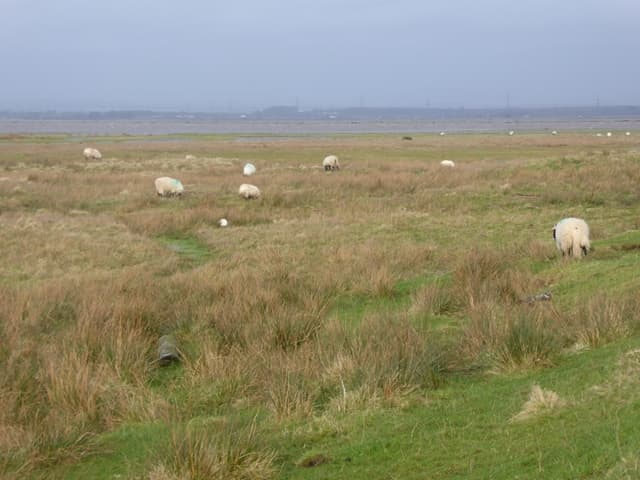
Archive assessment: this is a disputed photograph-history case, not a documented encounter with an astronaut or an observed aerial vehicle. Its value lies in comparing the photographer's account, his daughter's limited memory and later investigations without silently upgrading any of them into laboratory proof. The original portrait can be consulted through the linked research; the local image here is a licensed modern landscape, not the disputed photograph. The remaining gaps concern original film custody, method-bearing examination records and the exact day. Those limits favor careful comparison of ordinary explanations, not a declaration that an unrecognized shape is extraterrestrial.
Related checks and records
- Salem 1952: a photograph and changing official explanations
Compare the signed statements with the initial double-exposure assessment and later window-reflection interpretation.
- Calvine: a separate photograph-provenance dispute
- McMinnville: negatives and competing image analyses
- Where to find UFO disclosure files
Timeline
- Templeton photographs his daughter on Burgh Marsh; later accounts disagree between May 23 and 24.
- The Courier publishes Murray's interviews with Templeton and his adult daughter.
- Templeton's Daily Mail letter recounts the photograph and later Woomera correspondence.
- Clarke and Roberts publish their investigation in Fortean Times 286.
- Randles revisits her family interviews and archival work in Northern UFO News 194.
Solway photograph questions
Did the family see a spaceman?
Templeton said the figure appeared to him only in the developed picture. That is a photographic claim, not a reported direct encounter with a suited visitor.
Did Kodak prove it was an alien?
No such conclusion is established. Claims of no tampering are reported without the original laboratory documentation; even no tampering would not identify the subject as extraterrestrial.
Why do sources give two dates?
Some use May 23 and others May 24, 1964. One report calls the 23rd a Sunday, contradicting the calendar. The cited retrospective material does not settle which element is wrong, so this dossier retains month-level dating.
Sources
- [1] ArchiveTempleton's 2002 letter: his retrospective accountJames Templeton / Daily Mail / AFU archive
- [2] News reportMurray, Courier 3 May 1996: father and daughter interviewedAndy Murray / Courier (Dumfries) / AFU archive
- [3] ResearchClarke and Roberts, April 2012: interviews and archival interpretationDavid Clarke and Andy Roberts / Fortean Times 286
- [4] ResearchRandles, May 2018: first-person research retrospectiveJenny Randles / Northern UFO News 194
- [5] ResearchConrad's commentary on the overexposure interpretationJames A. Conrad, 2021
- [6] ArchiveDixon's licensed modern landscape, not the disputed photographOliver Dixon / Geograph / Wikimedia Commons