
United States / 1952 / DISPUTED
1952 Salem Coast Guard UFO Photograph
On July 16, 1952, Coast Guard photographer Shell R. Alpert photographed bright lights from the photo office at Salem, Massachusetts. Four light images appear in the photograph, but Alpert could not establish their size, distance, motion or even whether they were aircraft. Thomas Flaherty reported only a possible brief flash. An early Air Force analysis suspected double exposure; a 1963 review instead favored indoor lights reflected in a window and found no indication of attempted fraud. The records document a disputed photograph, not four measured flying craft.
This case is disputed. The archive preserves the claims while separating evidence from interpretation.
- Documentation
- High documentation
- Primary location
- Salem, Massachusetts
- Source base
- 6 linked records
- Research use
- Comparison case
What the Salem records establish
- Time and place
- 16 July 1952, Salem Coast Guard photo office. Alpert gives about 9:35 a.m.; Flaherty about 9:30. Neither supplies a measured target position.[1][2]
- What the photo shows
- Four light images, not four objects with established size, distance or speed. The second witness's account is limited to a possible flash.[1][2][3]
- Official explanation
- The 1963 review favors reflections of indoor lights and explicitly does not find evidence of an attempted hoax; this differs from the initial 1952 assessment.[3]
Case dossier
Alpert's July 17 statement places the observation at about 9: 35 a.m. on July 16. While filing negatives, he noticed brilliant white lights near the power-plant smokestacks. After watching for perhaps five or six seconds, he turned to a Busch Pressman camera, set its focus roughly to infinity and prepared an exposure. The lights dimmed; he went to fetch hospitalman Thomas E. Flaherty. On returning, he saw them brighten, took the photograph and then noticed a momentary flash before they disappeared. This sequence is his account, not an independently timed film record.
The two statements are not equivalent corroboration. Alpert expressly stated that he could not determine the lights' number, altitude, speed, direction of motion or shape, and could not honestly identify objects or aircraft rather than lights. Flaherty's separate July 17 statement gives approximately 9:30 a.m. and the northwest window. He described what he thought might be a quick flash, adding that passing cars or the ocean could have produced reflections. Thus the familiar phrase 'two Coast Guardsmen saw four UFOs' overstates both the second witness and what the photographer could determine.
The Associated Press dispatch dated August 1 reports the Coast Guard releasing the photograph because of public interest, without endorsing its cause or origin. It describes four bright spots and also reports military spokesmen's replies about possible flares or firing. The clipping nevertheless misattributes a brief-flash/reflection remark to Alpert that belongs to Flaherty's signed statement. Its adjacent account of jet pilots watching a light at 17,000 feet concerns Dayton, not Salem. Contemporary reporting is valuable here precisely because it can be compared against the original statements rather than treated as an error-free composite account.
The Air Force summary says its Air Technical Intelligence Center completed an examination of the original negative on August 1, 1952, then returned it to the Coast Guard. The initial analyst reasoned that external bright lights should have reflected from polished cars below. The absence of such reflections led to a double-exposure and hoax interpretation. That is the documented reasoning of an analyst, not a confession by Alpert or a recovered second exposure. The summary also refers to comparison photographs, without furnishing a complete original experimental dataset in the two-page record available here.
A re-examination in October 1963 changed the explanation to reflections of interior lighting, probably ceiling lights, in the window. The summary compares blurred light shapes with sharper outdoor cars and buildings, the infinity-focus setting and reported brightness changes as the observer moved. A shorter reflected optical path could leave indoor light images out of focus while distant scenery remained sharp. Crucially, this later assessment expressly found no indication of an attempted hoax. It is an official optical interpretation, not an independently reproduced test of the exact window, lighting and camera position.
The photographic question and the witness question must remain separate. A single exposure can record four bright shapes without measuring four objects in flight. Alpert's statement mentions a dirty window screen and a dirty lens; a screen is not itself proof of the position of a glass pane. Without the original negative, full room geometry and controlled comparison imagery, a web reproduction cannot settle every optical assumption. Conversely, uncertainty about reflections does not establish a structured craft, extreme speed or a formation. No authenticated moving footage or radar track is part of the cited case evidence.
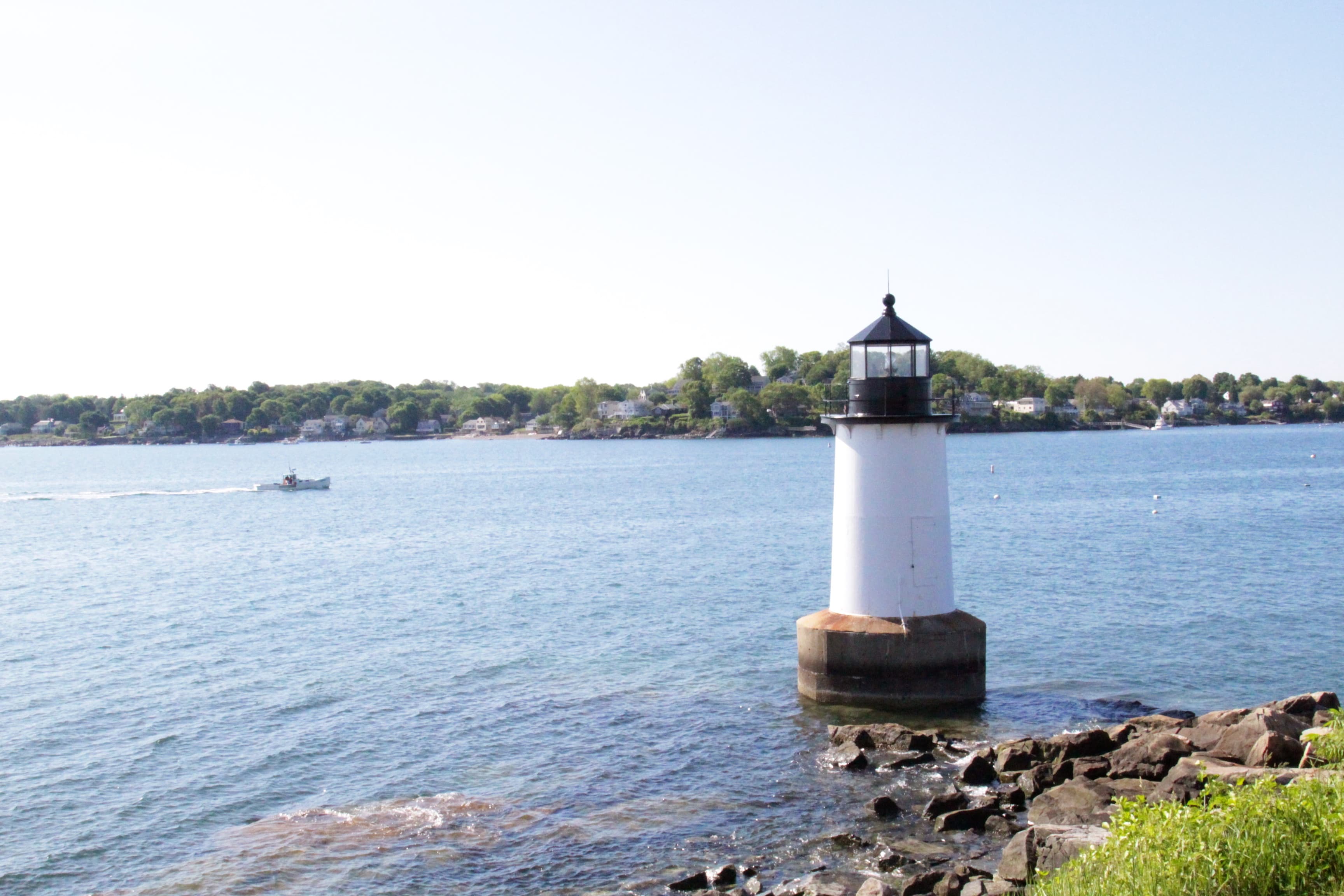
Salem belongs in the archive because the surviving statements, contemporary press and changing official assessment allow a source-by-source reconstruction of how a famous image acquired stronger claims than its witnesses made. The cautious conclusion is a documented light photograph with a published reflection explanation and important evidentiary limits, not confirmation of extraterrestrial visitors or deliberate deception. The map is an approximate Salem location, not a measured target position. The modern harbor photograph supplies local context only; it does not show the 1952 frame, the photo-office window or Alpert's viewpoint.
Related checks and records
- Fort Belvoir: photographs and the smoke-ring identification
Compare the original sequence with the Condon investigation and later criticism, keeping demonstration photos separate.
- Solway: a family photograph and the limits of later claims
- McMinnville: testing photographic interpretations
- Calvine: photograph provenance and missing originals
- Tremonton: a separate 1952 moving-image record
Timeline
- Morning at the Salem station: Alpert makes the photograph; Flaherty describes only a possible brief flash.
- The two Coast Guardsmen submit separate statements with different levels of observation and approximate times.
- The reproduced witness statements carry this declassification date; it is not the photograph's exposure date.
- AP reports the public photograph release. The later USAF summary dates completion of the initial negative analysis to the same day.
- The official re-examination favors internal-light reflections and finds no indication of an attempted hoax.
Salem photograph questions
Did two Coast Guardsmen see four flying saucers?
That overstates the statements. Alpert could not identify aircraft or count the lights reliably; Flaherty described only a possible quick flash. Four light images on film do not supply four independently identified objects.
Was Alpert proved to have faked the photograph?
The initial assessment suspected double exposure, but the 1963 review favored reflections and explicitly found no indication of attempted fraud. Neither an early suspicion nor a modern retelling is a confession.
Is the harbor image the original UFO photograph?
No. It is a licensed 2015 photograph of Salem Harbor and Fort Pickering Light, used as location context. The original case image and official analysis are accessible through the source links, not recreated by this modern photograph.
Sources
- [1] Official fileAlpert: what the photographer could and could not identifyShell R. Alpert / US Coast Guard; RR0 transcription
- [2] Official fileFlaherty: a possible flash, not a detailed formation sightingThomas E. Flaherty / US Coast Guard; RR0 transcription
- [3] Official fileUSAF record: 1952 analysis and October 1963 re-examinationUS Air Force / Project Blue Book; RR0 facsimile
- [4] News reportAP, August 1952: contemporary release reporting, archive PDF p.8Associated Press / UFO Newsclipping Service archive
- [5] ArchivePhotographic annex: archive scans, not the original negativeUSAF file 1501 / Internet Archive contributor copy
- [6] ArchiveModern Salem harbor photograph and licencedaveynin / Flickr / Wikimedia Commons