
Portugal / 1977 / DISPUTED
Amarante 1977 UFO record dispute
This page preserves a disputed archive identity, not a verified photographic event. The former record named ‘Amarante UFO photographs’ and dated it 25 October 1977, but no reviewed source identifies a photographer, witness, original negative, publication, or photograph from that date. A traceable research chapter instead describes a different report: on 14 January 1977, one girl aged ten and two boys aged ten and nine said they saw a large orange-faced figure above a hill while doing gymnastics at Padronelo, Amarante. Their drawings and later-collected testimony are not photographs, and the date, evidence type and described subject all conflict with the old entry. The safest conclusion is that the October photographic identity is unsupported and must not be repaired by borrowing facts from the January children’s report.
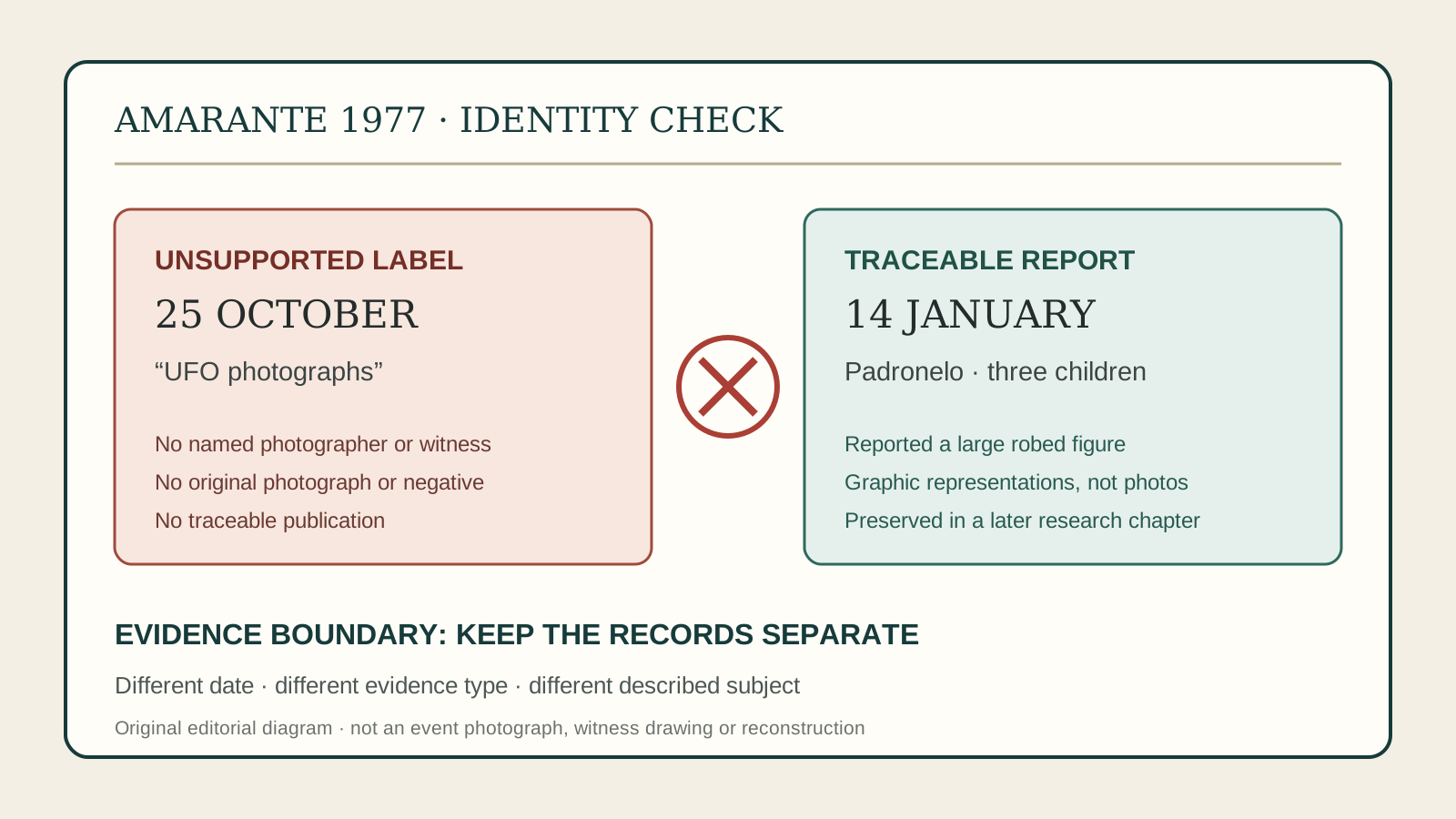
This case is disputed. The archive preserves the claims while separating evidence from interpretation.
- Documentation
- High documentation
- Primary location
- Amarante; separate traceable report at Padronelo
- Source base
- 4 linked records
- Research use
- Comparison case
What can be established
Case dossier
The stable slug entered the archive with a precise date and a photographic label, yet its associated source was only a general Wikipedia list. The current list contains no Amarante entry, and the reviewed repository data supplied no nearer citation. Precision in a database field is not evidence: without a source that states 25 October, the date remains an inherited assertion. Mário Neves Silva’s chapter in a Universidade Fernando Pessoa research project is the clearest Amarante-specific record found. It labels ‘Record 8’ as 14 January 1977 at Padronelo and identifies three anonymous children: a ten-year-old girl and boys aged ten and nine. The chapter says the witnesses were doing gymnastics and preserves extracts from their accounts together with graphic representations. The children described a stationary, very large figure in a blue opening among clouds, a little above a hill. Accounts mention an elongated bald head, a white robe, arms slightly open, and a dark-orange face and hands. These are attributed recollections, not independently measured observations. The chapter does not identify an aircraft, camera, photographer, negative, film stock or photographic publication. The drawings matter as records of what children were asked to depict, but their chain of custody is incomplete in the public copy. It does not state when every interview or drawing was made, who first documented the report, whether the witnesses were interviewed separately, or what questions preceded the quoted answers. The teacher’s question about transparency shows that prompting occurred, although it does not by itself establish distortion. RTP’s official archive documents Portugal’s broader UFO culture: a CEAFI exhibition aired in June 1977, later programmes reviewed alleged sightings, and the archive’s terms prohibit unlicensed republication of its footage. The reviewed RTP descriptions do not identify this Amarante event. They provide institutional media context, not corroboration of either the January report or an October photograph claim. Because the records conflict at the identity level, ordinary explanations of the sighting cannot repair the archive. Clouds, sunlight, a person on terrain, religious imagery, memory and interview effects are possible categories for the January figure, but the public record is too thin to choose among them. None explains where the October date or ‘photographs’ label came from.
Timeline
- Traceable Padronelo report: three children said they saw a large figure while doing gymnastics.
- RTP recorded a CEAFI UFO exhibition in Portugal; this is period context, not an Amarante case record.
- Date inherited by the old ‘photographs’ entry; no supporting case source was located.
- Preliminary results of the Universidade Fernando Pessoa iconographic project were presented at the university.
- Silva’s chapter was published in De outros mundos, preserving the January report and drawings as a retrospective research record.
Questions about the Amarante record
Were UFO photographs taken at Amarante on 25 October 1977?
No reviewed source establishes that claim, and no photographer, original image or publication chain was located.
What happened at Padronelo on 14 January?
A later research chapter says three children reported a large robed orange-faced figure above a hill while doing gymnastics and made drawings.
Are the January and October records the same event?
There is no reliable link. Their dates, evidence types and described subjects conflict, so this archive keeps them separate.
Do the children’s drawings prove an unusual craft?
No. They document reported perception; the chapter describes a figure and lacks instrument data or an independently verified object.
Is there an official conclusion?
No case-specific official investigation or conclusion was located in the reviewed public records.
Sources
- [1] ResearchOVNI / ET: graphic representations by children and young peopleMário Neves Silva / CTEC, Universidade Fernando Pessoa (access copy)
- [2] News reportEncontros Imediatos do Nosso Grau — Part IRTP Arquivos
- [3] News reportCases in which UFOs were reportedly observedRTP Arquivos
- [4] Reference databaseLegacy association with the list of reported UFO sightingsWikipedia (legacy association; current list has no Amarante entry)
The hero is a site-authored record diagram, not event evidence. No alleged photograph or copyrighted witness drawing is reproduced.