
United States / 1973 / DISPUTED
Falkville metal man
The secure historical core is narrow: Greenhaw made a report on 17 October 1973, The Decatur Daily printed it the next day, and four Polaroid images of a shiny human-sized figure entered circulation. Nearly everything about the encounter itself comes from Greenhaw. Later investigators described the figure as a person in a fire-protective garment or foil and cited an unnamed minor's alleged confession, but that statement is not publicly available. Conflicting stories about the originals—destroyed in a November 1973 fire versus stolen in 1983—break the photograph chain. The case remains D / DISPUTED, with a prank more plausible than an anomalous being but not fully documented in public records.
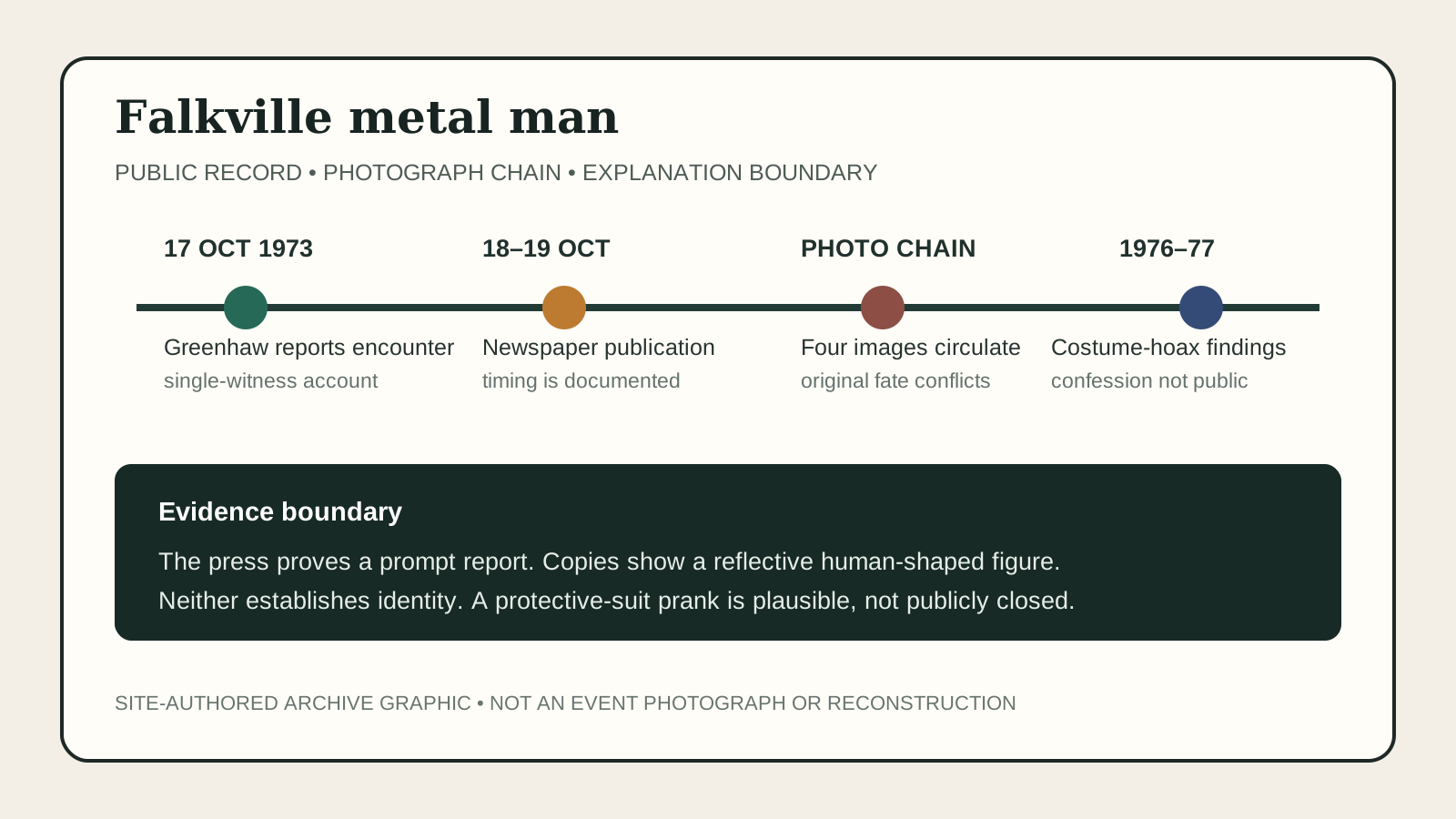
This case is disputed. The archive preserves the claims while separating evidence from interpretation.
- Documentation
- Moderate documentation
- Primary location
- Falkville, Alabama
- Source base
- 4 linked records
- Research use
- Comparison case
What the record supports
- Confirmed chronology
- The report was made on 17 October 1973 and appeared in The Decatur Daily on 18 October.[1][2]
- Single witness
- No independent witness to the figure or accessible caller statement was located.[3][4]
- Photo boundary
- Four Polaroids circulated, but the originals have conflicting loss histories and the surviving copies lack a complete custody chain.[3][4]
- Leading explanation
- A person in reflective fire-protective clothing best fits the visible form; the alleged confession is not publicly auditable.[4]
- Career claim
- Greenhaw later said he resigned within weeks; no source located here supports saying he was fired.[3]
Case dossier
Late on 17 October 1973, off-duty Falkville police chief Jeff Greenhaw said he received a call about lights or a landed object west of town. Accounts disagree on whether the caller was anonymous or a known neighbor. No recording, dispatch log or statement from that caller has been located, so the call is part of Greenhaw's account rather than an independently confirmed report.
Greenhaw said he drove out with a Polaroid camera, found no craft, then encountered a human-sized figure on or beside a gravel road. He described reflective material, a joined-looking head and neck and awkward movement. He said he spoke to the figure, took four flash photographs and followed when it ran. Distances, speed and a patrol-car skid appear in later accounts, but no scene measurements or vehicle report have been located.
The report entered the press quickly. Later source research says Greenhaw telephoned The Decatur Daily around 11:30 p.m.; NewspaperArchive metadata confirms coverage on pages 1 and 8 of the 18 October edition and a follow-up on 19 October. This chronology supports a real-time report and the early existence of photographs. It does not independently verify what the camera recorded.
The photograph chain is the case's central weakness. A later source study cites 1974 accounts saying the original instant prints were destroyed when Greenhaw's trailer burned on 9 November 1973, after a UFO researcher had rephotographed them. Greenhaw told a 2021 local newspaper that the four pictures were stolen with two firearms in 1983 and that he filed a report. Without the fire, theft or police records, those incompatible histories cannot be reconciled; circulating reproductions are not authenticated originals with metadata.
The conventional explanation developed inside UFO organizations, not through a disclosed police finding. NICAP material summarized after a multi-year inquiry described a fire-retardant 'hot suit' with an aluminum covering. William Spaulding called the images a humorous space-creature hoax. NICAP president John Acuff later said a 17-year-old participant had admitted wearing the costume, but the name and signed statement were withheld and the claim survives through a quoted private letter.
The aftermath also needs careful wording. Greenhaw told the Cullman Tribune that he resigned within weeks and withdrew from public attention; later source lists identify a 16 November 1973 Decatur Daily item about resignation under pressure. No municipal personnel record was found in this review. The archive therefore says 'resigned' as a sourced claim, not 'was fired,' and does not present ridicule or later hardship as evidence that the photographed figure was extraordinary.
Timeline
- Greenhaw says he encounters and photographs a reflective figure near Falkville; the exact minute derives from later reconstruction.
- Later source research places his telephone report to The Decatur Daily at about 11:30 p.m.
- The Decatur Daily publishes the report on pages 1 and 8; this is next-day, not same-day, coverage.
- The Decatur Daily publishes follow-up coverage on page 10.
- Greenhaw later says he resigned within weeks; a personnel record was not located.
- Spaulding and NICAP publications characterize the photographs as a costume hoax; Acuff cites a private, unnamed confession.
- The Cullman Tribune publishes a late interview account, including Greenhaw's 1983 theft claim.
Questions about the Falkville photographs
Did the Falkville metal man incident really happen?
Greenhaw unquestionably made a prompt public report and photographs circulated. The figure's identity and the claimed chase are not independently confirmed.
What do the photographs show?
Available reproductions show a bright, human-proportioned shape at night. Their quality cannot establish anatomy, material, speed or extraterrestrial origin.
Where are the original Polaroids?
Their fate is unresolved. Early accounts say they burned in November 1973; Greenhaw later said they were stolen in 1983. Neither chain was verified here.
Was it a person in a fire suit?
That is the leading explanation because it fits the outline and reflectivity and was reached by later photo investigators. No identified suit or publicly signed confession closes the case.
Was Jeff Greenhaw fired?
The accessible retrospective says he resigned within weeks. Without a personnel file, this dossier does not substitute 'fired' for 'resigned.'
Why is the case rated D / DISPUTED?
The report is historically traceable, but it rests on one witness, degraded copies, a broken provenance chain and a strong conventional explanation with incomplete public proof.
Sources
- [1] ArchiveThe Decatur Daily front-page clipping, 18 October 1973The Decatur Daily / NewspaperArchive
- [2] ArchiveThe Decatur Daily continuation, 18 October 1973The Decatur Daily / NewspaperArchive
- [3] News reportCullman Tribune interview with Jeff GreenhawThe Cullman Tribune
- [4] ResearchFOTOCAT source and photograph studyVicente-Juan Ballester Olmos and Luis Ruiz Noguez
The hero is a site-authored evidence map, not an event image. Circulating Falkville photographs were not copied because their original chain and reuse rights remain unresolved.