
History / Updated 2026-09-30 / 2 min read
Foo fighters: World War II lights before the modern UFO era
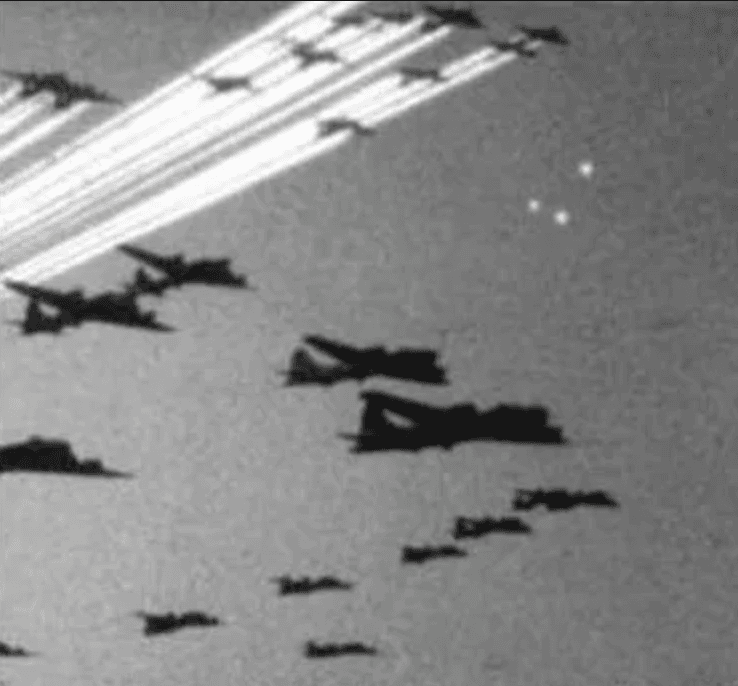
Foo fighters were wartime reports of lights or objects near aircraft, long before flying saucers became a public obsession.
Reviewed and maintained byGlobal UFO Archive Editorial DeskEditorial policy
Key points
- The reports matter because they predate the 1947 flying saucer wave.
- Wartime stress, enemy-technology fears, atmospheric effects, and misidentification all shape the record.
Why they remain interesting
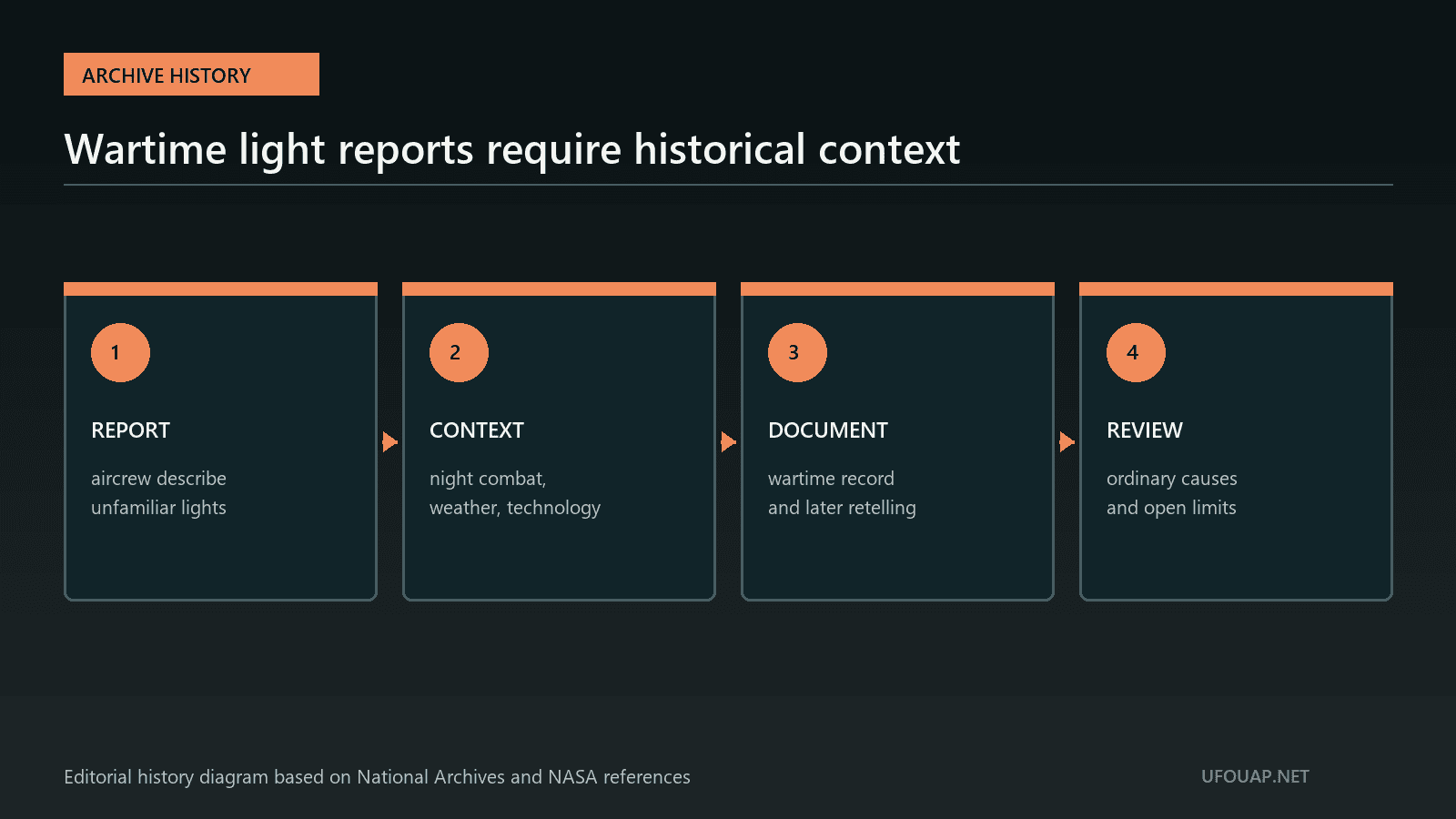
Foo fighter reports are useful because they show that unusual aerial reports did not begin with postwar UFO culture. Aircrews described lights, balls, or objects that appeared near aircraft during combat operations. The records are historically important, but they are also difficult: wartime conditions limited documentation, and explanations can include enemy technology anxiety, electrical effects, atmospheric phenomena, or ordinary lights seen under stress.
Follow each wartime report separately
Foo fighters is a collective historical label, not a single object with a single flight path. A wartime newspaper account, an operational report and a much later interview have different evidentiary roles. The Wyoming collection is a later compilation: follow its references to the underlying records instead of treating every entry as an independent official finding.
For a proposed identification, choose one dated sortie and compare the reported direction, duration and aircraft movement with that hypothesis. A light said to follow an aircraft does not by itself establish a measured pursuit trajectory. Do not transfer a detail from one crew’s report into another or merge European and Pacific accounts into a single encounter. Where the original record is missing, leave the limitation explicit.
FAQ
Were foo fighters alien spacecraft?
There is no solid public evidence for that. They are better treated as wartime mystery-light reports.
Sources
- National ArchivesUFO and UAP-related Recordswww.archives.gov
- NASA ScienceIdentifying UFOs and UAPsscience.nasa.gov
- University of Wyoming American Heritage CenterThe Foofighters Files (2009 research compilation)digitalcollections.uwyo.edu
- TIMEScience: Foo-Fighter (15 January 1945)time.com