
History / Updated 2026-07-16 / 6 min read
Project Blue Book: what the U.S. Air Force UFO program actually investigated
Project Blue Book is one of the most searched historical UFO programs, but its files are best read as investigative records rather than a single final answer.
Reviewed and maintained byGlobal UFO Archive Editorial DeskEditorial policy
Key points
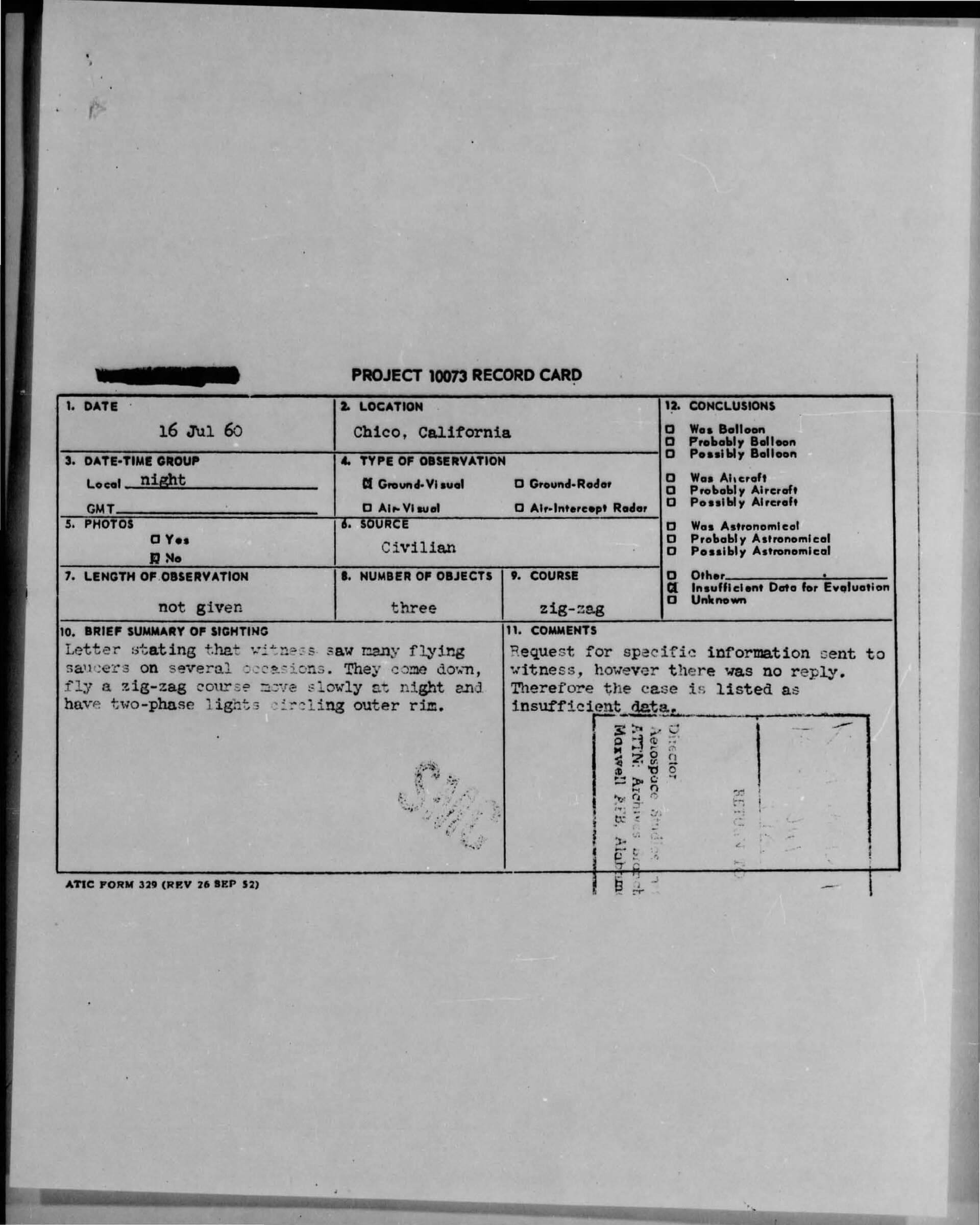
- Project Blue Book investigated UFO reports for the U.S. Air Force from the Cold War era through 1969.
- Its value is in the case files, classifications, and public controversy around official explanations.
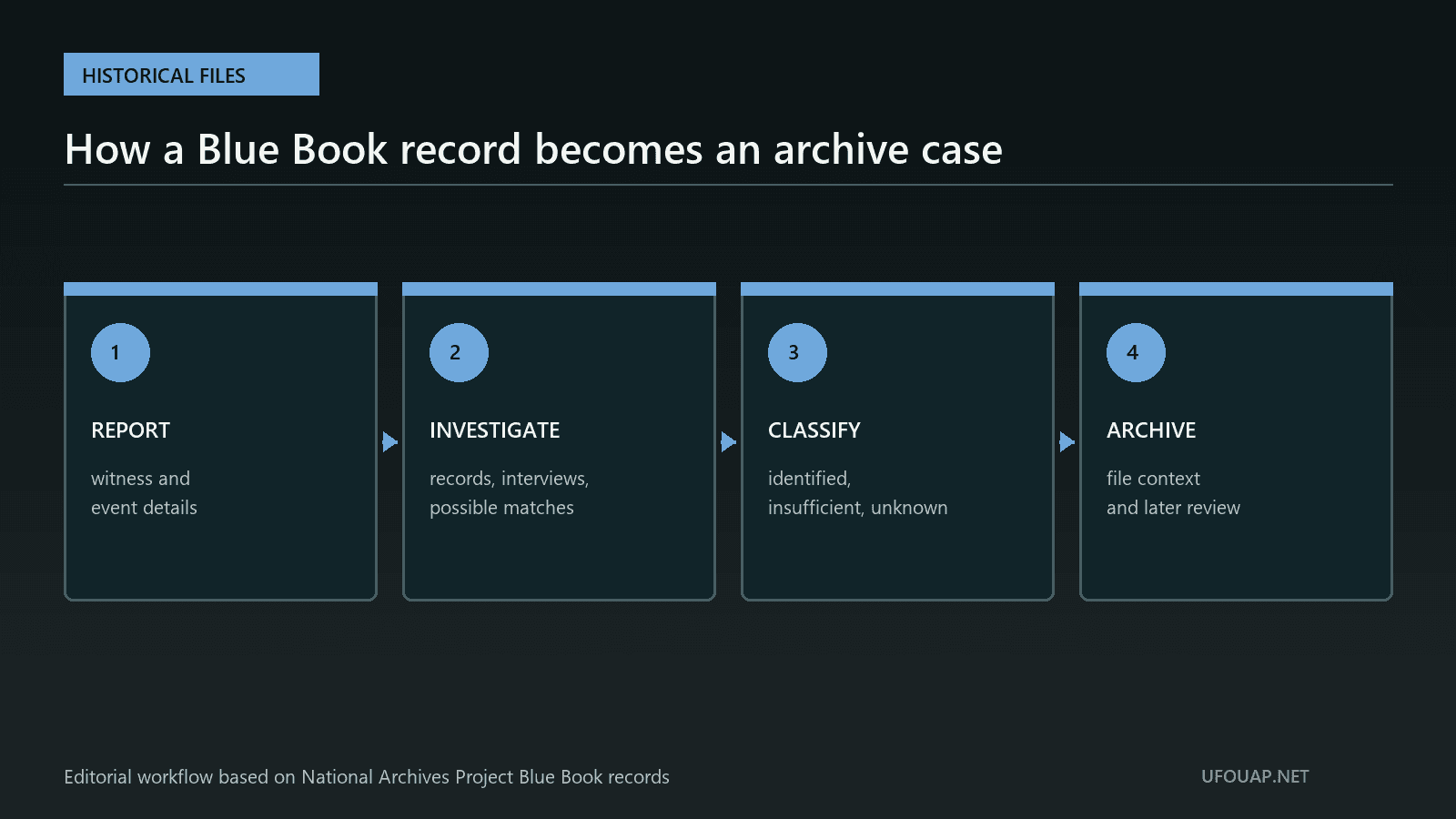
How to read Blue Book
Blue Book files are useful because they preserve dates, locations, witness types, official classifications, and explanation attempts. They should not be treated as perfect science or as a cover-up map. The better reading is comparative: which cases had strong data, which were weak, and why did some explanations satisfy officials but not the public?
FAQ
Did Project Blue Book solve all UFO cases?
No. Many were explained, but some remained unidentified or controversial because public evidence was incomplete.
Sources
- National ArchivesProject BLUE BOOKwww.archives.gov
- FBI VaultProject Blue Book (UFO)vault.fbi.gov