
Evidence / Updated 2026-10-25 / 4 min read
Pentagon UFO Videos: Official Sources and Evidence Limits
Open the Navy’s FLIR and GIMBAL recordings, separate filming from release and upload dates, and check what the images can actually establish.
Reviewed and maintained byGlobal UFO Archive Editorial DeskEditorial policy
Quick answer
The Pentagon authorized three historical Navy videos for public release on 27 April 2020. That statement confirmed their Navy provenance and described the recorded phenomena as unidentified at that time. Official provenance does not establish an extraordinary craft or verify a speed inferred from a reposted clip. Start with the official video page and its accompanying written assessment.
Key points
- A recording’s provenance, its interpretation and the identity of its subject are separate questions.
- DVIDS upload dates do not replace the historical filming periods.
- Use the full official clip and the written assessment before evaluating a dramatic crop or caption.
What the April 2020 statement confirmed
The Department of Defense dated one video to November 2004 and two to January 2015. It noted earlier unauthorized circulation in 2007 and 2017 and said the authorized release would not reveal sensitive capabilities or obstruct subsequent investigations. These are statements about the records and their publication, not new measurements of the objects.
The word unidentified must stay attached to that statement’s date and scope. It is neither a permanent guarantee that a recording cannot be explained nor a finding of extraterrestrial origin. Later assessments should be attributed separately, with their reasoning and the exact recording they address.
FLIR: find the recording before the retelling
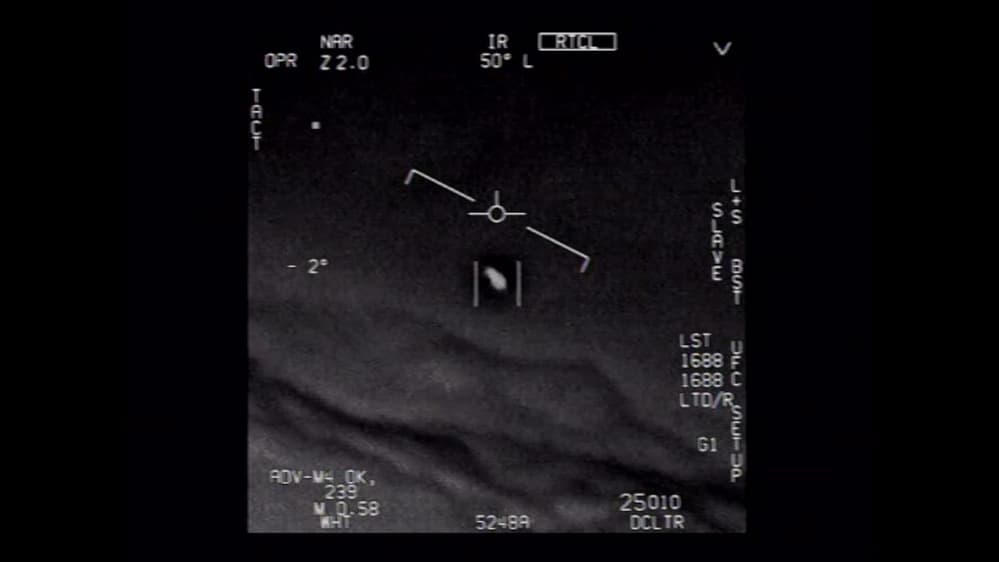
DVIDS video 955825 identifies Naval Air Systems Command as the provider, lists a duration of 1 minute 16 seconds and gives a posted date of 19 March 2025. Its historical filming period is November 2004 in the 2020 release statement. The catalogue’s Date Taken field displays 1 November; that field alone is not a verified day for every event associated with the Nimitz story.
Open the official player and retain its video ID, duration and source URL when comparing copies. A witness’s close visual encounter and a later sensor recording are separate evidence items. Neither a clip title nor official hosting supplies all the radar, range or mission records needed to reconstruct the wider encounter.
GIMBAL: the upload is not a new encounter
DVIDS video 956955 lists a 34-second GIMBAL recording from Naval Air Systems Command, posted on 31 March 2025. The 2020 statement places the relevant historical footage in January 2015. Preserve the month-level dating rather than promoting the catalogue’s 1 January entry into an independently confirmed encounter day.
The target’s bright outline and apparent rotation are features to analyse, not a resolved silhouette of a vehicle. A responsible comparison asks what changes with camera orientation, viewing geometry and sensor response. The public image alone does not independently measure the target’s dimensions, distance, physical rotation or propulsion.
Read the assessment alongside the imagery
AARO’s imagery directory distinguishes resolved reports, unresolved reports and reports undergoing analysis. Read the accompanying explanation: an assessment that a physical object was present is different from identifying that object, while insufficient imagery can prevent even that first determination. Keep the case identifier with any quoted conclusion.
NASA’s FAQ explains that limited high-quality data restrict scientific conclusions, and that its 2023 study concerned methods for future investigation rather than a review of earlier incidents. NASA’s participation is therefore not an independent authentication or identification of each Navy clip. Repeated official links can preserve one source chain without becoming several independent measurements.
A practical check before sharing a clip
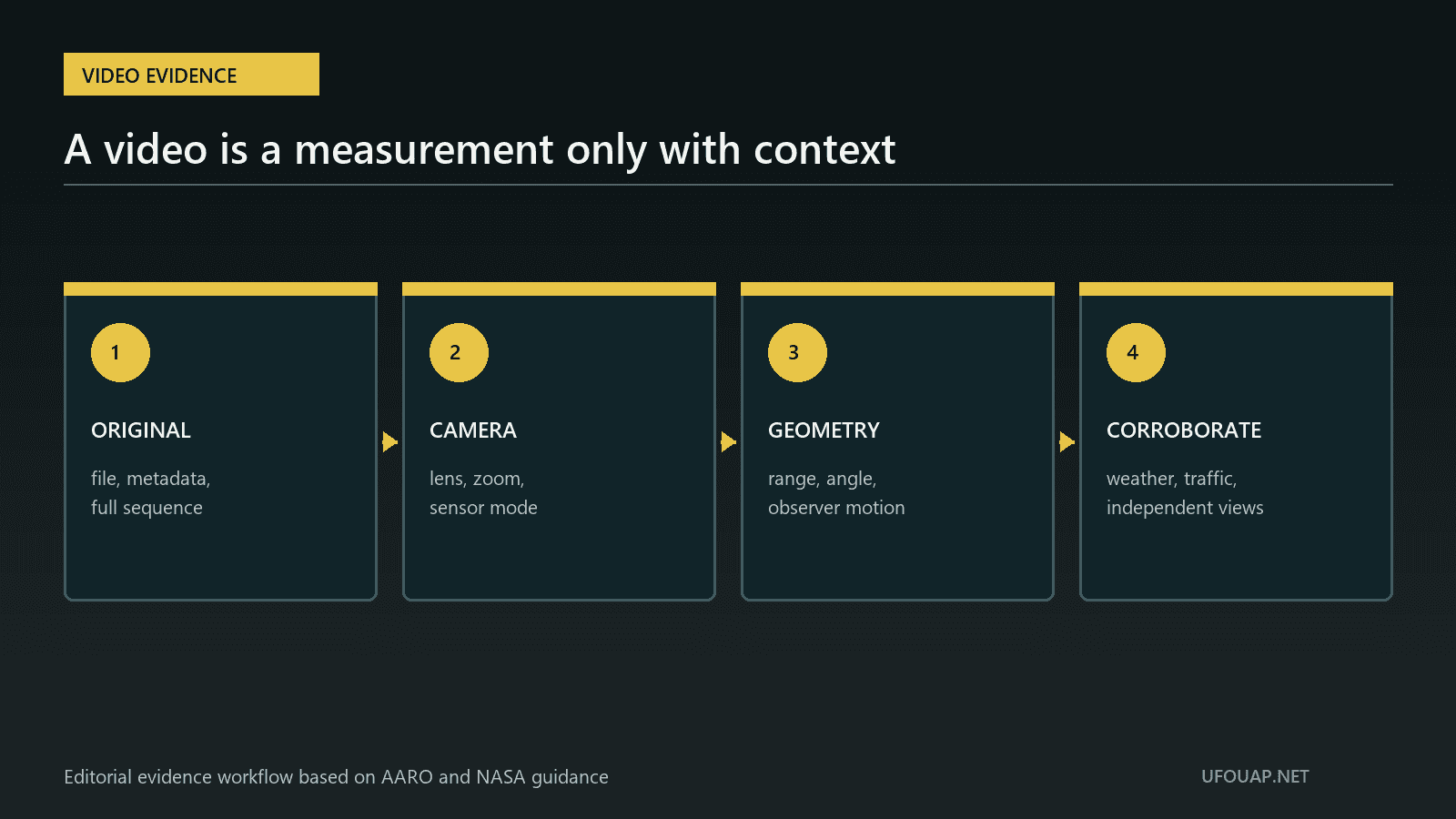
First match the repost to the official file by duration and frame sequence. Note crops, changed playback speed, missing display edges and added narration. Then ask which quantities are actually known: camera field of view, platform movement, target range and timestamps. Screen displacement is not automatically physical speed; missing scale must stay missing rather than being guessed from a familiar aircraft size.
For reuse, check the individual DVIDS page’s public-domain notice together with its linked restrictions. Government hosting is not a blanket licence for every third-party element, logo or implied endorsement. Linking the official player preserves access without replacing its provenance with an unattributed copy; attribution should identify both the provider and the specific video.
FAQ
Did the Pentagon confirm that these videos show aliens?
No. The 2020 statement confirmed Navy provenance and authorized release. It did not identify an extraterrestrial subject.
Are FLIR and GIMBAL new videos from 2025?
No. Their DVIDS posting dates are in March 2025. The historical filming periods in the release statement are November 2004 and January 2015.
Can a short infrared clip establish speed and size?
Not without adequate range, scale, geometry and timing. Apparent motion combines the scene, camera and observing platform; the missing quantities must be identified.
Where should I watch the official copies?
Use the linked DVIDS pages for FLIR, video 955825, and GIMBAL, video 956955. AARO’s imagery directory provides additional official recordings and written assessments.
Sources
- Department of Defense (historical statement)Navy video release statement, 27 April 2020www.war.gov
- Naval Air Systems Command / DVIDSFLIR — official video 955825 and upload metadatawww.dvidshub.net
- Naval Air Systems Command / DVIDSGIMBAL — official video 956955 and upload metadatawww.dvidshub.net
- AAROUAP imagery: recordings and written case assessmentswww.aaro.mil
- NASA ScienceUAP FAQs, questions 4, 5 and 7: data limits and study scopescience.nasa.gov
- DVIDSVisual information copyright and use restrictionswww.dvidshub.net
- NASAUAP Independent Study Team Report, 2023: sensor calibration and metadata (pp. 14–17)science.nasa.gov