
United States / 1961 / DISPUTED
Betty and Barney Hill UFO Incident
Betty and Barney Hill reported an unusual light while driving through New Hampshire on 19–20 September 1961. A near-contemporary interview records a close encounter claim; the detailed abduction narrative developed later, including during hypnosis in 1964. Their papers survive at the University of New Hampshire, but neither the collection nor nearby radar reports proves an extraterrestrial abduction. The central question is how early observations, later recollections and independent evidence differ.
This case is disputed. The archive preserves the claims while separating evidence from interpretation.
- Documentation
- High documentation
- Primary location
- New Hampshire
- Source base
- 7 linked records
- Research use
- Comparison case
What the dated records establish
- Date and setting
- Night of 19–20 September 1961, Route 3 in New Hampshire. The map locates the reported Lincoln/Franconia Notch area, not a verified landing site.[1]
- Early versus later testimony
- The October 1961 report predates the 1964 hypnosis. These are separate documentary layers.[1][2]
- Radar limitation
- The Pease memo did not establish a link between its radar return and the visual report.[2]
- Archival custody
- UNH preserves the personal papers, not independent proof of abduction.[3]
Case dossier
The journey and first account: The Hills were returning to Portsmouth from a Canadian holiday along U.S. Route 3. Walter Webb's report, dated 26 October 1961, places the start of their observation around midnight near Groveton, while explicitly saying the exact time was uncertain. It describes repeated stops and binocular observations as they travelled south through the White Mountains. This is an investigator's record of the couple's statements, not a recording made during the drive.
What the witnesses described: Near Franconia Notch, Barney said he left the car and saw figures behind an illuminated row of windows. Betty was watching her husband at a crucial moment and did not independently describe every detail he reported. Webb recorded estimated distances and heights as uncertain. Treating those estimates as measured dimensions, or the two accounts as two independent instrument detections, would overstate the evidence.
The 1961 interview matters: Webb interviewed the couple on 21 October and supported their sincerity, while acknowledging observational uncertainties. His six-page report already mentions Barney's fear of capture and difficulty recalling part of the encounter. It does not contain the later detailed account of examinations aboard a spacecraft. This prevents two opposite errors: saying every extraordinary detail began under hypnosis, or saying the complete later story was documented immediately in 1961.
Hypnosis and later recollection: The Hills underwent sessions with psychiatrist Benjamin Simon in 1964. Accounts of being taken aboard, examinations and a star map belong to this later evidentiary layer. Simon distinguished what patients sincerely believed from independently established events; the Air University study reproduces his caution. A hypnosis recording proves that a person gave a particular account, not that the recalled scene happened. It cannot supply the missing external chronology by itself.
The radar question: A 1974 Air Command and Staff College study transcribes Blue Book material about separate North Concord and Pease radar observations. The Pease entry was timed at 02:14 local on 20 September. Its accompanying memo explicitly says a relationship to the Hills' observation could not be determined. Different locations, times and incomplete descriptions prevent treating those returns as a tracked route of the alleged captors. The study's argument for reopening Blue Book is its author's analysis, not an Air Force confirmation of abduction.
What survives in the archive: UNH's Milne Special Collections holds correspondence, journals, manuscripts, photographs, material concerning Betty's star map and the dress associated with the claim. University custody makes this history researchable; it is not a university endorsement. A drawing recalled after an event is not a sky survey, and the survival of a garment does not, without a verified causal chain, identify what caused its condition.
Pease Air Force Base received the report on 21 September 1961, and material entered Project Blue Book. The record reproduced in the 1974 study includes changing proposed explanations and a final insufficient-data classification. Jupiter and atmospheric effects were considered; that history is neither a proven planetary identification nor official recognition of a spacecraft.
Possible explanations address different parts of the case. Misidentification can be tested against the early light report; fatigue, dreams and suggestion have been proposed for later recollections. None licenses a retrospective diagnosis of the Hills. Showing that hypnosis can mislead does not identify the original light; rejecting an incomplete planetary explanation does not demonstrate abduction.
The defensible conclusion is a historically important, disputed encounter account with a recoverable documentary history and no independently demonstrated extraterrestrial origin. Compare dated versions: what was said before hypnosis, what was added later, and which claims have external support. This preserves testimony without turning the absence of a complete explanation into positive proof.
Publicity and archival value: Boston newspaper coverage in 1965 and John Fuller's 1966 book, The Interrupted Journey, brought a wider audience. NHPR documented the state historical marker installed in 2011. That marker commemorates an influential local story, not a scientific finding. The case belongs in the archive because dated records let readers compare an early report with a later, culturally important abduction narrative rather than treating every retelling as one unchanging account.
PBS: a later visit to the White Mountains
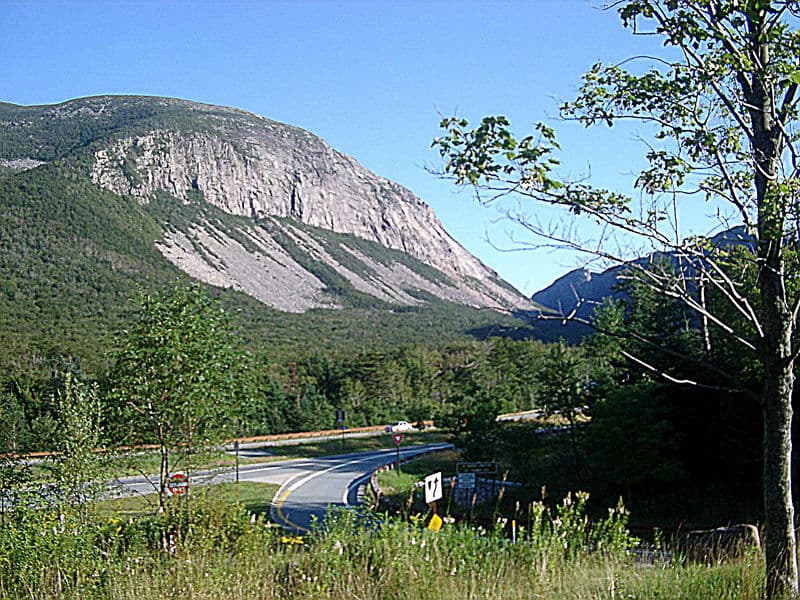
The photo shows the region, not an observed object or a verified encounter location. PBS's Mountain Mysteries is later reporting and local history, not original sighting footage.
Compare witness records, not just similar stories
Timeline
- The Hills report a light and close encounter on their journey home.
- The sighting is reported to Pease Air Force Base.
- Walter Webb interviews the couple; his report is dated 26 October.
- Sessions with Benjamin Simon produce the detailed later abduction account.
- Boston newspaper coverage and The Interrupted Journey reach a wider audience.
- New Hampshire installs a historical marker, later documented by NHPR.
Questions about the Hill case
Was the Hill abduction proved?
These records establish a reported experience and investigation, not independently verified extraterrestrial abduction or onboard examinations.
Did the whole story begin under hypnosis?
No. The 1961 report already mentions lights, figures and fear of capture. The detailed abduction account belongs to later versions, including hypnosis in 1964.
Did radar confirm the encounter?
Separate radar reports exist, but the Pease memo says their relationship to the visual observation could not be determined. They are not a continuous encounter track.
Are there original photographs or video?
No authenticated encounter image was found in the reviewed sources. This photograph is later landscape context; the PBS programme is a 2013 retrospective, not 1961 footage.
Sources
- [1] ArchiveWalter Webb's White Mountains report (26 October 1961)NICAP / Walter Webb
- [2] ArchiveAir University study 0450-74: Hill and radar records, pp. 52–71Air Command and Staff College / NICAP transcription
- [3] ArchiveUsing the Betty and Barney Hill CollectionUniversity of New Hampshire Library
- [4] News reportNHPR: commemorating the Hill incident in LincolnNew Hampshire Public Radio / Michael Brindley
- [5] News reportHISTORY: the Hill story and the abduction narrativeHISTORY / Linda Lacina
- [6] ResearchNOVA: Kidnapped by UFOs? (1997 transcript)PBS / NOVA
- [7] News reportMountain Mysteries (2013 retrospective, not event footage)NHPBS / PBS
The photo shows the region, not an observed object or a verified encounter location. PBS's Mountain Mysteries is later reporting and local history, not original sighting footage.