
United States / 1973 / DISPUTED
1973 Pascagoula UFO encounter
The Pascagoula encounter is a documented same-night report of an extraordinary personal experience, not a documented extraterrestrial abduction. Charles Hickson, 42, and Calvin Parker, 19, told Jackson County officers that robotic beings took them from a fishing spot beside the Pascagoula River on 11 October 1973. Officers secretly recorded the men after leaving them alone; the conversation supports that they remained distressed and continued discussing the claim without an audience. It does not verify the beings, craft or cause. No authenticated event photograph, film, radar track, physical trace or government conclusion establishes what happened.
This case is disputed. The archive preserves the claims while separating evidence from interpretation.
- Documentation
- High documentation
- Primary location
- Pascagoula, Mississippi
- Source base
- 8 linked records
- Research use
- Comparison case
What the surviving record supports
- Confirmed record
- Hickson and Parker reported an extraordinary encounter to Jackson County officers on the night of 11 October 1973.[1][2][3][4]
- Strongest evidence
- A private-room police recording preserves their distressed conversation, supporting a prompt and apparently sincere report rather than the claimed cause.[1][2][4]
- Late corroboration
- Maria Blair's 2019 recollection concerns lights and a splash from another location and does not independently confirm an abduction.[7]
Case dossier
The reported encounter. Hickson and Parker said they were fishing from an abandoned shipyard area on the west bank of the Pascagoula River when they noticed a blue light and an oval object nearby. Their account described three floating, roughly humanoid beings with claw-like hands and rigid features. Hickson said the beings moved both men into the object and examined him; Parker's early account said he fainted or lost awareness for much of the alleged episode. These details are witness claims recorded after the event, not independently observed facts.
The same-night reporting chain. The men first tried to contact Keesler Air Force Base and were directed to local law enforcement. They then went to the Jackson County sheriff's office, where Captain Glenn Ryder and other officers interviewed them. The surviving institutional and press record supports that the report was made within hours, before the story became nationally known. Prompt reporting reduces the time available to construct a public narrative, but it cannot by itself establish that the reported perception was accurate.
The hidden-recorder evidence. Officers suspected a possible fabrication and left Hickson and Parker alone in an interview room while a recorder continued running. In the private conversation, both men remained agitated and referred to the experience as real. The audio is the case's strongest contemporaneous evidence because it preserves their behavior before a large public audience formed. Its limit is equally important: sincerity and distress can coexist with misperception, suggestion, a psychological episode or an unproven coordinated story. Audio cannot identify an external object.
Medical, press and civilian follow-up. Contemporary wire coverage reported that the men were taken for medical observation and were then questioned by civilian UFO investigators. Publicity expanded within a day, and Hickson soon appeared in national media. The University of Southern Mississippi now preserves oral-history and cultural artifacts associated with the story. These records document how quickly the case entered public history; they do not constitute a government investigation that authenticated an abduction.
The polygraph claim. Hickson later took a polygraph examination that was reported as favorable. The result became a recurring argument for the story, but the examiner's qualifications and the limited protocol were challenged, and polygraph testing does not determine whether a remembered event had an external extraordinary cause. At most, the reported result bears on whether Hickson appeared deceptive under that particular test; it is not evidence of a spacecraft or nonhuman beings.
How the story changed. Parker's earliest recorded position placed him unconscious through much of the alleged examination; his later books and interviews supplied a more detailed personal narrative. Hickson also continued retelling the case. In 2019, Maria Blair publicly recalled seeing unusual lights and a splash from a different location on the river. Her account is relevant as a late recollection but was recorded about 45 years afterward and does not independently establish the claimed abduction. A historical marker and anniversary coverage commemorate the story; civic recognition is not official validation.
Why the case remains in the archive. Pascagoula belongs in a UAP archive because it combines a prompt police report, unusually specific testimony, a contemporaneous private recording and a well-documented media afterlife. Those features make it useful for studying witness behavior, memory, police documentation and the evolution of an abduction narrative. They do not elevate the claim beyond the evidence. The public record supports a disputed personal experience with sincere-seeming witnesses; it does not identify an extraterrestrial or supernatural cause.
Retrospective television report
WLOX-TV's 2013 report includes later Hickson interview material and excerpts from the police recording. It is retrospective journalism, not film made during the alleged 11 October 1973 encounter.
Related video
Timeline
- Hickson and Parker said the encounter occurred beside the Pascagoula River and reported it to the Jackson County sheriff's office that night.
- Officers interviewed the men and secretly recorded their conversation after leaving them alone in the room.
- Wire reports carried the story beyond Mississippi; medical observation and civilian-investigator interviews were reported during the immediate follow-up.
- A sermon and other early cultural records now preserved by the University of Southern Mississippi show how quickly the event entered local public memory.
- Hickson completed a reportedly favorable polygraph, later challenged over examiner qualifications and test limits.
- Hickson published a book-length account, extending the case from a police report into a lasting abduction narrative.
- Joe Nickell published a skeptical reassessment emphasizing story development and a possible psychological or hypnagogic explanation.
- WLOX published a retrospective television report with Hickson interview material and excerpts from the police recording; it is not event footage.
- Maria Blair publicly described a late recollection of lights and a splash seen from another river location; a historical marker was also dedicated to the case.
- The long-discussed private police recording became broadly accessible through library and news archives, allowing direct assessment of the audio's strengths and limits.
Pascagoula encounter questions
What happened in the 1973 Pascagoula UFO encounter?
Charles Hickson and Calvin Parker said robotic beings took them from a fishing area beside the Pascagoula River on 11 October 1973. Their same-night report is documented, but the alleged beings and craft are not independently verified.
Is the Pascagoula police recording authentic?
A recording made while the men were left alone is preserved through library and news archives. It documents their private conversation and distress, not the existence or identity of an external object.
Was there an official investigation?
Jackson County officers interviewed the men and recorded them. No published federal case file or final technical government report has been located that confirms an abduction or identifies a craft.
Are there real photographs or videos of the encounter?
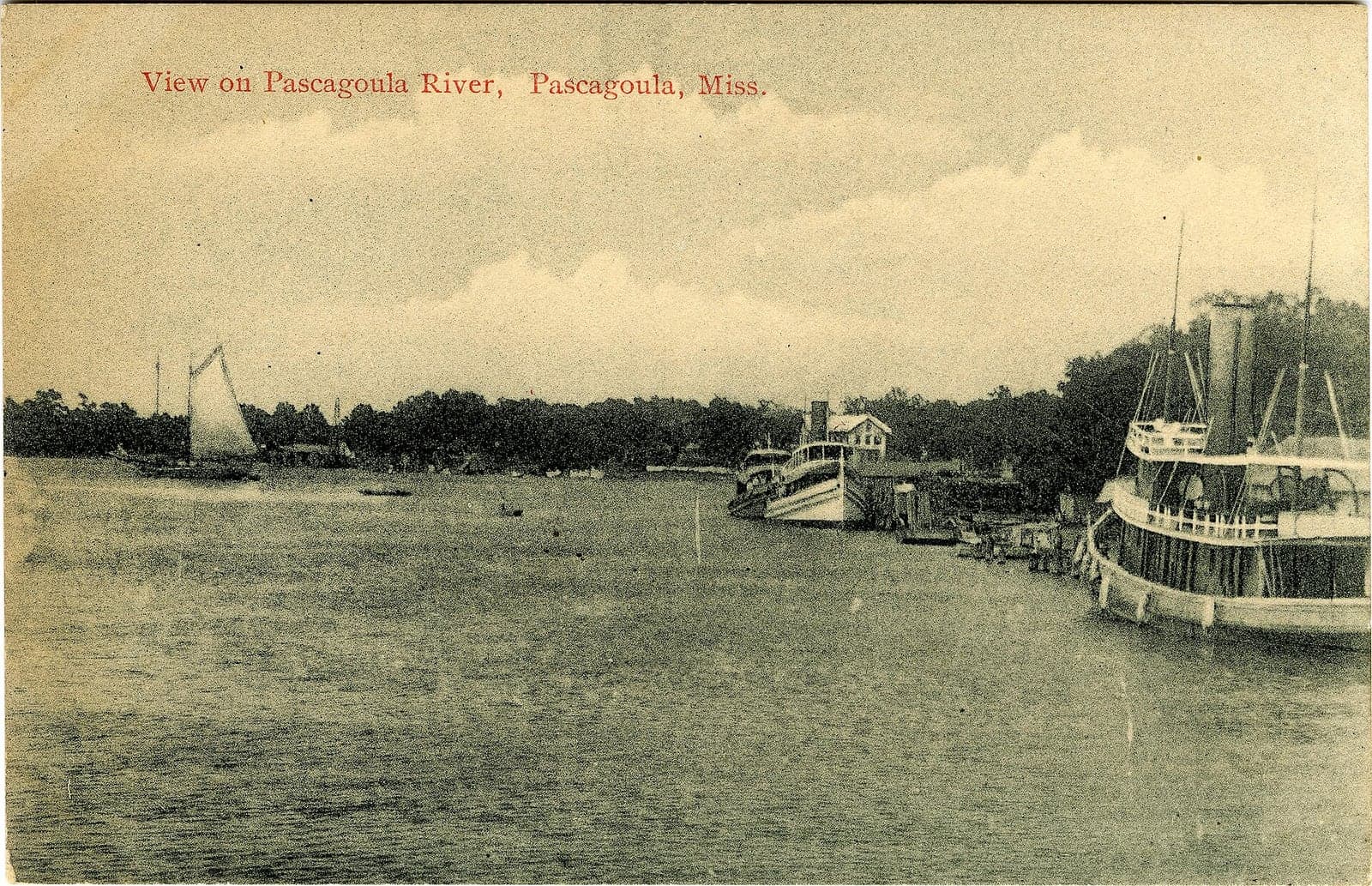
No authenticated photograph or motion picture from the alleged encounter is publicly available. The image on this page is historical river context, and the WLOX video is retrospective reporting.
Did Calvin Parker tell the same story throughout his life?
His early account placed him unconscious for much of the alleged examination. Later books and interviews added more personal detail, so early and late versions must remain distinct.
Was the Pascagoula encounter a hoax?
A deliberate hoax has been proposed but not proved. The hidden recording complicates a simple performance theory, while psychological explanations also remain hypotheses rather than demonstrated findings.
Why is the Pascagoula case still important?
It preserves an unusually prompt police report, named witnesses and private audio, making it useful for studying testimony and memory even though the extraordinary interpretation remains unverified.
Sources
- [1] ArchiveUniversity of Southern Mississippi archives the Pascagoula encounterUniversity of Southern Mississippi Special Collections
- [2] ArchiveHinds library access to the 1973 police-room recordingHinds Community College Library
- [3] News reportUPI wire report on the Pascagoula claim, 12 October 1973United Press International transcript archive
- [4] ArchiveTranscript archive of the Hickson-Parker police interview and private conversationNICAP transcript archive
- [5] ResearchCUFOS November 1973 bulletin: early Pascagoula investigationCenter for UFO Studies
- [6] ResearchSkeptical Inquirer reexamines the Pascagoula abduction claimSkeptical Inquirer
- [7] News reportWLOX reports a late Pascagoula witness recollectionWLOX
- [8] News reportWLOX Memories: Pascagoula UFO IncidentWLOX-TV
The photograph is a historical view of the Pascagoula River from a Mississippi archive. It provides geographic context only and does not show the 1973 fishing site, the claimants, an object or evidence from the alleged encounter.