
China / 2010 / DISPUTED
2010 Xiaoshan Airport UFO Incident
On 7 July 2010, Hangzhou Xiaoshan International Airport suspended departures and diverted arrivals after an unidentified airborne target was reported near the airport. Contemporary accounts place the restriction between 8:45 p.m. and 9:41 p.m.: 12 inbound flights were diverted and six outbound flights were delayed, with a newspaper estimate of more than 2,000 passengers affected. The initiating target remains unidentified in the public record. Widely circulated photographs were not released by the airport and were later assessed as aircraft or as unrelated to the operational event. No evidence of an extraterrestrial origin has been published, and no complete final government investigation report has been found in the public record.
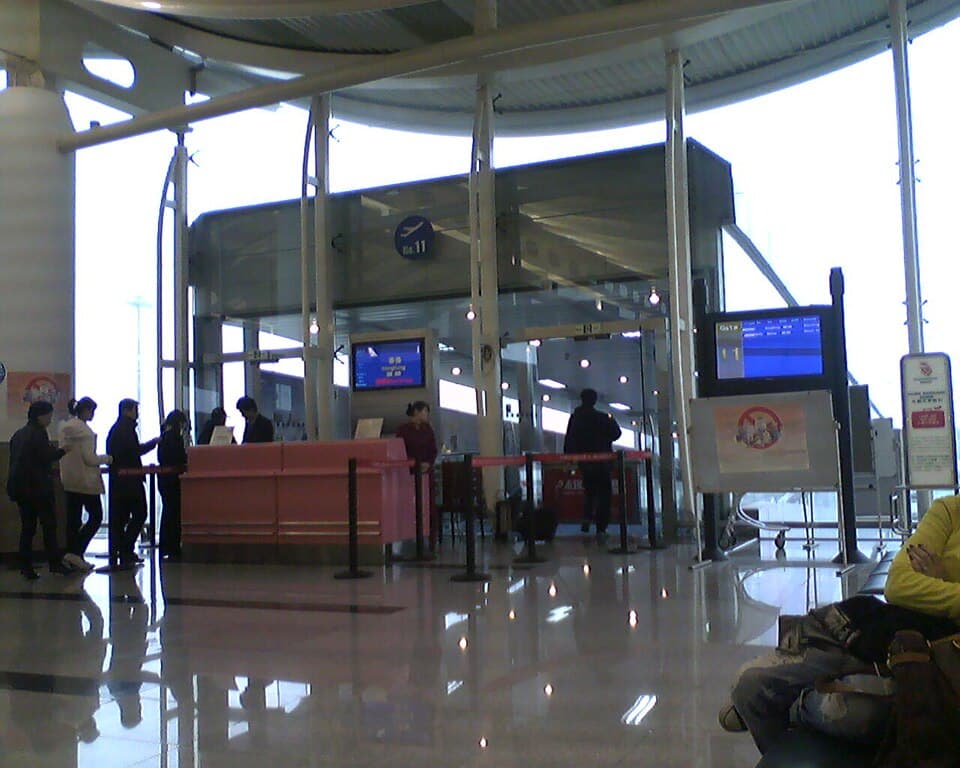
This case is disputed. The archive preserves the claims while separating evidence from interpretation.
- Documentation
- High documentation
- Primary location
- Hangzhou, Zhejiang
- Source base
- 9 linked records
- Research use
- Comparison case
Case conclusion at a glance
- Confirmed
- The airport restricted movements from 8:45 p.m. to 9:41 p.m.; 12 arrivals were diverted and six departures delayed.[1][8][9]
- Still unknown
- No public primary record identifies the target. Original crew statements, controller audio, raw radar logs and a final government findings report remain unavailable.[2][4][8]
Case dossier
What happened on 7 July 2010: Xinhua reported that the Hangzhou municipal government said an unidentified flying object had disrupted air traffic late that Wednesday. ABC News placed a descending crew's report at about 8:40 p.m. South China Morning Post, quoting an airport spokesperson, recorded an initial advisory at 8:45 p.m. and an all-clear at 9:41 p.m. The sources therefore support a 56-minute operational restriction, not a prolonged airport shutdown: controllers held departures, diverted arrivals to Ningbo and Wuxi, and then resumed normal movements.
Who reported the object: The accessible record is not perfectly uniform. China Daily quoted an airport staff member saying a twinkling object was first noticed at about 8:30 p.m.; ABC News attributed the triggering report to a crew preparing to descend at about 8:40 p.m.; and a later independent Beijing-Shanghai UFO team said it was told that two flight crews had seen the object. None of the reports publishes crew names, flight numbers, original radio calls or signed statements. This witness layer is more substantial than a social-media rumor, but it remains a secondary account rather than a public primary aviation record.
How the airport responded: Contemporary reporting gives a consistent numerical breakdown. South China Morning Post and China Daily recorded 12 inbound flights diverted to nearby airports and six outbound flights delayed, for 18 affected flights in total. China Daily said the outbound delays lasted three to four hours and attributed the estimate of more than 2,000 affected passengers to the Shanghai-based Evening News. The 18-flight split is the clearest operational count; the passenger total should be read as a press estimate rather than an official manifest-based figure.
Photographs and video provenance: The dramatic images commonly attached to the Xiaoshan story are not a verified visual record of the target that prompted the airport action. ABC News described an afternoon photograph of a bright object with a tail and a separate 8:26 p.m. photograph taken by Hangzhou resident Ma Shijun. The article warned that these pictures might be unrelated. Meteorological authorities reportedly regarded the afternoon object as sunlight reflecting from an aircraft, while Beijing Planetarium curator Zhu Jing said Ma's night image resembled aircraft strobe lights. The later joint review likewise said no official Xiaoshan event photograph or video had been released and that the most widely shared images showed aircraft or lacked a demonstrated connection to the airport event.
What the radar and aviation record shows: China Daily reported on 10 July that the twinkling object did not appear on airport radar. Xinhua quoted Wang Jian, head of air traffic control with the Zhejiang branch of the Civil Aviation Administration of China, saying that no conclusion had been reached and that a private-aircraft theory was only a guess. The 26 July independent review repeated the reported absence of radar detection, while noting that radar can have blind areas and that private or military aircraft could not be excluded. No raw radar plots, controller recordings or completed aviation report have been released for public review.
Official statements and the later joint review: The first Xinhua and South China Morning Post reports attributed the restriction and investigation to municipal, airport and aviation officials; SCMP said the Civil Aviation Administration of China and the provincial government were investigating. A separate China Daily article carried an anonymous claim of a military connection and predicted a forthcoming explanation, but no named official or public finding in the reviewed record substantiated that assertion. The detailed 26 July conclusion instead came from members of the Beijing UFO Research Association and Shanghai UFO Exploration Research Center after interviews on 14 and 15 July. That independent team found no extraterrestrial evidence, rejected viral images as reliable depictions of the airport target and left ordinary aircraft activity possible.
What is confirmed and what remains unconfirmed: Confirmed elements include the date, the roughly one-hour disruption, diversions to Ningbo and Wuxi, and the existence of an investigation discussed by officials and journalists. The identity, distance, altitude, course and appearance of the initiating target are not established by publicly available primary records. Claims that radar tracked an extraordinary craft, that the airport released authentic UFO imagery, or that authorities confirmed a military or extraterrestrial vehicle are not supported by the sources reviewed here. The absence of a public final report leaves the initiating observation unresolved, not proven extraordinary.
Why this case belongs in the archive: The Xiaoshan incident is valuable because an aviation response can be documented while the visual evidence most people associate with the story is poorly matched to the event. It shows why operational facts, witness reports, radar claims and viral media must be separated. The case is also an important Chinese example of how a short safety response can become a durable UFO narrative when official detail is limited. Preserving the event with explicit evidence boundaries is more useful than presenting a dramatic photograph whose provenance does not support the claim.
Archived news video
CCTV preserves a news report about the flight diversions and unresolved investigation. It is secondary coverage, not original footage of the target that triggered the restriction.
Timeline
- China Daily later quotes airport staff saying a twinkling object was noticed over Hangzhou. The original observer record is not public.
- ABC News reports that a crew preparing to descend alerts air traffic control to an unidentified object.
- An airport advisory halts takeoffs and landings. Twelve inbound flights are diverted to Ningbo and Wuxi, while six outbound flights are delayed.
- The all-clear is issued after 56 minutes and normal movements resume. Outbound delays continue for three to four hours; a newspaper estimates more than 2,000 passengers were affected.
- Xinhua publishes the first accessible confirmation attributed to the municipal government and an airport spokesperson.
- Xinhua reports that police and aviation officials are investigating; Wang Jian says no conclusion has been reached and calls a private-plane theory a guess.
- ABC News reports the flight-crew account, the 18 affected flights and the uncertainty surrounding photographs taken elsewhere in Hangzhou.
- An independent joint team from UFO research groups in Beijing and Shanghai visits aviation organizations and interviews relevant personnel.
- The joint team publishes a preliminary assessment: no extraterrestrial evidence, no radar detection according to its interviews, and no demonstrated link between viral images and the airport event.
Frequently asked questions
Did a UFO really close Xiaoshan Airport?
An unidentified-object report prompted the airport to restrict operations for about one hour. In this context, UFO means the target had not been identified at the time; it does not establish an extraterrestrial craft.
How long was the airport affected?
The airport advisory ran from 8:45 p.m. to 9:41 p.m., a 56-minute restriction. Twelve arrivals were diverted and six departures delayed; more than 2,000 affected passengers was a newspaper estimate.
Was the object detected on radar?
China Daily reported that the object did not appear on airport radar, and a later independent team said aviation contacts gave the same account. No raw radar plots have been published, and the team also noted possible blind areas.
Are the viral Xiaoshan UFO photos authentic?
The photos are real photographs, but their connection to the airport incident is not established. Contemporary assessments described the most widely circulated examples as aircraft reflections or aircraft strobe lights.
What was the official explanation?
No publicly accessible final government identification was found. An anonymous military-connection claim was not corroborated by a named authority; a later independent team found no extraterrestrial evidence and considered ordinary aircraft activity possible.
Is there an original video of the airport target?
No complete, verifiable original video of the target that caused the operational response has been located. CCTV preserves later news coverage, not authenticated footage of the initiating object.
Was the object extraterrestrial?
The reviewed sources provide no evidence of extraterrestrial origin. The initiating target remains unidentified in the limited public record, while the famous associated images have conventional explanations or uncertain relevance.
Sources
- [1] News reportUFO disrupts air traffic in E. ChinaXinhua via China.org.cn
- [2] News reportExperts cool on private plane theory in China UFO probeXinhua via China.org.cn
- [3] News reportUFO in China's Skies Prompts InvestigationABC News
- [4] News reportJoint investigation team publishes preliminary Xiaoshan assessmentHangzhou Net
- [5] News reportUFO not from space: reportChina Daily via China.org.cn
- [6] News reportHangzhou Xiaoshan flights diverted; unidentified object still unexplainedCCTV-4 / China News
- [7] ResearchHangzhou Light Show: analysis of a widely circulated photographArms Control Wonk
- [8] News reportUFO remains a mysteryChina Daily
- [9] News report'UFOs' cause flight delays at HangzhouSouth China Morning Post
The CCTV link preserves news coverage, not authenticated original footage of the initiating target. Reviewed YouTube uploads labeled as Xiaoshan footage lack verifiable provenance and are not embedded as evidence.