
Evidence / Updated 2026-09-27 / 3 min read
Infrared and FLIR UAP videos: how to read the display
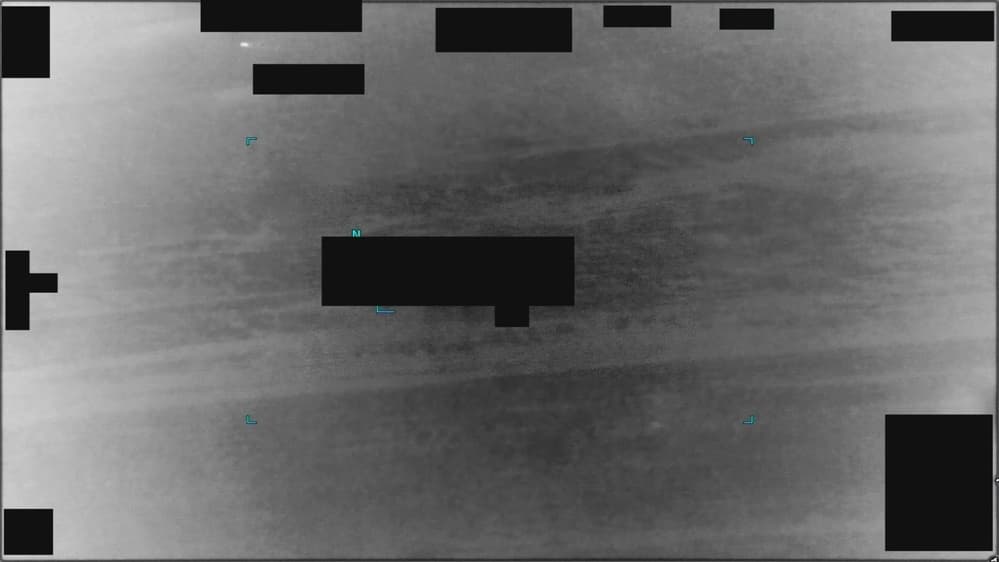
Thermal video maps infrared contrast, not ordinary color or a direct physical outline. Palette, gain, range, atmosphere and tracking mode all affect the image.
Reviewed and maintained byGlobal UFO Archive Editorial DeskEditorial policy
Quick answer
Infrared video displays measured radiance or temperature contrast through a chosen palette; it is not a normal photograph. White-hot and black-hot polarity can reverse the appearance, automatic gain can change apparent size, and glare may spread a strong source beyond its physical outline. Range, sensor mode, weather and metadata are required before inferring shape, temperature or speed. A heat signature supports contrast in the sensor band, not an extraordinary identity by itself.
Key points
- Brightness represents sensor contrast under a selected palette, not visible color.
- Gain, focus, glare and atmospheric attenuation can alter apparent edges and size.
- Platform telemetry and sensor settings are essential to performance claims.
What a thermal image represents
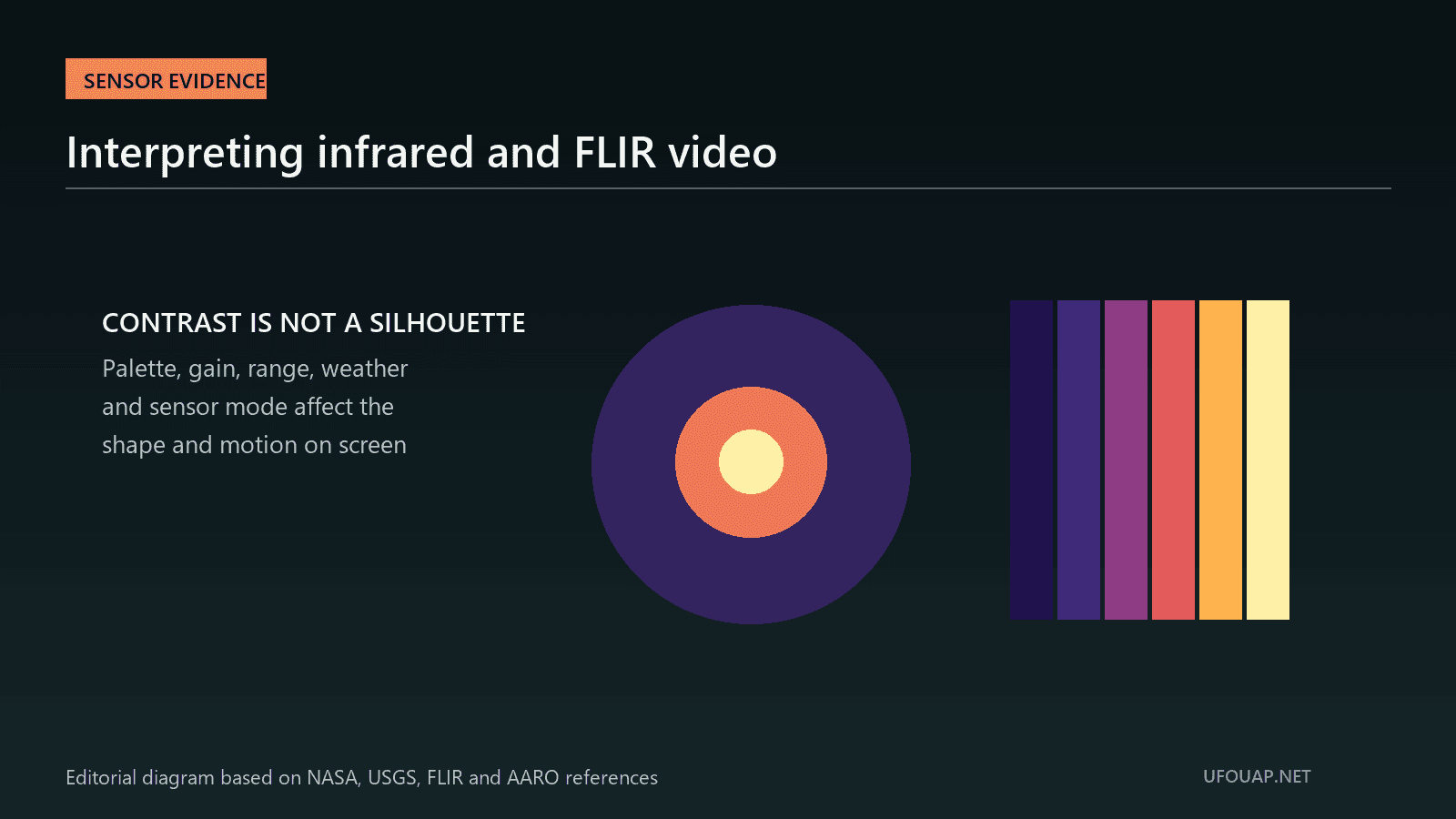
Thermal sensors detect infrared energy within specific wavelength bands and convert differences into display tones. Depending on polarity, warmer or stronger radiance may appear white or black. The resulting blob is a measurement footprint shaped by resolution, optics and processing. It should not automatically be read as the solid silhouette, surface temperature or material of a distant target.
Display settings that change the target
Automatic gain stretches scene contrast as backgrounds enter or leave the frame. Focus, zoom, palette and edge enhancement can make a target expand, shrink or acquire a halo. Tracking gates and stabilization can keep it centered while the background rotates. Without the full display and manual, a cropped clip may hide the mode change responsible for an apparent transformation.
Range, weather and motion
Fog, humidity, rain and atmospheric path length attenuate infrared energy differently by wavelength. A target's distance is also central to size and speed. Analysts need platform position, line of sight, field of view, range source, timestamps and wind. AARO's published imagery illustrates why some infrared objects can be assessed as balloons or birds while others remain unresolved because the available data are insufficient.
Careful assessment
A thermal return can support that the sensor detected contrast, but it does not by itself establish a craft, propulsion system or extraordinary heat. Strong conclusions require calibrated data, original files and cross-sensor agreement. When settings and range are missing, the archive should describe exactly what is visible and what cannot be inferred. Unresolved means the data do not support a firm attribution, not that every ordinary cause has been excluded.
Related checks and records
FAQ
Does a white object in FLIR mean it is extremely hot?
Not necessarily. The palette, gain and scene range determine displayed brightness. A white area indicates stronger contrast under those settings, not a standalone temperature measurement.
Can infrared cameras see through clouds?
Not in a simple universal sense. Performance depends on wavelength, cloud, fog, rain, humidity, distance and sensor sensitivity; attenuation can hide or reshape a target.
Official sources used
- NASA EarthdataThermal Infrared Sensorwww.earthdata.nasa.gov
- U.S. Geological SurveyThermal Imaging Cameras for Studying Groundwaterwww.usgs.gov
- AAROOfficial UAP Imagerywww.aaro.mil
- Teledyne FLIRCan Thermal Imaging See Through Fog and Rain?www.flir.com