
Earth orbit / 1996 / DISPUTED
1996 STS-75 Tether UFO Video
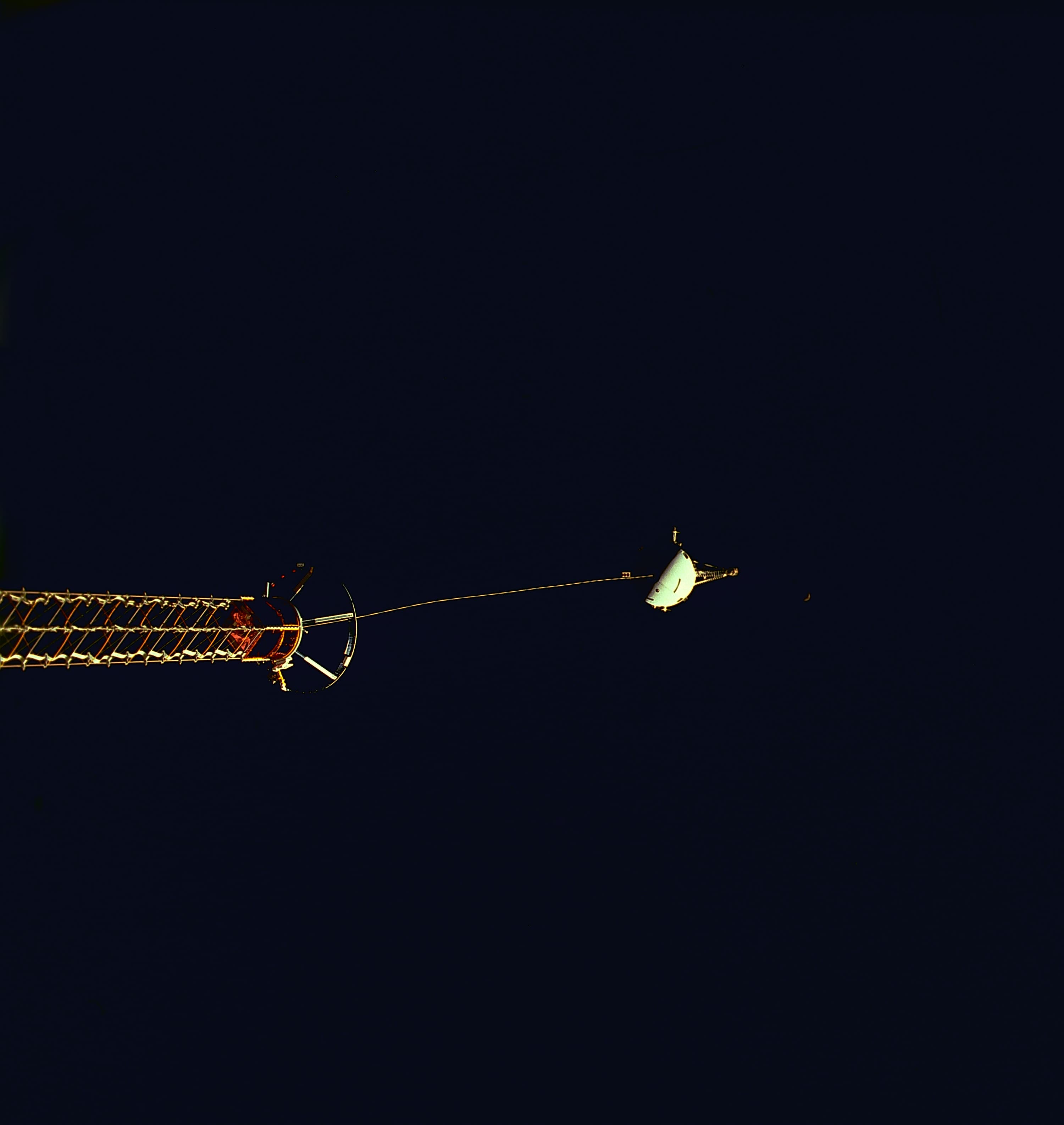
STS-75's tether broke on February 26, 1996 GMT, after almost 20 kilometres had deployed from Columbia. Later video of the free-flying satellite and tether shows bright patches that have been interpreted as giant UFOs. The NASA mission record establishes the hardware failure and later observations, not giant craft. James Oberg proposed defocus and bright-image effects; that interpretation does not independently identify every point. The official Flight Day 9 programme provides a better reference than anonymous edits, while target distance and the exact imaging chain remain essential limits on size claims.
This case is disputed. The archive preserves the claims while separating evidence from interpretation.
- Documentation
- High documentation
- Primary location
- Earth orbit
- Source base
- 7 linked records
- Research use
- Comparison case
Tether records and imaging limits
Case dossier
A documented engineering event: Columbia launched on February 22 and returned March 9, 1996. NASA's NSTS-37406 report records TSS-1R deployment beginning February 25 at 20:45 GMT. The tether broke inside the deployment boom at February 26, 01:29:35 GMT, with 19,695.2 metres deployed. This was still February 25 in US time zones. The satellite separated; possible retrieval was considered but not implemented because of projected propellant limits. Experiments continued during free flight. The failure is documented independently of later UFO interpretations; the known satellite is not itself an unidentified craft.
Later observations and the official video: the report records a close approach on March 1 at 05:10 GMT and crew observation of the satellite with its tether below it. NTRS identifies the Flight Day 9 programme, dated March 1, and links directly to NASA STI Program's upload. Its tether imagery is visible around 4:10; the following exchange discusses the long line and foreground material. Automated subtitles contain transcription errors and are not a precision flight transcript. The edited programme's date does not assign an exposure time to every shot, nor authenticate every commercial or social-media excerpt.
How the giant-disc claim developed: Billy Cox's June 2, 2000 Florida Today report, preserved in a republication, describes a commercial compilation and interviews its advocate Martyn Stubbs. The interpretation depends on patches appearing to pass behind the distant tether, making them look enormous. That apparent overlap is not a distance measurement. Cox also quotes Joseph Nuth finding Oberg's ordinary explanation reasonable, while Jack Kasher's qualified comment followed limited viewing and incomplete camera information. These are reported assessments, not separate optical experiments or a NASA institutional verdict.
The optical explanation: Oberg's argument, republished in 2000, points to a tether image whose length changes with zoom while its apparent width does not. He proposes bright-image spreading and central darkening, with defocused point sources producing disc-like shapes; notch orientation, he argues, follows image position. These are distinct imaging effects, not simply proof that every object is ice. His claimed ranges, water-dump association and unshown refocusing sequence have not been independently reproduced here. The original board posting is not authenticated by its republication, and the argument is not a peer-reviewed, calibrated camera test.
Engineering context is not identification: NASA's report lists poor distant focus in low light for CCTV camera C, but does not tie that camera to the disputed images. The separate Tether Optical Phenomenon instrument had its own synchronization issues; transferring one camera's fault to another would be misleading. Philip Chien's contemporary reporting discusses orbital separation and recovery constraints, not disc identification. Together these sources document an unusual operating environment without supplying the complete detector, lens, focus, gain and processing record required to infer physical dimensions from a luminous patch.
A useful archive comparison: the real satellite, real broken tether and genuine NASA broadcast do not make a giant-craft interpretation real. Foreground particles and camera effects are a plausible explanation, not a measured identity for every patch. Range must be established independently before apparent diameter or overlap becomes a size or depth claim. This case offers accessible primary footage, engineering records and traceable competing interpretations. The deployment photograph precedes the break; the later programme is shown intact through its official player. No precise terrestrial sighting point is invented for the orbital scene.
Related video
Related checks and records
Timeline
- Columbia launches STS-75.
- 20:45 GMT: TSS-1R deployment begins.
- 01:29:35 GMT: tether breaks with 19,695.2 metres deployed; still February 25 in US time zones.
- 05:10 GMT: later close pass recorded; date of the Flight Day 9 compilation, not every shot's exact exposure.
- Cox reports competing interpretations in Florida Today.
STS-75 questions
Did giant UFOs pass behind the tether?
Apparent overlap is not calibrated depth evidence. Without independent range and camera response, the images do not establish giant vehicles.
Is there official footage?
Yes. NASA STI Program's Flight Day 9 video is linked by NTRS and can be watched in full on the original video page. It includes later tether tracking, not the moment of failure.
Did a camera fault prove the ice explanation?
No. Camera C's documented focus issue is not linked to these exact frames. A plausible optical explanation is not identification of every particle.
Sources
- [1] Official fileNASA mission report: tether operations and camera limitsNASA / JSC, 1996
- [2] Official fileNASA official daily programme: later tether tracking, not the break instantNASA STI Program / NTRS 19960025957
- [3] ResearchOberg's optical explanation, republished in 2000James Oberg / Whispers, Rense republication
- [4] News reportCox's June 2000 interviews: competing interpretations, republicationBilly Cox / Florida Today, 2000-06-02; PRG copy
- [5] News reportChien's contemporary reporting on recovery and orbital separationPhilip Chien / Earth News, SeeSat-L, 1996-02-26
- [6] Official fileNASA TSS-1R engineering report: separate optical instrumentNASA / JSC, 1996
- [7] Official fileNASA photograph: deployment before the tether brokeNASA / Johnson Space Center