
Belgium / 1989 / DISPUTED
Belgian UFO Wave (1989-1990)
From 29 November 1989 into 1990, Belgian police officers and other witnesses reported unusual lights and, in some accounts, dark triangular forms. The best documented episodes are the Eupen-area police observations and the 30-31 March 1990 operation in which two F-16s attempted to investigate radar and ground reports. The pilots did not see an unidentified object. A Belgian Defence technical report released in 2025 substantially weakens popular claims of extraordinary radar performance: it identifies several contacts as the other F-16 and explains how track switching and the radar's Kalman filter could create apparent jumps. The famous Petit-Rechain triangle photograph was admitted to be a model hoax in 2011. The record supports a genuine, heterogeneous reporting wave and an official response, but not one verified craft or a non-human origin.
This case is disputed. The archive preserves the claims while separating evidence from interpretation.
- Documentation
- High documentation
- Primary location
- Eupen, Wavre, Wallonia and wider Belgium
- Source base
- 8 linked records
- Research use
- Comparison case
What the record supports
- Confirmed reporting
- Police officers and civilians reported unusual lights from late November 1989, including attributed triangle descriptions around Eupen.[4]
- Military response
- Two Belgian F-16s launched on 31 March 1990 and obtained brief radar contacts, but the pilots saw no unidentified object.[2]
- Radar boundary
- The 2025 Salmon report identifies several contacts as the wingman and shows how filtering and target switching can create apparent extreme motion.[1][2]
Released F-16 radar report
Case dossier
Case scope: From 29 November 1989 into 1990, Belgian police officers and other witnesses reported unusual lights and, in some accounts, dark triangular forms. The best documented episodes are the Eupen-area police observations and the 30-31 March 1990 operation in which two F-16s attempted to investigate radar and ground reports. The pilots did not see an unidentified object. A Belgian Defence technical report released in 2025 substantially weakens popular claims of extraordinary radar performance: it identifies several contacts as the other F-16 and explains how track switching and the radar's Kalman filter could create apparent jumps. The famous Petit-Rechain triangle photograph was admitted to be a model hoax in 2011. The record supports a genuine, heterogeneous reporting wave and an official response, but not one verified craft or a non-human origin.
Chronology: The Belgian UFO wave was not one continuous encounter. It was a series of reports beginning in eastern Belgium on 29 November 1989 and continuing into 1990. Accounts differed in duration, geometry and evidentiary quality. The archive therefore separates the initial police observations, the later F-16 operation, radar interpretation and photographic claims instead of combining them into a single vehicle narrative.
Evidence record: The witness record is strongest as proof that police officers and civilians reported unusual lights over a sustained period. It is weaker as a measurement record because most accounts lack calibrated distance, angular size, bearing and synchronized photography. The detailed Eupen narrative survives online through an early interview-based secondary text rather than the original police file.
The March 1990 operation is documented by a Belgian Air Force report: two F-16s launched, operators recorded intermittent contacts and the pilots attempted intercepts. The same record also says the pilots never saw the reported object. Temporal overlap between ground reports and radar activity establishes an operational incident, not automatic identity between each light and each radar contact.
The 2025 Salmon report is the most important technical correction to the popular radar story. It identifies three contacts as the second F-16 and shows how filtering and target switching can produce apparent extreme motion. It does not prove that every contact was false or explain every ground observation, but it removes the radar data as straightforward proof of one craft performing extraordinary maneuvers.
The Petit-Rechain photograph is excluded from positive evidence because its maker admitted a model hoax. The public-domain reconstruction used on this page is an editorial illustration, and the RTBF video is a later retrospective. Neither is original event imagery.
Official record: Belgian authorities did not simply ignore the reports. Gendarmerie observations were relayed through official channels, the Air Force scrambled fighters, and an operational report documented the response. A UK National Archives guide also points researchers to a 1993 Belgian Air Force statement and an account by General Wilfried de Brouwer in British Ministry of Defence files.
Official attention establishes institutional concern and a documented investigation, not endorsement of an extraterrestrial explanation. The 2025 release is especially important because it makes a detailed internal radar analysis available while preserving redactions related to F-16 capabilities. Its findings require older summaries of the radar episode to be revised.
Possible explanations: Conventional aircraft or helicopters seen under poor night references, bright celestial objects, atmospheric effects, social reinforcement and later media framing can explain parts of a long reporting wave. They need not explain every testimony in exactly the same way because the wave was a collection of separate events.
A cautious conclusion does not reduce the case to either mass hysteria or proof of an exotic vehicle. It recognizes credible reporting and a real military response while refusing to merge inconsistent testimony, transient radar contacts and a confessed photographic hoax into one object.
Archive assessment: According to an early interview-based report, gendarmerie officers Heinrich Nicoll and Hubert von Montigny first noticed unusually strong lights at about 17:45 while travelling near Eupen and Eynatten. They described slow movement, little or no audible engine noise and an impression of three lights arranged around a dark triangular area, sometimes with a red light near the center. These details are important testimony, but they are not calibrated measurements of distance, size or speed.
The officers followed the lights through their patrol area and remained in radio contact with their superior, René Creutz. The report places later observations near the Gileppe reservoir and says the phenomenon finally disappeared at about 20:39. The online text is a later mirror and translation of a report based on a 9 December 1989 interview and press conference, not the original gendarmerie file. Exact wording and fine details must therefore be treated as attributed witness reporting.
Reports spread across Belgium over the following months, with triangles, corner lights and slow or hovering motion becoming recurring descriptions. That repetition made the wave socially and historically important, but it does not show that every observer saw the same object. Different nights, locations, aircraft traffic, stars, helicopters, expectation effects and later media coverage could all contribute to a mixed record.
On 30 March 1990, ground reports south-east of Brussels were passed to the Control and Reporting Center at Glons. The surviving Belgian Air Force operational report records an alert around 23:00, a scramble order at 23:56 and the takeoff of two F-16s at 00:05 on 31 March. Between approximately 00:07 and 00:54, the aircraft made repeated interception attempts. The pilots had brief radar contacts and lock-ons, but neither pilot obtained visual contact with an unidentified object.
The operational report described several correlations between ground observations and radar activity and regarded a number of ordinary explanations as unlikely. It also recorded major limits: the airborne contacts were brief, no object was visually acquired by the pilots, and ground observers did not obtain contemporaneous film or photographs. Its conclusions document how the event was assessed at the time; they are not a complete modern reconstruction of every radar return.
In June 2025, Belgian Defence released a partially redacted 173-page technical report by Lieutenant Colonel Salmon concerning the F-16 radar echoes. The report analyzes thirteen contacts between about 00:13 and 00:50, identifies contacts 8, 9 and 10 as the wingman F-16, and warns that display precision, assumed motion, target switching and the radar's Kalman filter can generate discontinuous or fictitious tracks. It concludes that the contacts do not form one regular trajectory and that, if some were material targets, the interceptions probably did not all concern one object. This sharply limits claims that the radar proved impossible acceleration while leaving the separate ground reports unresolved.
The most famous image associated with the wave, the Petit-Rechain triangle photograph said to have been taken on 4 April 1990, cannot be used as event evidence. In 2011 its maker admitted photographing a small model with lights. That confession does not erase independent reports made before the photograph, but it removes the image from the positive evidence. The responsible classification is DISPUTED with credibility B: the wave includes documented police testimony and a real military response, yet its components do not establish a single extraordinary craft or non-human origin.
RTBF retrospective on the police witnesses
This RTBF public-broadcaster segment revisits the gendarmes' reports. It is later documentary reporting, not original 1989 footage.
Related video
Timeline
- Officers Heinrich Nicoll and Hubert von Montigny report first noticing unusually strong lights near Eupen and Eynatten.
- The early police-account mirror places the final disappearance after a prolonged sequence of observations in the Eupen and Gileppe area.
- An interview and press conference provide the basis for the early detailed account later preserved online.
- Gendarmerie reports of three lights are relayed to the Belgian Air Force Control and Reporting Center at Glons.
- The order is given to scramble two F-16 fighters.
- The two F-16s take off to investigate the reports.
- The fighters make repeated interception attempts and obtain brief radar contacts, but the pilots do not see an unidentified object.
- The Petit-Rechain triangle photograph is said to have been made; it later becomes the wave's best-known image.
- Belgian broadcasters report the photographer's admission that the Petit-Rechain image used a small illuminated model.
- Belgian Defence releases the redacted Salmon technical report after an administrative-records request.
Frequently asked questions
When did the Belgian UFO wave begin?
The best-known opening reports occurred near Eupen on 29 November 1989, followed by reports elsewhere in Belgium into 1990.
What did the Eupen police officers report?
An early interview-based account attributes slow, bright lights and a dark triangular impression to two officers. It is testimony, not calibrated measurement.
Did Belgian F-16 pilots see a UFO?
No. The operational report records brief radar contacts and interception attempts, but neither pilot obtained visual contact with an unidentified object.
Did the radar prove impossible acceleration?
No. The 2025 Salmon analysis identifies some contacts as the other F-16 and explains how filtering and target switching can produce apparent jumps.
Was the Petit-Rechain photograph genuine?
No as event evidence. Its maker admitted in 2011 that he photographed a small illuminated model.
Does the photo hoax explain the whole wave?
No. It invalidates that photograph, but reports made before and independently of it still have to be assessed on their own evidence.
Is the Belgian UFO wave solved?
Parts have conventional or technical explanations, while some witness reports remain insufficiently documented for a specific identification. The record does not establish one extraordinary craft.
Sources
- [1] Official fileLieutenant Colonel Salmon report on Belgian F-16 radar echoesBelgian Ministry of Defence record / UFO Transparency mirror
- [2] Official fileBelgian Air Force operational report on the 30-31 March 1990 interceptionBelgian Air Force record / historical document mirror
- [3] ArchiveUK National Archives guide to Belgian Air Force UFO recordsThe National Archives (United Kingdom)
- [4] ResearchEarly report of the 29 November 1989 Eupen police observationsInterview-based historical report mirror
- [5] News reportVRT report: the Petit-Rechain UFO photograph was a forgeryVRT NWS
- [6] News reportRTL follow-up on the Petit-Rechain model hoaxRTL Info
- [7] ResearchCOBEPS review after the Petit-Rechain hoax admissionCOBEPS
- [8] News reportRTBF retrospective on police witnesses during the Belgian UFO waveRTBF
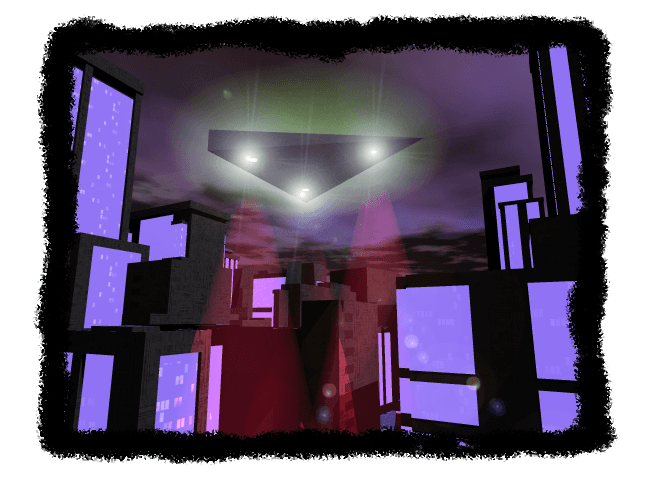
The main image is a public-domain editorial reconstruction of a commonly reported triangular form. It is not a photograph of a 1989-1990 sighting and is not the discredited Petit-Rechain photograph.