
Brazil / 1958 / DISPUTED
1958 Trindade Island UFO Photographs
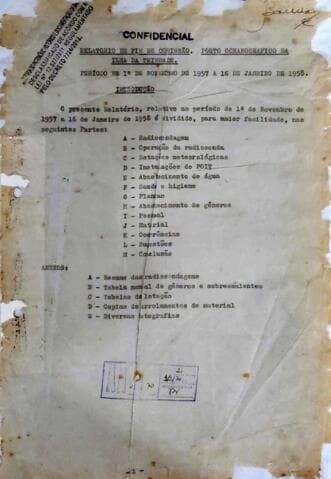
On 16 January 1958, civilian photographer Almiro Baraúna said he exposed six Rolleiflex frames from the Brazilian Navy survey ship NE Almirante Saldanha while an object passed near Trindade Island; four developed images were said to contain it. The photographs and the expedition setting are part of the public record, but the evidentiary chain is incomplete. Brazil's Navy archive catalogs the expedition's end-of-commission report and possible UFO reports, while noting that the report currently lacks the cited Annex E photographs. A March 1958 U.S. Naval Attaché report recorded that Brazilian naval authorities considered the images insufficient proof and that the ship's commanding officers did not see the object; its preparer judged a hoax or publicity stunt most likely. Later analyses have argued both for and against manipulation, and a relative's 2011 account alleged Baraúna privately described a laboratory montage. That late testimony is not a contemporaneous confession. The case remains disputed because the images are historically important, but no continuous custody of original negatives or conclusive examination now available to the public settles whether they show an unidentified object, a conventional object or a photographic construction.
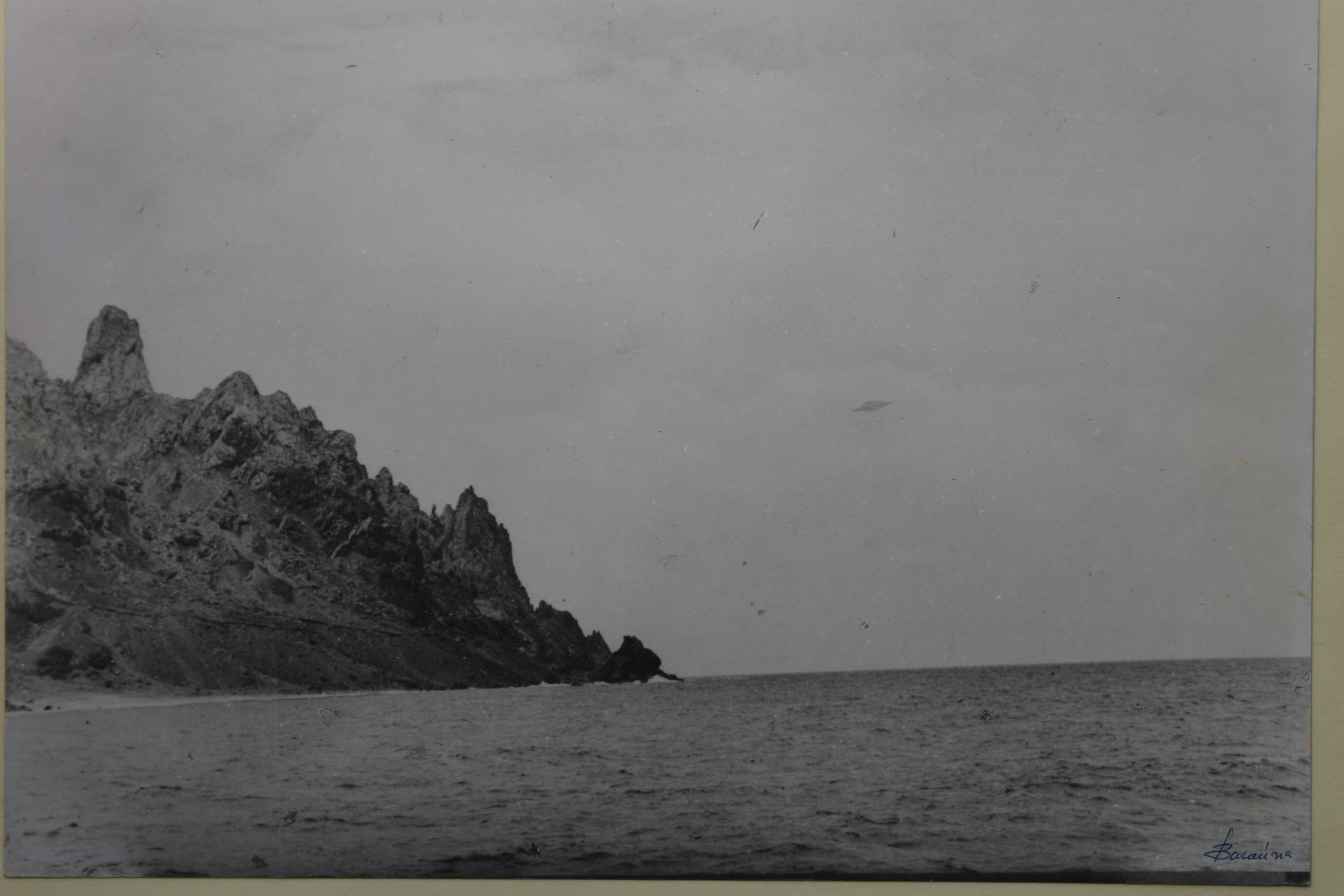
This case is disputed. The archive preserves the claims while separating evidence from interpretation.
- Documentation
- High documentation
- Primary location
- Trindade Island, South Atlantic
- Source base
- 7 linked records
- Research use
- Comparison case
What the public record supports
- Confirmed setting
- The photographs were circulated from a real January 1958 Brazilian Navy expedition to Trindade Island.[1][2]
- Image boundary
- The surviving public copies document the claimed sequence but do not preserve a complete, continuously held original-negative record.[2][3][4]
- Witness boundary
- Multiple-person observation was reported, but no complete contemporaneous roster verifies the often repeated count of 48 or 50.[2][6]
Official archive document
Case dossier
The reported event occurred shortly after midday on 16 January 1958, near the end of a Brazilian Navy scientific mission to remote Trindade Island in the South Atlantic. NE Almirante Saldanha was anchored offshore. Baraúna, a professional photographer and experienced underwater photographer travelling with civilian divers, later said people on deck called attention to an approaching object. He described it moving toward the island, disappearing behind a peak and reappearing before departing. This sequence comes from later witness and case accounts; no synchronized ship log or instrument track in the public file independently fixes every movement.
Baraúna said he used a Rolleiflex camera loaded with black-and-white film, a shutter speed of 1/125 second and an aperture of f/8. He reportedly made six exposures; four later showed a small lenticular or Saturn-like form and two missed it. The film was developed aboard ship. The U.S. Naval Attaché report says a naval officer waited outside the improvised darkroom rather than observing every step. The wet negatives were reportedly shown to people aboard, but Baraúna retained them afterward. That procedure supplied some immediate witnesses to the developed film, yet it did not create a sealed, continuous institutional custody chain.
Later literature often repeats that 48 or about 50 people witnessed the object. The public record is less precise. Some people aboard reportedly saw something, while the U.S. attaché report says the commanding officer and executive officer did not and identifies only a secretary as a possible naval eyewitness who declined discussion. No complete contemporaneous roster with independent statements is public. The archive therefore records a multi-person sighting claim but does not present the popular witness total as a verified count or assume that every person saw the same duration, direction and shape.
The images became public in Rio de Janeiro newspapers on 21 February 1958 and quickly acquired an aura of naval authentication. The available official language is narrower. The Brazilian Navy acknowledged that the photographs had been taken in the expedition setting and examined, but declined to identify the depicted form. As summarized in the U.S. attaché report, the Navy considered the photographs insufficient proof and issued no extraordinary-object conclusion. The current Brazilian Navy archive entry confirms the end-of-commission report and possible UFO material, yet explicitly says the referenced Annex E photographs are absent from the report now available online.
U.S. authorities received a Naval Attaché report dated 11 March 1958 and entered the event in Project Blue Book. The attaché summarized press claims, interviews and the Brazilian Navy's reserved position, then offered his own assessment that a hoax or publicity stunt was most probable. The Blue Book card categorized the case as a hoax. Those records are important because they are near-contemporaneous official documents, but they do not contain a modern forensic examination of original negatives. The attaché's report also includes prejudicial speculation about Baraúna; the archive separates those opinions from its useful procedural and photographic observations.
The public reproductions show a dark, low-contrast form against sky and sea, with the island providing a sharp reference. Skeptical analysis has questioned the object's softness, apparent orientation changes and lack of motion blur, and has proposed double exposure, superimposition or a small model. Other writers have argued that the sequence, immediate development and reported witnesses favor authenticity. Neither side now has unrestricted access to a documented set of original negatives with full camera, processing and custody records. Measurements from scans or newspaper copies can test consistency, but their generation loss limits any final claim.
A 2011 Revista UFO article added a consequential but late claim. Author Alexandre de Carvalho Borges reported interviews with Marcelo Ribeiro, a relative of Baraúna, who said the photographer had privately described the pictures as a laboratory montage and a “great joke.” The article also reproduced Baraúna's earlier published demonstration of trick photography, showing that he possessed relevant skill. This materially strengthens the hoax hypothesis, but it remains second-hand testimony delivered more than five decades later. It is not a signed statement by Baraúna, a recovered setup, or a repeatable analysis of the original negatives.
Trindade belongs in the archive because it is an unusually instructive photographic case, not because the pictures establish an exotic craft. It joins a naval expedition, recognizable image sequence, near-contemporaneous official documents, disputed witness totals and a later alleged admission. The strongest secure conclusion is that Baraúna produced and circulated four photographs within a real Navy mission context. The strongest skeptical conclusion is that manipulation was feasible and suspected early, with later testimony pointing toward fabrication. What remains unresolved is whether surviving public copies can independently prove how the images were made. The archive therefore keeps the case disputed and treats “unidentified” as a limit of the public record, not an extraterrestrial finding.
Related video
Timeline
- The Trindade Oceanographic Post commission covered by the Navy report begins.
- Baraúna reports making six exposures from NE Almirante Saldanha; four are said to show the object.
- The film is developed aboard ship; wet negatives are reportedly shown, then remain with Baraúna.
- The commission period covered by the Navy archive catalog ends on the same date as the claimed photographs.
- Rio de Janeiro newspapers publish the photographs and the case enters international circulation.
- The U.S. Naval Attaché submits Report No. 39-58, judging a hoax or publicity stunt most likely.
- Project Blue Book records the case under the category “Hoax.”
- Martin J. Powell publishes a detailed photographic and provenance review of the case.
- Revista UFO publishes a relative's late account alleging Baraúna described a laboratory montage.
- This archive audit separates the event photographs, official records, later analyses and unresolved custody gaps.
Frequently asked questions
Are the Trindade Island photographs real historical photographs?
Yes in the limited documentary sense: identifiable prints circulated in 1958 and are attributed to Baraúna. That does not prove the depicted form was a physical unidentified craft.
Were the photographs taken aboard a Brazilian Navy ship?
The established account places Baraúna aboard NE Almirante Saldanha during the Navy mission. That setting is better supported than the identity of the photographed form.
Did 48 people see the object?
That number is widely repeated but not verified by a complete contemporaneous list of independent statements. The archive records a multiple-witness claim, not a confirmed total.
Did the Brazilian Navy authenticate a UFO?
No. The Navy acknowledged and examined the photographs but declined to identify the form and considered the images insufficient proof.
What did Project Blue Book conclude?
The Blue Book record categorized the case as a hoax, relying in part on the U.S. Naval Attaché's skeptical assessment. It did not publish a conclusive modern forensic reconstruction.
Did Baraúna confess to faking the photographs?
No contemporaneous signed confession is public. A relative said in 2011 that Baraúna privately described a montage; it is relevant late, second-hand testimony rather than direct proof.
Is the embedded video original 1958 motion footage?
No. It is a 2013 archival presentation built around still photographs and later commentary. It is useful context, not moving-image evidence of the reported object.
Sources
- [1] Official fileEnd-of-commission report for the Trindade Oceanographic PostArquivo da Marinha do Brasil
- [2] ArchiveU.S. Naval Attaché Report No. 39-58 and Project Blue Book recordU.S. Navy / U.S. Air Force record via The Black Vault
- [3] Reference databaseAlmiro Baraúna's disputed Trindade Island photographServiço de Documentação da Marinha / Wikimedia Commons
- [4] ResearchThe Trindade Island UFO photographs: a critical reviewMartin J. Powell / Aenigmatis
- [5] News reportA relative alleges the Trindade photographs were a trickAlexandre de Carvalho Borges / Revista UFO
- [6] ResearchJerome Clark's Trindade case encyclopedia accountJerome Clark / NICAP archive
- [7] ArchiveUFO over Trindade Island, Brazil, 16 January 1958OpenMindsTV / YouTube
The main image is a public-domain reproduction of one disputed photograph attributed to Almiro Baraúna. It is genuine as a historical reproduction but does not authenticate the depicted form. The supplementary image is the first-page scan supplied by the Brazilian Navy archive; it documents the commission report, not the object. The embedded OpenMindsTV video is a 2013 archival presentation, not original 1958 motion footage.