
Brazil / 1957 / DISPUTED
1957 Ubatuba Magnesium Fragments
The Ubatuba case concerns magnesium fragments publicized in Brazil on September 14, 1957, alongside an unidentified sender's story of an exploding disc. The publication date is known; the alleged event's date and recovery beach are not. Colorado-project tests and subsequent studies found impurities rather than uniquely pure metal. Later magnesium-isotope results were compatible with terrestrial material, while recent trace-element tests were inconclusive. Laboratory measurements are real evidence about the samples, but cannot by themselves establish that the metal came from an aerial explosion or an extraterrestrial vehicle.
This case is disputed. The archive preserves the claims while separating evidence from interpretation.
- Documentation
- Moderate documentation
- Primary location
- Ubatuba, São Paulo
- Source base
- 4 linked records
- Research use
- Comparison case
What the Ubatuba tests establish
- Date and place
- 14 September 1957 is the newspaper date. The alleged event date and beach are unknown; the map marks Ubatuba approximately.[2]
- Established material
- Magnesium specimens were analyzed and impurities measured. A laboratory result does not authenticate the anonymous recovery story.[1][2]
- Isotope limits
- The 2022 study found trace-element results inconclusive; its later magnesium results were terrestrial-compatible. The tests are not unanimous or proof of alien metal.[3]
Case dossier
Peter Sturrock's 2001 paper reproduces Ibrahim Sued's O Globo column of September 14, 1957. Its letter describes fishing with friends near Ubatuba, a disc approaching the water at noon, a sudden climb and an explosion scattering burning fragments. The sender said some metal was collected near the beach. This is one anonymous narrative, not statements from separately interviewed fishermen. The signature was illegible, and neither the letter's writer nor an independently documented recovery site was established. September 14 must not be presented as a verified crash date.
Physician and UFO investigator Olavo Fontes obtained three pieces from Sued and arranged Brazilian laboratory tests. Parts later passed through the Aerial Phenomena Research Organization (APRO) and to Sturrock. His reconstruction notes destructive tests, unreturned pieces and inadequate sample logging: even a remnant attributed to the original Sample 1 could no longer be confidently identified. Later aliquots therefore cannot automatically settle every claim about the first tested piece. Equally, uncertainty about that piece cannot turn an anonymous recovery story into a verified chain of custody.
Roy Craig's chapter in the Colorado study describes an independent comparison with triply sublimed Dow magnesium. A cleaned chip underwent neutron activation and gamma spectrometry. The reported concentrations included strontium at 500 ± 100 parts per million, barium at 160 ± 20 and zinc at 500 ± 100. These are impurity measurements, not evidence of absolute purity. The study also used metallography and microprobe work. Its government-supported investigation tested composition; it did not independently establish the sender, retrieve debris from a beach or authenticate an exploding vehicle.
Strontium was unusual for routine magnesium production, but Craig reported a relevant distinction: Dow's records included a 700-gram experimental batch made on March 25, 1940, with nominally the same strontium concentration. That demonstrates a pre-1957 manufacturing possibility, not that the Ubatuba fragments were traced to that batch. No matching production record or delivery route was established. A composition that could be made on Earth is enough to challenge an assertion of impossible manufacture; identifying who actually made this particular material requires different evidence.
Sturrock's subsequent analyses distinguish surface contamination from internal composition and compare several specimens rather than treating every chip as interchangeable. His 2001 paper reports calcium, strontium, barium and other impurities; the surviving material was not purer than magnesium available in the 1950s. Small magnesium-isotope differences could follow ordinary fractionation during processing. His conclusion was not an extraterrestrial identification: the manufacturing source remained unknown. Differences between specimens, methods and detection limits also caution against selecting one dramatic number while discarding the comparison samples.
Robert Powell, Michael Swords, Mark Rodeghier and Phyllis Budinger published further tests in 2022, using measurements made in 2017 and 2018. They criticized the early NOLAT isotope analysis and acknowledged missing uncertainty estimates in their own first round. Their later magnesium results supported terrestrial compatibility, but the two laboratories disagreed on trace-element isotope values. The authors therefore called those trace-element results inconclusive and proposed better separation and measurement. This is a methodological dispute, not unanimous laboratory agreement and not a demonstrated nonterrestrial isotope signature.
The practical alternatives are not limited to a spacecraft or a solved hoax. Terrestrially manufactured magnesium with an unverified story remains possible without identifying a particular factory, experiment or deliberate deception. Unknown provenance is a reason to withhold an origin claim, not evidence for the most extraordinary one. A repeat analysis should identify the exact aliquot, preparation, standards, uncertainties and custody history. A crash claim would additionally require independently supported witnesses, an event date and recovery documentation; chemistry cannot supply those missing observations retrospectively.
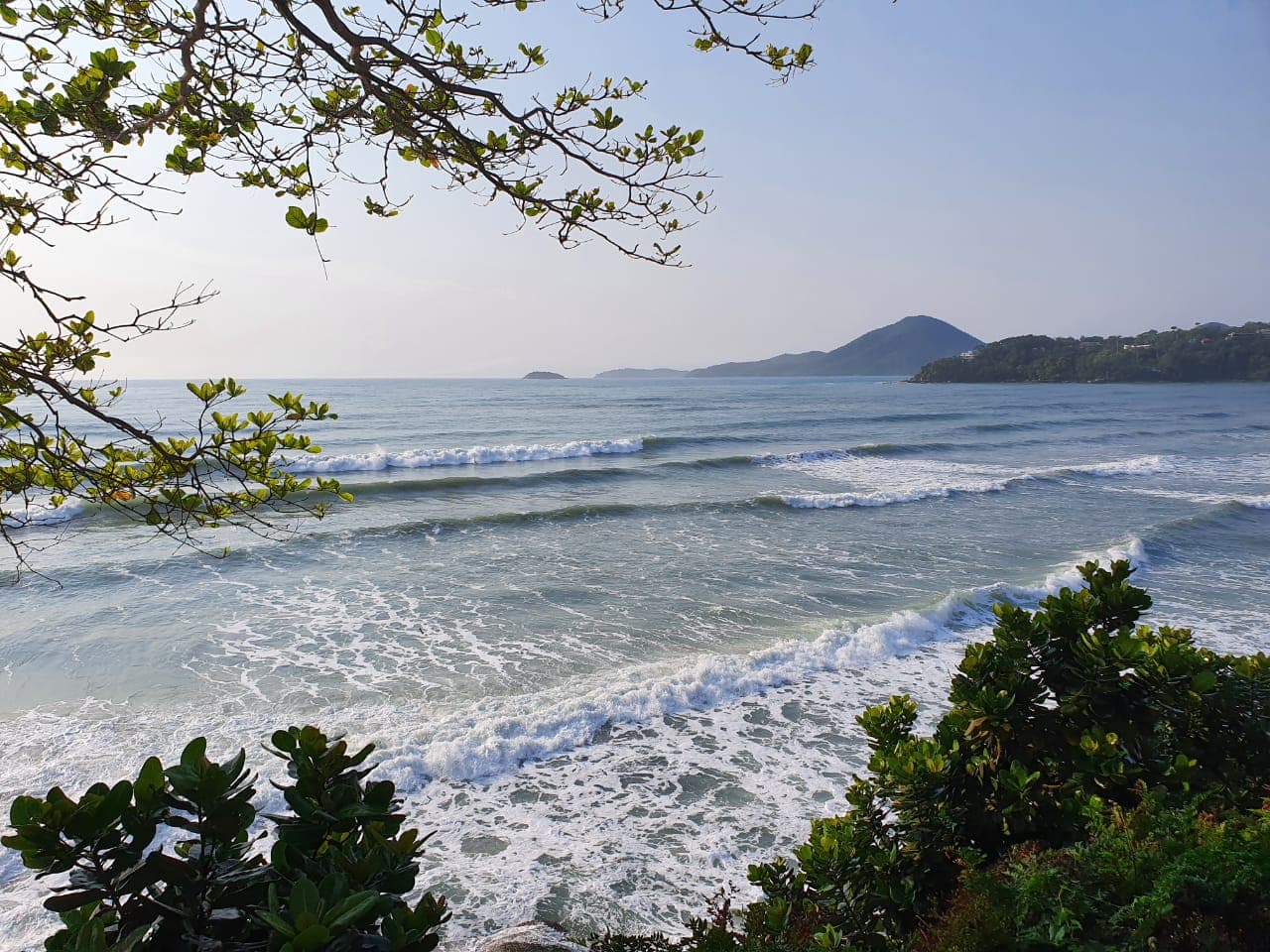
Ubatuba belongs in the archive as a sustained test of material-evidence claims, not a confirmed UFO crash. It shows why a laboratory can establish what a specimen contains without establishing the event said to have produced it. The map marks the Ubatuba area approximately, not a known debris site. The coastal photograph is modern geographical context, not the alleged beach, recovered metal or a 1957 event photograph. The linked analytical papers are the relevant evidence for composition; photographs of scenery and later retellings do not strengthen the missing recovery chain.
Related checks and records
Timeline
- Sued's newspaper column publicizes the anonymous letter and metal. This is a publication date, not a verified event date.
- The Colorado study reports impurity measurements and a terrestrial manufacturing comparison.
- Sturrock publishes composition and isotope analyses, with explicit sample-history limitations.
- Two commercial laboratories measure magnesium and trace-element isotopes for the later Powell and colleagues study.
- The new paper reports terrestrial-compatible magnesium results but inconclusive trace-element isotope tests.
Ubatuba magnesium questions
Was the Ubatuba magnesium too pure to make on Earth?
No. The Colorado and later analyses measured impurities. The comparison with an experimental Dow batch shows manufacturing feasibility, not a match identifying the maker.
Did a UFO crash at Ubatuba on September 14, 1957?
That is the newspaper-publication date, not a verified crash date. The anonymous letter describes an earlier explosion, without an identified witness or independently established recovery site.
Do the samples prove extraterrestrial technology?
No. Published magnesium-isotope results support terrestrial compatibility, with disagreements and inconclusive trace-element tests. Neither an unknown manufacturer nor missing recovery records is positive evidence of extraterrestrial technology.
Sources
- [1] ResearchCraig / Colorado study: magnesium tests, pp.138–143Roy Craig / University of Colorado; NCAS transcription
- [2] ResearchSturrock, 2001: specimen history, composition and isotope analysisPeter A. Sturrock / Journal of Scientific Exploration; NICAP reprint
- [3] ResearchPowell and colleagues, 2022: tests performed in 2017 and 2018Robert M. Powell, Michael D. Swords, Mark Rodeghier, Phyllis Budinger / Journal of Scientific Exploration
- [4] ArchiveModern Ubatuba coastal photograph and licenceManula202088 / Wikimedia Commons