
Brazil / 1996 / DISPUTED
1996 Varginha UFO Incident
On 20 January 1996, Liliane Fátima Silva, Valquíria Silva and Kátia Andrade Xavier said they encountered a small, brown, red-eyed figure crouched beside a wall in Jardim Andere, Varginha. Their account was reported within days. Claims that firefighters captured creatures, soldiers moved bodies through hospitals and an extraterrestrial craft had crashed developed through ufologists, anonymous testimony and later media. Brazil's Army investigated allegations published in a 1996 book and rejected military participation, proposing that the women probably misidentified a local man known as Mudinho during a storm. The inquiry is real and public; it does not turn either the recovery story or the official identification into independently demonstrated fact.
This case is disputed. The archive preserves the claims while separating evidence from interpretation.
- Documentation
- High documentation
- Primary location
- Varginha, Minas Gerais
- Source base
- 8 linked records
- Research use
- Comparison case
What the Varginha record supports
- Confirmed record
- Three named women reported a strange crouching figure on 20 January 1996, and Brazilian television and newspaper archives recorded their account within days.[2][3]
- Unverified recovery
- Firefighter capture, military transport, hospital custody, recovered bodies and a crashed craft rely on anonymous or later testimony without authenticated physical records.[2][1]
- Official finding
- IPM 18/1997 denied extraordinary military transport and proposed a storm-time misidentification of the local man known as Mudinho.[1][4]
Case dossier
The best-documented core is a short civilian encounter. On the afternoon of 20 January, sisters Liliane, 17, and Valquíria Silva, 14, were walking with Kátia Andrade Xavier, 22, through Jardim Andere. They said they saw a human-shaped figure crouched close to a wall in a vacant lot. Early descriptions emphasized a brown or oily-looking body, large red eyes, a head with three bumps, thin limbs and an unsteady posture. The women fled frightened and told family members. These details are witness testimony recorded by journalists; there is no contemporaneous photograph, video, measurement or recovered sample from the lot.
The account entered the public record rapidly. TV Alterosa broadcast an early report on 1 February, Estado de Minas began newspaper coverage on 2 February, and Fantástico aired interviews on 4 February. The surviving archive material identifies the three witnesses and preserves their description close to the event. It also shows how quickly investigators and television crews framed the report as an extraterrestrial encounter. That early coverage is important evidence that the women made the report in 1996; it is not independent observation of the figure they described.
The recovery narrative was broader and less direct. On 28 February, Estado de Minas reported that ufologists said an unnamed serving soldier had recorded a forty-minute cassette on 16 February. According to the ufologists' account, firefighters captured a creature in the morning and a military truck took it to the Army's Escola de Sargentos das Armas (EsSA) in Três Corações. Later versions added hospitals, more creatures, a crashed craft and transfer to a university laboratory. The public sources reviewed here do not provide an authenticated original recording, a named chain of custody, hospital intake records for a nonhuman patient, biological material or a craft-recovery record.
The official file is later than the encounter and must be described precisely. After the 1996 book Incidente em Varginha named soldiers as participants in an alleged capture and transport, EsSA opened Military Police Inquiry no. 18/1997. The Superior Military Court catalog dates production from 13 February to 19 June 1997, records 357 folios in two volumes, and says the file was archived in August 1997. The inquiry examined military testimony and vehicle movements. It was an institutional response to published allegations, not a contemporaneous forensic examination of the vacant lot or a complete investigation of every civilian claim.
The inquiry rejected the recovery allegation. Its reported conclusion said the named soldiers had not transported extraordinary cargo and that military vehicles seen in Varginha had ordinary maintenance-related explanations. For the women's sighting, it proposed that heavy rain and fear contributed to a mistaken identification of Luís Antônio de Paula, a local man known as Mudinho who sometimes crouched and whose appearance investigators tried to compare with the description. The women later said they knew him and did not see him. A 2011 congressional information request also noted that the three witnesses had not been interviewed in the IPM. The official hypothesis is therefore documented and relevant, but its fit to the original observation remains contested.
A separate strand links the later death of military police officer Marco Eli Chereze to an alleged capture. Public retellings say he handled a creature and then died from an unusual infection. The accessible contemporary and official case records reviewed here do not establish that he participated in a capture, and no authenticated biological sample, exposure record or medical chain of evidence connects his illness to a nonhuman organism. His death is real; the claimed causal link is later testimony and inference. Treating the death itself as proof of alien contact skips the missing evidentiary steps.
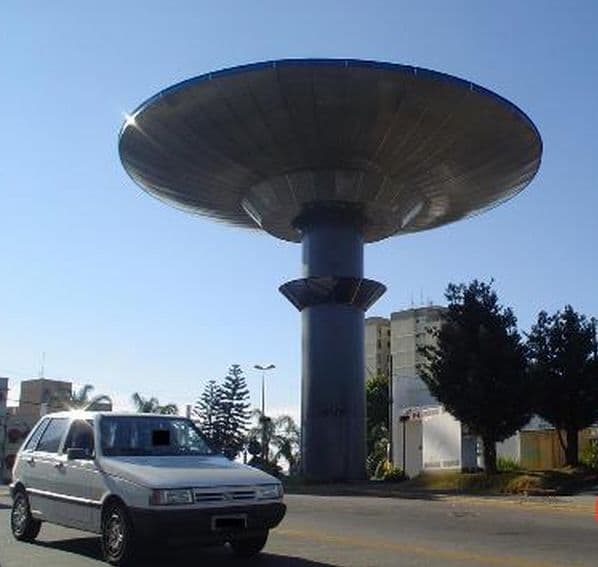
No authenticated image of the figure, a captured being or a crashed craft has entered the public record. The familiar drawings, television reconstructions and frames from Moment of Contact are later representations. The 2022 documentary is useful for studying modern testimony and renewed international interest, but its promotional synopsis assumes a UFO crash and cannot substitute for 1996 records. Varginha has since adopted the story as civic folklore, using alien monuments and a saucer-shaped water tower. The local cultural footprint is verifiable; it measures the story's influence, not the biological reality of its central claim.
Timeline
- The three women report the crouching figure in Jardim Andere.
- TV Alterosa broadcasts the earliest television report identified in the reviewed archive.
- Estado de Minas begins newspaper coverage of the witnesses' account.
- Fantástico airs interviews with the witnesses and UFO investigator Ubirajara Rodrigues.
- Estado de Minas reports ufologists' claim that an anonymous soldier described a firefighter capture and military transport.
- EsSA produces Military Police Inquiry no. 18/1997 into the allegations published in the 1996 book.
- The two-volume, 357-folio inquiry is archived by the Superior Military Court.
- A congressional information request challenges the Army account and notes that the three witnesses were not heard in the IPM.
- Moment of Contact renews international attention through later interviews and reconstruction.
Varginha incident questions
What happened in Varginha in 1996?
Three young women reported a strange crouching figure on 20 January. Claims of firefighter and military recovery emerged later and are not supported by authenticated public physical evidence.
Did the Brazilian Army investigate the Varginha case?
Yes. EsSA produced IPM 18/1997 after a 1996 book accused named soldiers of capture and transport. The 357-folio file denied extraordinary military involvement.
What is the Mudinho explanation?
The inquiry proposed that the women probably saw Luís Antônio de Paula, known as Mudinho, crouching while dirty or wet during severe weather. The women say they knew him and reject that identification.
Was a creature captured in Varginha?
No authenticated public record establishes a capture. The claim was attributed to anonymous military testimony relayed by ufologists, while the Army inquiry denied it.
Did Marco Eli Chereze die after alien contact?
Chereze died, but the public record reviewed does not establish that he handled a creature or that his illness came from a nonhuman organism. That causal link is a later allegation.
Are the famous Varginha images original evidence?
No authenticated photograph or video of the reported figure, capture or craft is public. Famous drawings, recreations, monuments and documentary frames are later media or cultural material.
Is the Varginha incident proof of aliens?
No. It documents a notable witness report, official inquiry and major cultural event. The public evidence does not verify extraterrestrial origin or a recovery operation.
Sources
- [1] Official fileMilitary Police Inquiry no. 18/1997Superior Tribunal Militar / ARQUIMEDES
- [2] ArchiveThe first Estado de Minas reports on the Varginha caseEstado de Minas
- [3] ArchiveFantástico archive: the Varginha caseMemória Globo
- [4] News reportThe official history of the Varginha ETIstoÉ
- [5] Official fileCongressional information request RIC 679/2011Câmara dos Deputados
- [6] Official fileCultural registration dossier for the Varginha ET caseFundação Cultural de Varginha
- [7] News reportVarginha municipality presents Moment of ContactPrefeitura de Varginha / Fundação Cultural
- [8] News reportVarginha at 30: sighting, inquiry and new testimonyEl País
The main image is Olimor's July 2007 public-domain photograph of Varginha's saucer-shaped water tower. It documents the city's later cultural response, not the January 1996 sighting, an alleged creature, a crash site or military recovery. No authenticated event photograph or original motion footage was located. Estado de Minas and Globo archive images and frames from Moment of Contact remain linked at their publishers and are not copied.