
États-Unis / 1986 / CONTESTÉ
Incident UFO du vol Japan Airlines 1628
Le cargo Japan Air Lines 1628 reliait Reykjavík à Anchorage lorsque le commandant Kenju Terauchi, le copilote Takanori Tamefuji et le mécanicien Yoshio Tsukuda signalèrent des lumières inhabituelles. Terauchi décrivit ensuite deux objets lumineux et un immense « vaisseau mère » sombre ; les deux autres confirmèrent des lumières, pas sa description détaillée d'un engin géant. Anchorage Center autorisa des changements de cap et d'altitude, consulta le centre radar militaire d'Elmendorf et guida des avions voisins. Le dossier FAA conserve entretiens, communications radio, déclarations de contrôleurs, sorties radar et affichages simulés. Il note aussi l'absence de confirmation par le radar de Fairbanks, le vol United 69 et un C-130 de l'USAF. Les spécialistes FAA attribuèrent la double cible conservée à un dédoublement du retour du 747 ; Philip Klass proposa des effets de nuages ou cristaux de glace et Jupiter selon les phases. Ces hypothèses sont plausibles sans reproduire tous les détails : conclusion prudente, un signalement aéronautique documenté aux perceptions non résolues, non une technologie extraordinaire vérifiée.
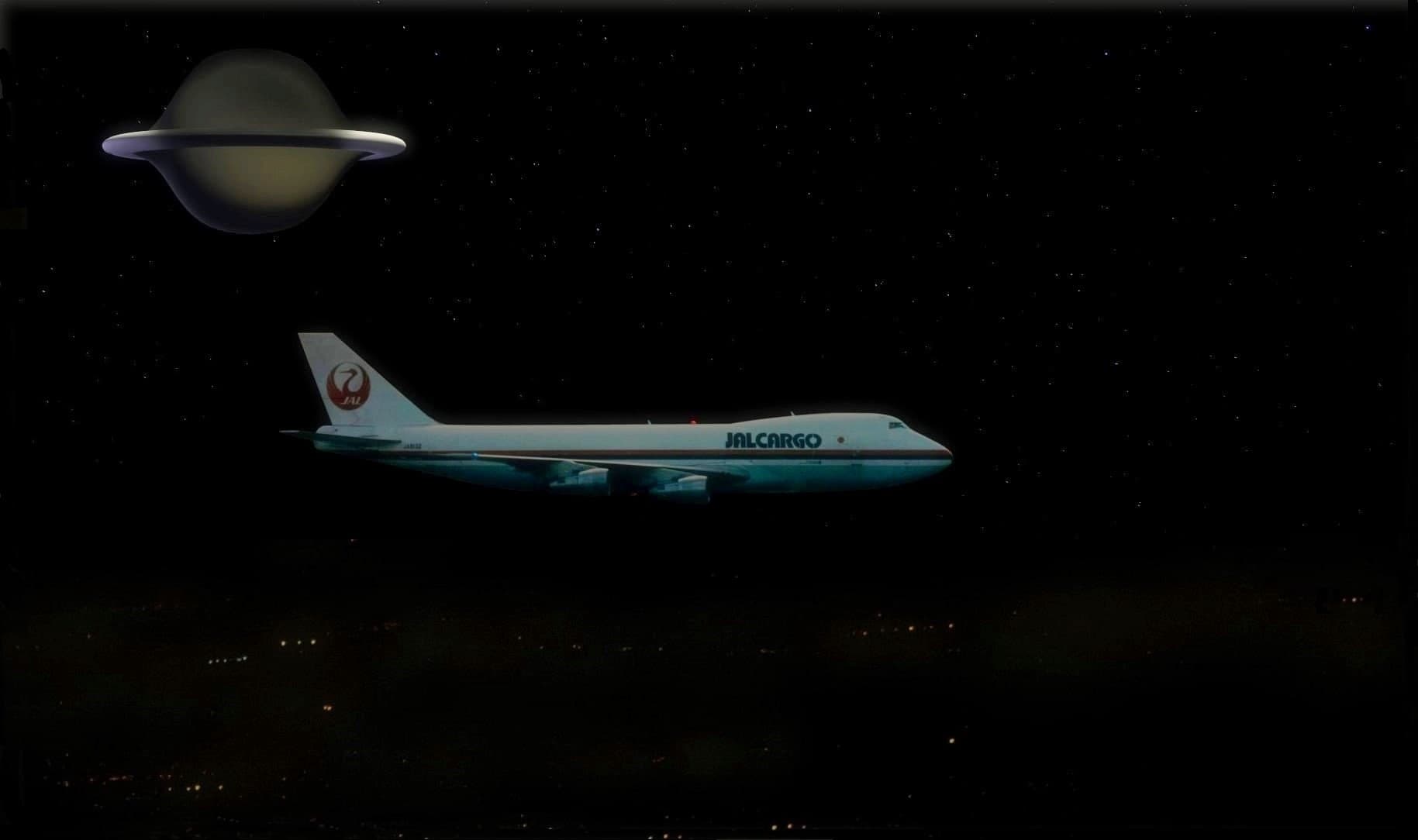
Ce cas reste contesté. L’archive conserve les affirmations tout en séparant les preuves de l’interprétation.
- Documentation
- Documentation élevée
- Lieu principal
- Fort Yukon to Fairbanks, Alaska airspace
- Base documentaire
- 7 liens documentaires
- Usage de recherche
- Cas de comparaison
Ce qu'établit le dossier JAL 1628
- Dossier confirmé
- Les dossiers FAA confirment signalement par trois membres, gestion ATC, changements de cap et d'altitude, discussions radar et contrôles voisins.[1][2][3]
- Limite équipage
- Tous signalèrent des lumières ; les notes immédiates disent aucun engin. La description détaillée du « vaisseau mère » vient de Terauchi seul.[2]
- Limite radar
- De brefs retours furent discutés, mais Fairbanks ne vit que JAL et l'expertise FAA identifia la double cible comme retour dédoublé du 747.[3][4]
- Explications conventionnelles
- Jupiter, nuages de cristaux éclairés par la Lune, faibles échos météo et retours radar dédoublés expliquent plausiblement des parties ; aucune reconstruction unique n'est prouvée.[4][6]
- Limite média
- Aucune photo ou vidéo authentifiée. L'image principale est une reconstruction sous licence de 2018 ; la vidéo Callahan est un commentaire ultérieur.[7]
Dossier du cas
L'événement se déroula le soir du 17 novembre 1986 en Alaska, tandis que les transcriptions FAA emploient le 18 novembre UTC. Le Boeing 747 cargo JAL 1628, de Reykjavík à Anchorage, approchait Fort Yukon au niveau 350 lorsque Terauchi demanda le trafic. À 02 h 19 UTC, il signala des lumières blanches et jaunes à environ un mille devant, à la même altitude. Aucun avion n'était connu ; le contrôleur traita le signalement comme un risque de circulation.
Les premières notes FAA après l'atterrissage consignent un récit commun de deux ensembles de lumières jaunes, ambrées et vertes changeant de position. Elles disent aussi que les trois hommes ne virent que des lumières, jamais un engin. Les récits écrits et enregistrés ultérieurs de Terauchi ajoutèrent objets lumineux proches, chaleur ressentie et immense corps sombre en noix ou Saturne. Tsukuda se souvint des premières lumières durant dix minutes, ne put décrire de forme et jugea que la faible lumière ultérieure pouvait être une ville lointaine. L'équipage corrobore donc des lumières inhabituelles, pas tout le récit du « vaisseau mère ».
Le dossier ATC consigne des indications capteurs actives mais ambiguës. À 02 h 25 UTC, Terauchi signala un écho météo embarqué à onze heures et huit milles. Anchorage vit brièvement un retour primaire incertain derrière le 747. Le centre militaire ROCC d'Elmendorf signala ensuite un retour primaire seul à dix heures et huit milles, le perdit, parla plus tard d'un « vol de deux », puis reperdit la piste supplémentaire. Fairbanks ne vit que JAL 1628. Ces pièces contemporaines sont authentiques, mais directions changeantes et brièveté n'établissent pas une cible unique correspondant au cockpit.
Anchorage Center autorisa une descente du FL350 au FL310, un changement de cap et un virage de 360°. La transcription note perte de vue à 02 h 39, nouvelle lumière à 02 h 44 et fin de contact à 02 h 53. United 69 fut guidé près de la route : il vit le 747 sur le ciel encore clair, rien d'autre. Un C-130 de l'USAF ne vit aucun objet non plus. Ces contrôles négatifs ne prouvent pas que l'équipage n'a rien vu, mais limitent l'affirmation d'un grand engin persistant et clairement proche.
Les dépêches de fin décembre transformèrent le dossier en histoire de « vaisseau mère », soulignant l'estimation de taille de Terauchi et parlant de confirmation radar avant la publication de l'expertise FAA. Les récits ultérieurs fusionnent souvent chaque retour, le témoignage du commandant et les souvenirs de l'ancien responsable FAA John Callahan en une piste militaire continue. Le dossier contemporain est plus prudent : indications intermittentes et contestées, enquête de sécurité achevée, aucune photo authentifiée et aucune conclusion officielle d'un véhicule extraordinaire.
Chronologie
- Terauchi demande le trafic et signale des lumières blanches et jaunes ; aucun avion connu.
- JAL signale un écho météo embarqué ; Anchorage et Elmendorf discutent de brefs retours primaires puis les perdent.
- Anchorage autorise descente, changements de cap et virage à 360° ; Fairbanks ne voit que JAL et Terauchi perd momentanément le trafic.
- Terauchi signale de nouveau une lumière. United 69 voit JAL mais rien d'autre ; fin du contact à 02 h 53 UTC.
- Anchorage ARTCC indique que ses données radar enregistrées ne confirment pas de trafic près de JAL 1628.
- La FAA publie le dossier, dit ne pouvoir confirmer l'événement, attribue la seconde cible à un retour dédoublé et clôt l'enquête de sécurité.
Questions sur le vol Japan Airlines 1628
Que s'est-il passé sur le vol JAL 1628 ?
Le 17 novembre 1986, les trois membres du cargo signalèrent des lumières ; Terauchi décrivit ensuite un grand objet sombre et la FAA géra un possible trafic inconnu.
Les trois membres virent-ils le vaisseau mère ?
Non. Tous confirmèrent des lumières, mais les notes immédiates disent aucun engin. Le grand objet détaillé vient de Terauchi ; Tsukuda resta incertain.
Les radars FAA et militaires confirmèrent-ils un UFO ?
Des retours supplémentaires intermittents furent signalés, mais Fairbanks ne vit que JAL, les pistes furent vite perdues et la FAA attribua la double cible à un retour dédoublé du 747.
Quelle fut la conclusion de la FAA ?
La FAA dit ne pouvoir confirmer l'événement, ne trouva aucun avion non déclaré dangereux, expliqua la double cible par un effet de corrélation et clôt sans identifier chaque lumière.
Jupiter ou les nuages peuvent-ils expliquer l'observation ?
Ils peuvent expliquer différentes phases : Jupiter était basse dans la direction tardive ; des nuages de cristaux éclairés peuvent produire lumières changeantes et faibles échos météo. Ce scénario composé n'est pas une reconstruction prouvée.
Existe-t-il une photo ou vidéo radar authentique ?
Aucune photo authentifiée ni vidéo radar continue n'est publique. L'image est une reconstruction de 2018 et les démonstrations ultérieures ne sont pas des données contemporaines.
Sources
- [1] officielArchives nationales : dossiers FAA sur le vol Japan Airlines 1628U.S. National Archives and Records Administration
- [2] officielNotes FAA d'entretien de l'équipage après l'atterrissageFederal Aviation Administration / National Archives copy
- [3] officielChronologie et constat radar d'Anchorage ARTCCAnchorage Air Route Traffic Control Center / FAA
- [4] officielCommuniqué et expertise technique FAA sur JAL 1628Federal Aviation Administration, Alaskan Region
- [5] presse« Un contrôleur confirme l'observation d'un UFO »United Press International
- [6] recherche« Les données FAA éclairent le signalement UFO du pilote JAL »Philip J. Klass / Skeptical Inquirer
- [7] archiveThe Vault Files : vol JAL 1628, Alaska 1986The Black Vault
L'image est une reconstruction de JMK (2018), composée à partir de descriptions tardives et d'éléments sources. Contexte sous licence, non photo de 1986, affichage radar FAA ou preuve indépendante. Aucune image authentifiée n'a été trouvée.