Canada / 1990 / DISPUTED
1990 Montreal Bonaventure UFO Sighting
On November 7, 1990, guests, hotel staff and police reported lights above the rooftop pool of Montreal's Bonaventure hotel. Contemporary newspapers document the observation and published photographs, but not a measured solid craft. An astronomer's inquiry favored an aurora with important reservations; a later optical analysis proposed reflections of pool lights in ice crystals. Neither witness estimates of enormous size nor a reported absence of radar returns establishes an extraordinary aircraft. This is a well-documented light report with disputed interpretation, not confirmed extraterrestrial contact.
This case is disputed. The archive preserves the claims while separating evidence from interpretation.
- Documentation
- High documentation
- Primary location
- Montreal, Quebec
- Source base
- 6 linked records
- Research use
- Comparison case
What the Bonaventure evidence establishes
- Observation
- 7 November 1990, around 7 p.m. local, Bonaventure hotel rooftop pool, Montreal. Map: approximate hotel location, not target altitude or position.[2]
- Recorded evidence
- Contemporary witness reporting and published light photographs. No independently measured solid craft or raw radar track in the cited record.[2][3]
Case dossier
The Globe and Mail's November 9 report places the hotel observation at about 7 p.m. two evenings earlier. Lifeguard Line St. Pierre was watching guests in the heated outdoor pool when they called her to look up. Security staff and police attended. Security officer Albert Sterling described watching the lights for about two and a half hours. Canadian Press separately reported the gathering. These are contemporary accounts of people seeing lights; the length of the gathering is not a continuous instrument record of one airborne vehicle.
The two newspaper stories do not give one uniform description. The Globe and Mail mentions eight or ten lights, while Canadian Press describes six and says arriving journalists saw only two through clouds. A police spokesman confirmed three officers had seen lights, not that they had identified a craft. Both reports describe no corresponding radar aircraft. That is a reported response, not raw radar data available for independent correlation. A photograph's luminous patches likewise do not, without distance and geometry, measure the dimensions of a body connecting them.
Marc A. Gélinas examined the night in the February 1991 bulletin of the Royal Astronomical Society of Canada. His inquiry included experienced sky observers away from the hotel and favored an unusual aurora. However, his weather and space-weather discussion acknowledged weak geomagnetic and solar-particle activity rather than decisive confirmation. The 6:30 p.m. observation he describes at Dorval is not the pool report beginning around 7 p.m. Grouping reports across a city requires matching their time, direction and appearance; geographical spread alone does not prove everyone watched the same object.
A later CAELESTIA analysis by Wim van Utrecht challenges the enormous sizes attributed to the lights. It contrasts angular estimates recalled many months later with much smaller photographic angles, drawing on the 1992 Haines/Guénette report. That private report and original negatives are not independently reproduced here. The useful analytical distinction is between angular extent, assumed distance and inferred physical size: a witness's impression of a vast object is not a calibrated measurement. A small photograph cannot supply an unknown distance merely because the lights look joined.
Van Utrecht proposes that ice crystals reflected the pool's underwater lamps, producing elevated luminous images. His comparison uses the light arrangement visible in a later CBC report and photographic geometry; it is an optical hypothesis, not a controlled reconstruction of the 1990 weather. A January 2011 addendum discusses different lights over Montreal's casino in December 2010. That comparison can illustrate a mechanism but cannot retroactively measure the earlier atmosphere. Nor should pool reflections be confused with Gélinas' aurora hypothesis: they involve different light sources and processes.
The ending and subsequent records also require attribution. Canadian Press reported a slow northward movement; Guillaume Cyr's 2020 QMI/TVA retrospective says east, while CAELESTIA discusses increasing cloud obscuration. Those descriptions do not define a verified departure track. Cyr also reported that the Royal Canadian Mounted Police said the file had been destroyed. Without the underlying record, that remains a journalist's account of an agency response, not evidence of what the file contained or why it was removed. A later fighter-aircraft story cannot substitute for a dated flight record.
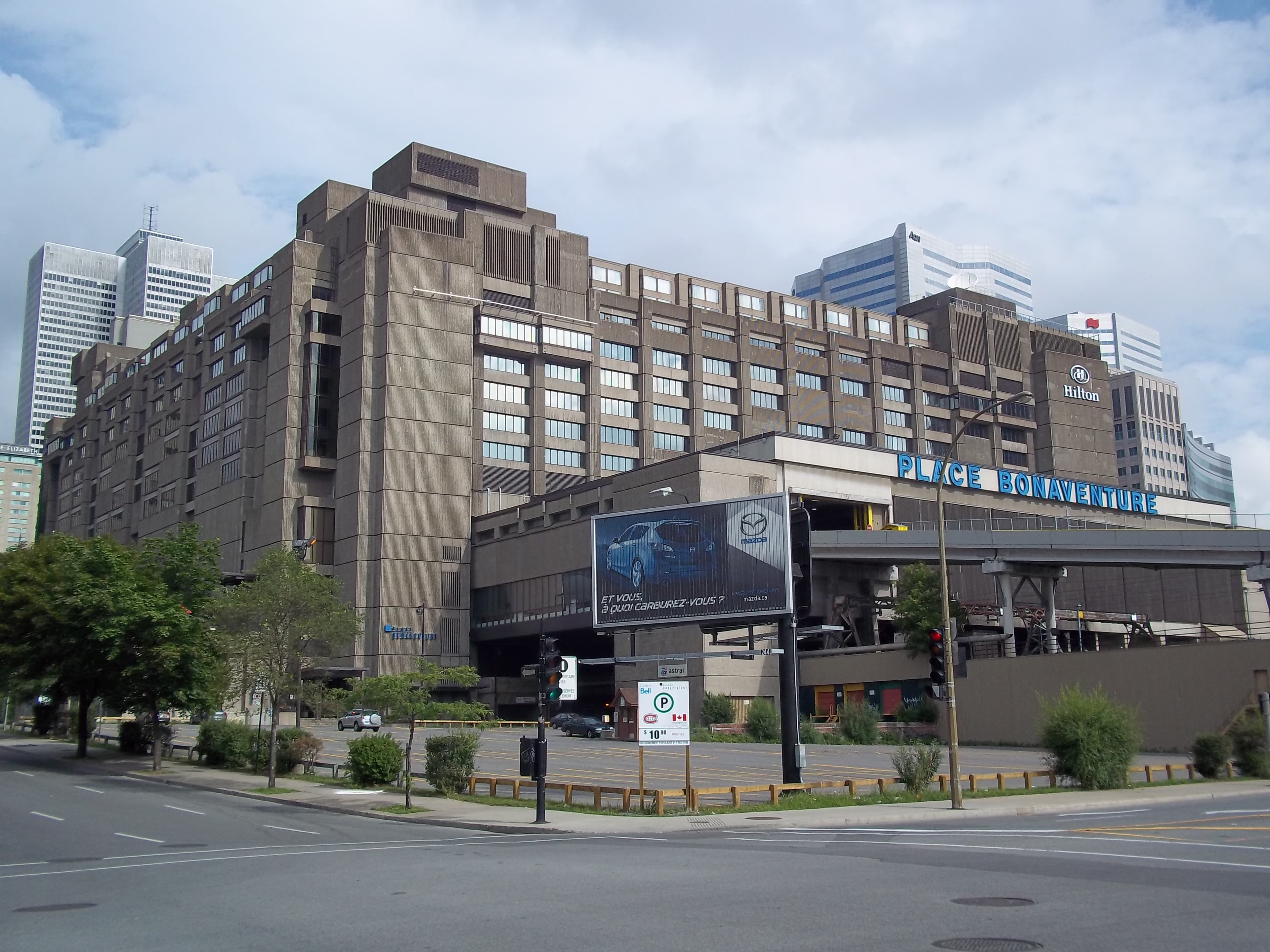
Bonaventure belongs in the archive because contemporary journalism and original astronomical and optical arguments can be compared without accepting a giant spacecraft narrative. The strongest common ground is an observed luminous display; its distance, physical extent and precise cause remain disputed in the cited record. The original police file, radar records, negatives and a contemporaneous atmospheric reconstruction would be needed to test stronger claims. The map marks the hotel complex approximately, not an aerial target. The 2011 building photograph supplies location context and is not a picture of the lights, pool observation or 1990 event.
Related checks and records
- Hessdalen: what recurring lights and instruments can establish
Compare the 1984 measurements, the headlight dispute and later geophysical hypotheses without assuming a single cause.
- Clarenville: another Canadian police-witness record
- What radar can and cannot corroborate
- Compare flight, satellite and weather records
Timeline
- About 7 p.m. local: hotel guests call the lifeguard to see lights; security staff and police join the observation.
- The Globe and Mail and Canadian Press publish contemporary reports, including differing light counts and reported radar responses.
- Gélinas publishes his astronomical inquiry, favoring an aurora while acknowledging weak supporting space-weather activity.
- CAELESTIA's addendum compares a separate December 2010 casino-light report with the earlier reflection hypothesis.
- Cyr's QMI/TVA retrospective reviews earlier witness accounts and reports the RCMP's response about the case file.
Bonaventure sighting questions
Did police confirm a giant UFO over Montreal?
The contemporary reports confirm that officers saw lights. That is different from identifying a solid aircraft or measuring its size and distance. A witness's official role does not turn an estimate into an instrument measurement.
Was the Bonaventure sighting explained as pool lights?
Pool-light reflections in ice crystals are a published optical explanation, not a controlled recreation of that night. The cited astronomical inquiry instead considered an aurora. Comparing their assumptions is more useful than calling either a proven official solution.
Does the photograph on this page show the 1990 lights?
No. It is a licensed 2011 photograph of the building. The source links discuss event photographs and later reporting, which should not be confused with continuous original video or proof of a craft.
Sources
- [1] ResearchRASC February 1991: Gélinas' astronomical inquiry, pp.4-5Marc A. Gélinas / Royal Astronomical Society of Canada
- [2] News reportThe Globe and Mail and Canadian Press, 9 November 1990: two contemporary articles, PDF p.11The Globe and Mail; Canadian Press / Winnipeg Free Press; Newsclipping Service archive
- [3] ResearchCAELESTIA: photographic geometry and the pool-light hypothesisWim van Utrecht / CAELESTIA
- [4] ResearchCAELESTIA: separate 2010 casino-light comparisonWim van Utrecht / CAELESTIA
- [5] News reportQMI/TVA, 6 November 2020: later witness and archive reportingGuillaume Cyr / Agence QMI / TVA Nouvelles
- [6] ArchivePlace Bonaventure building photograph and licenceJeangagnon / Wikimedia Commons