
Skywatching / Updated 2026-09-30 / 2 min read
Mystery lights and UFO reports: Marfa, Hessdalen, Min Min, and recurring sky lights
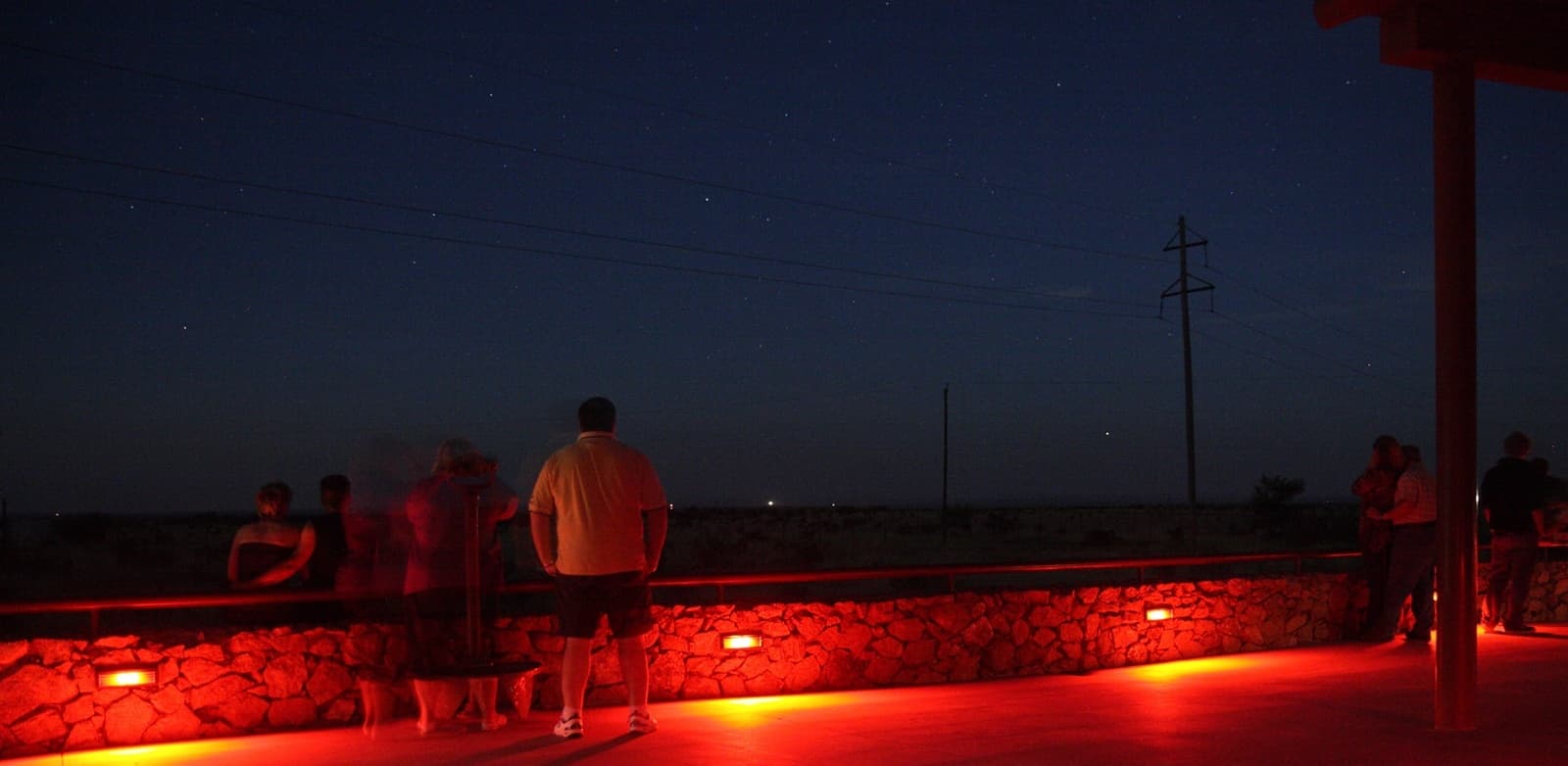
Recurring lights are high-interest search topics because they mix folklore, tourism, atmospheric science, and unresolved observation.
Reviewed and maintained byGlobal UFO Archive Editorial DeskEditorial policy
Key points
- Recurring lights can have multiple causes across different nights.
- They are useful comparison cases for separating folklore from instrumented study.
Why light cases are tricky
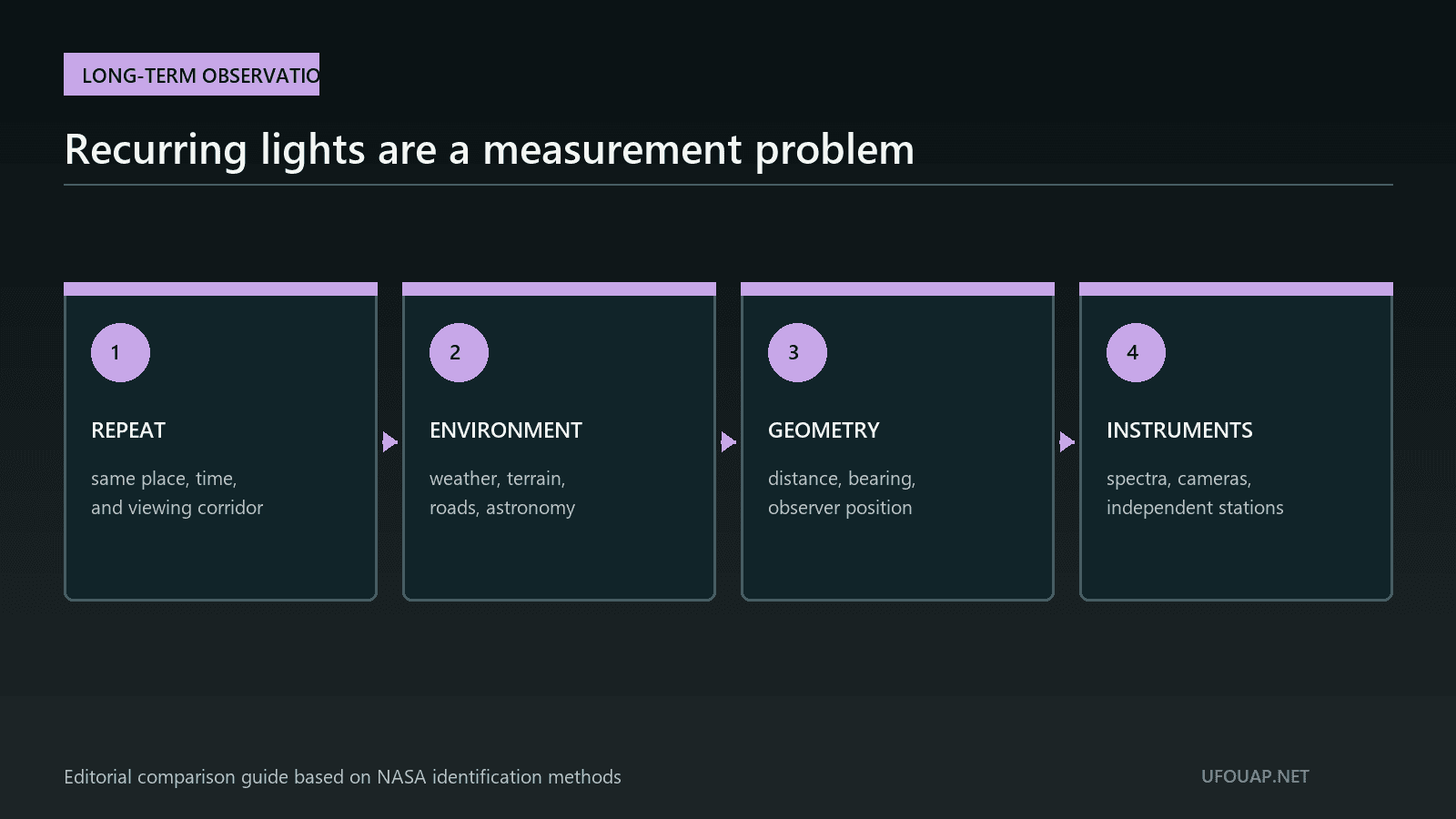
A light without scale is one of the hardest things to analyze. It may be a vehicle, aircraft, star, planet, atmospheric reflection, plasma-like phenomenon, or a mixture of different events grouped under one name. The best archive approach treats recurring lights as local case clusters rather than one object with one explanation.
Reconstruct the view before naming the light
Start a light report with the observation time, time zone, location, viewing direction and duration. Save a wide view containing fixed landmarks as well as the close-up. A tight zoom without a horizon can hide camera shake and removes the reference needed to compare movement. Do not infer an object’s size from a bright, unresolved spot.
NASA’s identification guide offers ordinary candidates such as planets, satellites and aircraft. Use those as hypotheses to test against the same time and direction, not as automatic verdicts. If several nights of lights share a local nickname, keep a separate observation log for each night: similar appearance does not establish a common cause. An image alone may leave the report unidentified.
FAQ
Are mystery lights UFOs?
They can be included as UFO/UAP-related reports when they remain unidentified, but many are eventually explained.
Sources
- NASA ScienceIdentifying UFOs and UAPsscience.nasa.gov
- AAROAARO FAQwww.aaro.mil