
Chile / 2014 / DISPUTED
2014 Chilean Navy UFO Video
On November 11, 2014, a Chilean Navy helicopter crew recorded an unidentified target and apparent trails off central Chile. Crew forms and a later interview document the report, but not a measured target distance or extraordinary speed. IPACO proposed a distant airliner, while Mick West later argued for flight IB6830. Those analyses differ in aircraft and geometry, and IPACO acknowledged using the wrong camera model. The record supports examining an aircraft explanation, not treating infrared brightness or an initially unidentified target as proof of extraterrestrial technology.
This case is disputed. The archive preserves the claims while separating evidence from interpretation.
- Documentation
- High documentation
- Primary location
- Central Chile coast
- Source base
- 7 linked records
- Research use
- Comparison case
Recording, measurements and interpretations
- Recorded report
- Two crew forms and an interview describe one November 11 flight, not independent encounters.[1][2][3]
- Measurement limit
- Helicopter altitude and coordinates do not establish the target's distance, size or speed.[1][2][3]
- Camera correction
- IPACO acknowledged a wrong camera assumption; its report was not recalculated with the WESCAM model.[5]
Case dossier
Flight and location: the crew forms identify AS-532 helicopter N-75, call sign ALFA COUGAR, flying from SCIE to SCVM on November 11, 2014. Pilot Carlos Rodríguez Rodríguez gives 16:52 UTC and 4,536 feet; Marcelo Neira Alarcón gives 16:48 UTC and 4,500 feet. The shared position, 34°03′22″S, 71°53′51″W, belongs to the reporting helicopter, not the target. The map uses that observer position. Rodríguez records nine minutes twelve seconds, while Neira gives about nine minutes. A consultant's approximately twenty-minute disc is not the same duration. These differences should not be silently converted into a single exact onset or target altitude.
Crew descriptions: the April 24, 2015 interview note names CEFAA interviewers Ricardo Bermúdez and Mario Ávila, Rodríguez as pilot and Neira as FLIR operator. Neira detected the target before informing the pilot. The note describes a white, semi-oval appearance through the optical system and a strong infrared signature, with two apparent gas or liquid releases. These are the crew's interpretations, not sampled material. Their estimated range relied on experience with the camera and the clouds beyond the target, not a successful measured distance. The roughly 120-knot figure concerns the helicopter, not demonstrated target speed. Neither a drawing nor an infrared outline measures a three-dimensional hull.
Radar and document boundaries: both forms mark no airborne-radar echo and no flight-instrument malfunction, but leave the ground-radar yes/no boxes blank. The interview describes traffic inquiries and an unsuccessful radio call. Such narratives are not the underlying radar or controller records. Rodríguez's declaration is dated April 17, 2015; Neira's declaration-date field is blank. The copies linked here are hosted by The Black Vault, not a live government document repository. Their contents can be examined, but that hosting does not independently authenticate every step of their release. Several documents about the same flight are not several independent sightings.
A consultant's image analysis: Alberto Vergara Pérez signs his report as a CEFAA collaborator. He says distance and dimensions cannot be determined, then applies Photoshop filters and interprets the resulting forms. His conclusion excludes an unmanned aircraft; it does not say every aircraft is excluded. He recommends further study. The scan mentions July 8 of the current year without specifying the year; a handwritten 30/3/17 is not labeled an issue date. Neither an embossed image nor a consultant's institutional association turns uncertain range or enhanced pixel boundaries into calibrated physical measurements or a final government identification.
IPACO's aircraft hypothesis: Antoine Cousyn, François Louange and Geoff Quick dated their analysis November 26, 2015. They considered a distant medium-haul twinjet approaching landing, with exhaust regions and a trail capable of producing an unfamiliar infrared appearance. A January 9, 2017 note acknowledges that they assumed EUROFLIR 350-3 rather than the actual WESCAM MX-15 camera, without recalculating the report. That affects the confidence warranted in its camera-dependent estimates. Its aircraft hypothesis deserves consideration, but the earlier dimensions and range cannot simply be treated as corrected measurements. Suggested trail mechanisms remain interpretations, not chemical tests.
West's later reconstruction: the Metabunk lead post, started January 6, 2017 and subsequently edited, argues for departing, climbing Iberia flight IB6830, an A340. It replaces an initial LA330 candidate and distinguishes actual GPS positions from an estimated missing track segment. This is not IPACO's twinjet-on-approach scenario, so the two are not independent reproductions of one identification. West's geometry and aerodynamic-contrail explanation are testable claims, not testimony from the helicopter or a government ruling. His linked reconstruction was not independently rerun for this dossier. Readers can examine the original analysis rather than treating a confident headline as raw flight data.
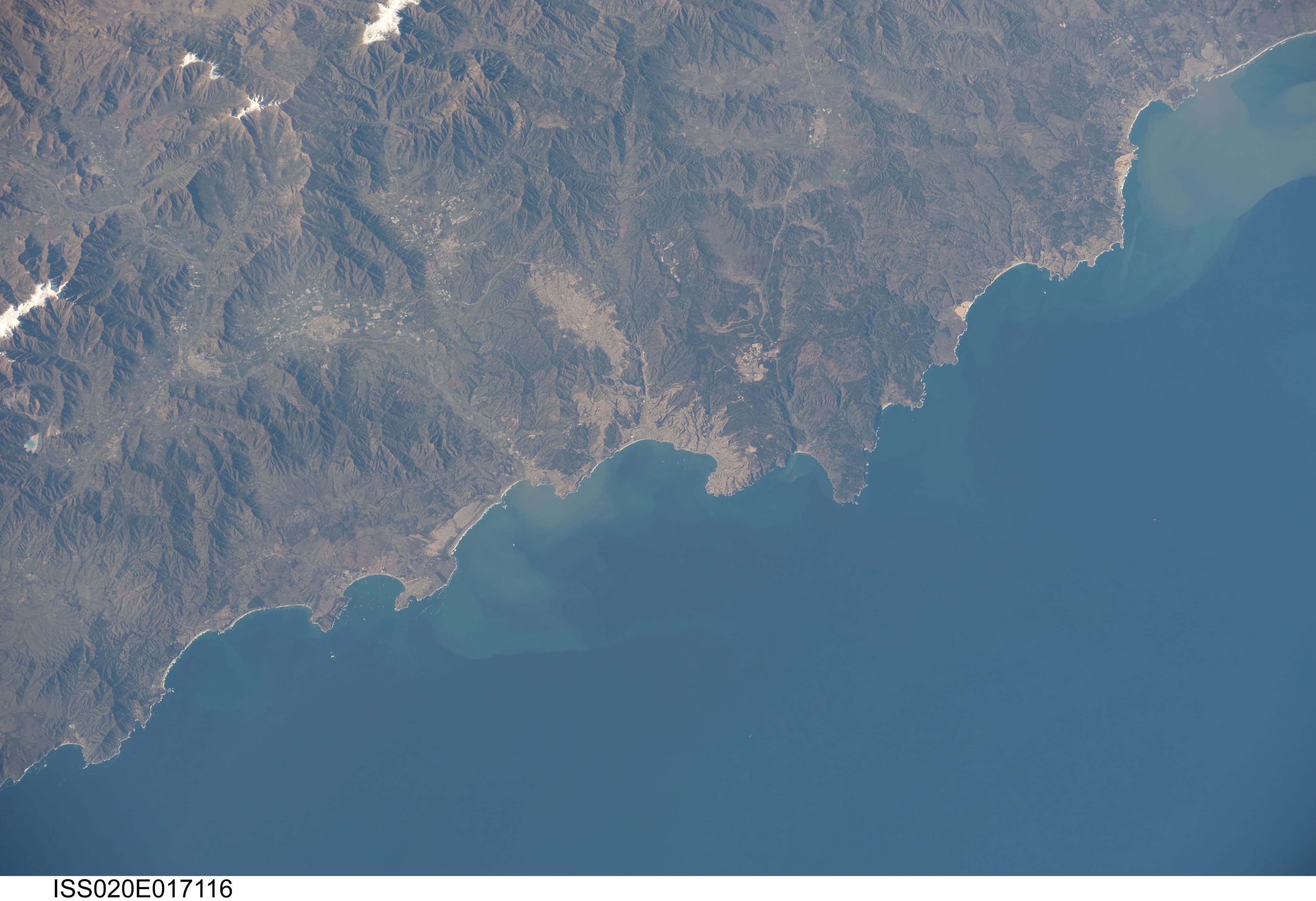
Assessment and archival value: the useful question is how a recorded target became difficult to identify, and which distance, camera and flight-path assumptions survive checking. The crew's uncertainty is real testimony, but does not validate every later interpretation. The strongest conventional explanation is an aircraft seen under unfamiliar infrared conditions; the exact identification remains an attributed reconstruction here. Missing radar originals and differing camera assumptions prevent a claim of independently reproduced certainty. The case belongs in the archive because its forms and competing analyses make those limits inspectable. The NASA coastal photograph supplies regional context only, not a frame from the Navy recording.
Related checks and records
Timeline
- N-75 crew records the target; forms disagree on 16:48 or 16:52 UTC onset.
- Rodríguez dates his statement; Neira's declaration-date field is blank.
- CEFAA interviewers meet the crew at Concón Alto.
- IPACO dates its aircraft analysis, later qualified by the camera correction.
- West opens his analysis thread; IPACO's January 9 note acknowledges the wrong camera model.
Questions about the Chilean Navy video
Was the target identified as IB6830?
That is West's later reconstruction, not a direct crew identification. It uses an estimated missing track segment, and it differs from IPACO's approaching-twinjet proposal.
Did radar confirm an extraordinary object?
No such confirmation follows from these forms. They mark no airborne echo; ground-radar boxes are blank. Reported inquiries cannot replace original radar data.
Does the trail prove an unusual substance?
No material was sampled in the cited record. Descriptions of gas or liquid and proposals involving condensation are visual interpretations, not chemical identifications.
Sources
- [1] ArchiveRodríguez: crew statement dated 17 April 2015Carlos Rodríguez / The Black Vault copy
- [2] ArchiveNeira: crew form with an undated declaration fieldMarcelo Neira / The Black Vault copy
- [3] ArchiveCEFAA interview note: 24 April 2015 meetingCEFAA interview note / The Black Vault copy
- [4] ResearchVergara: consultant image analysis, issue date unresolvedAlberto Vergara Pérez / The Black Vault copy
- [5] ResearchIPACO: 2015 analysis with January 2017 camera correctionAntoine Cousyn, François Louange and Geoff Quick / IPACO
- [6] ResearchWest: aircraft reconstruction and estimated track segmentMick West / Metabunk
- [7] ArchiveNASA: central Chile coast in 2009, regional context onlyNASA Johnson Space Center