
Sweden / 1946 / DISPUTED
Ängelholm UFO memorial
The Ängelholm monument is real; the extraterrestrial encounter it commemorates is not independently established. Carlsson said that on 18 May 1946 he saw a landed disc and human-looking occupants in a clearing near Ängelholm. The earliest public account identified in the reviewed sources is a 1971 Allers interview, twenty-five years later, and the memorial followed in 1972. Later investigator Clas Svahn found changing descriptions of alleged artifacts and no convincing evidence that events occurred as Carlsson described. No contemporary police, military or newspaper report, independent witness statement, original event photograph, or reproducible laboratory file has been located. The most careful classification is a disputed retrospective contact claim and a documented piece of local heritage—not a verified 1946 landing.
This case is disputed. The archive preserves the claims while separating evidence from interpretation.
- Documentation
- High documentation
- Primary location
- Kronoskogen, Ängelholm, Skåne
- Source base
- 8 linked records
- Research use
- Comparison case
What the public record establishes
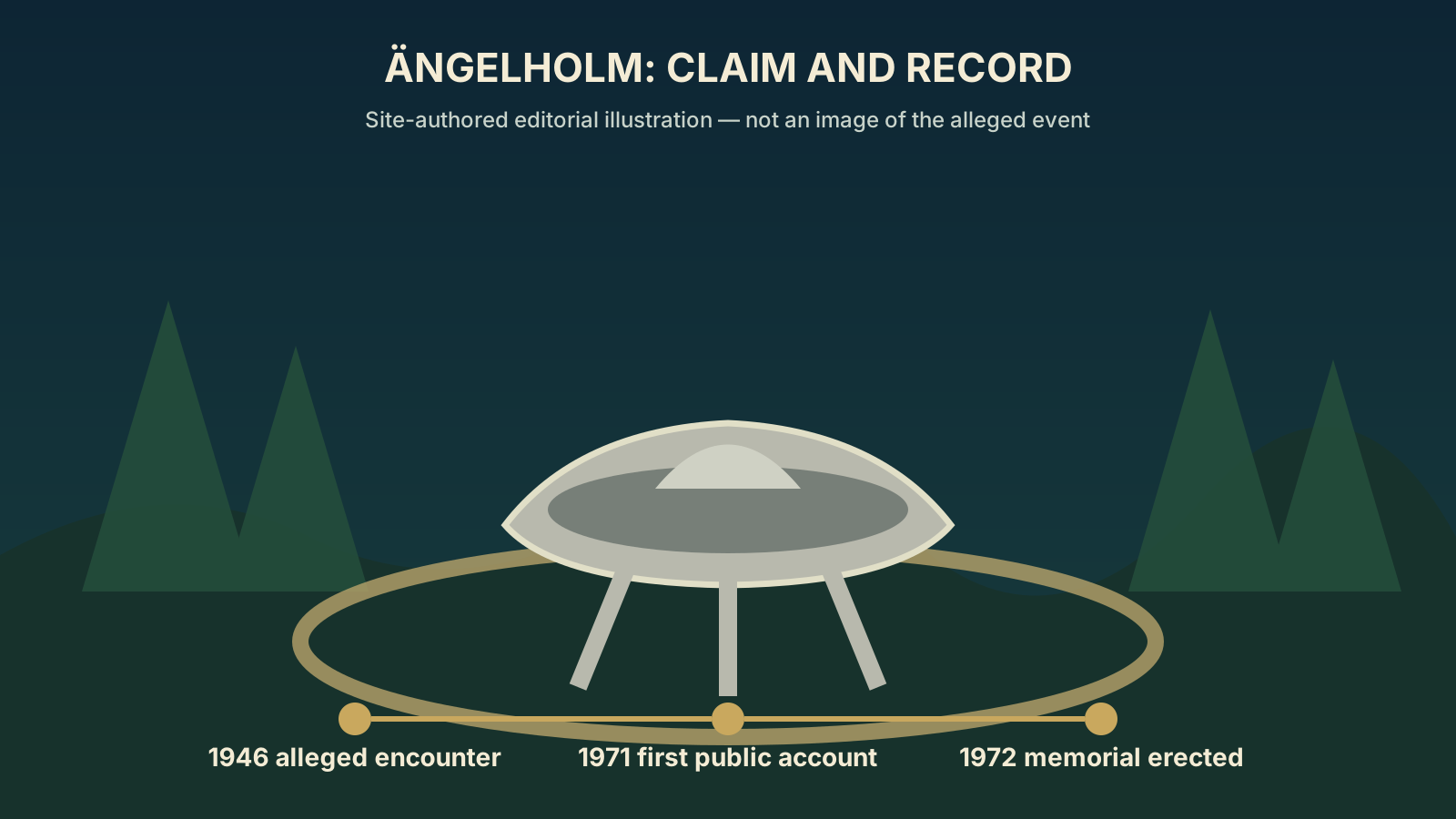
Claim and record timeline
Case dossier
Carlsson’s later account places him near Skälderviksstranden late on 18 May 1946. He said a light led him to a clearing, where a disc-like craft rested on a fin and legs while human-looking people worked around it. He described a guard, drinking cups, a luminous boundary and a slow departure. These details are testimony recorded long after the claimed night, not observations preserved in a 1946 report.
The publication gap is central. A 1996 review states that Carlsson revealed his ‘25-year secret’ in a 1971 Allers interview. UFO-Sverige investigator Clas Svahn likewise dates the story’s public life to 1971 onward. No reviewed source supplies a dated 1946 statement, police log, military report or newspaper article. The archive can therefore confirm a 1971 public claim about 1946, but not a contemporary 1946 case.
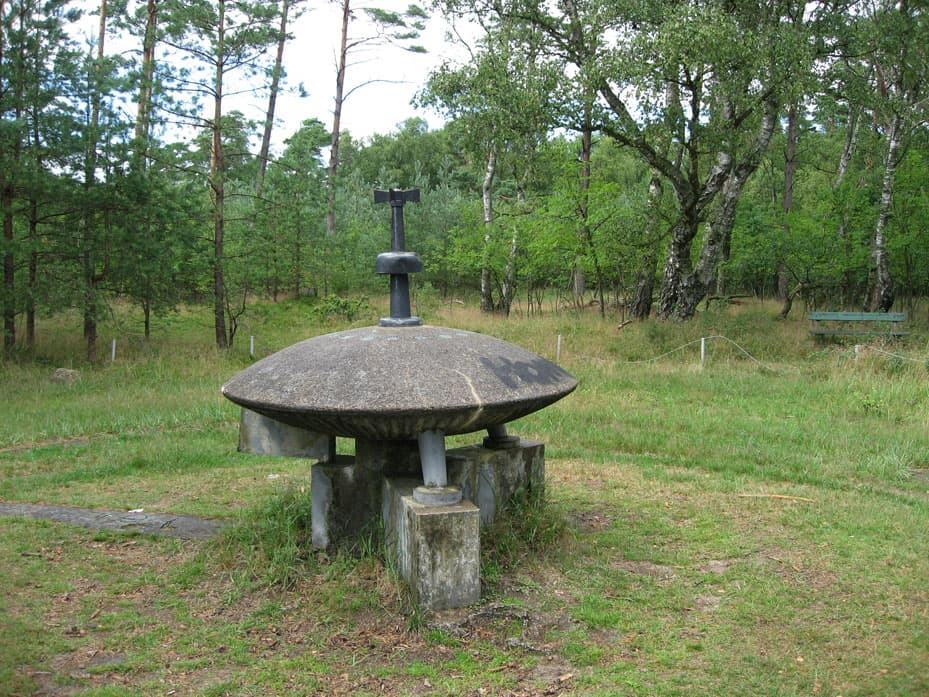
The concrete monument is the strongest documented object. Local tourism material says Carlsson had it erected in 1972; it represents his sketches and the alleged ground impressions. Its plaque asserts that the concrete marks reproduce impressions measured on 19 May 1946, but the plaque itself is dated 1972. The monument documents commemoration and local reception, not the age or cause of any original marks.
Carlsson later presented a ring, a quartz-like rod and accounts of two cups. Svahn recorded incompatible rod lengths, inscriptions absent from a 1967 drawing but present later, and changing descriptions of whether its surface was sooty or shining. He also reported that promised independent testing never occurred. The cups were said in one version to have been destroyed in a 1952 warehouse fire. Without secure custody, original measurements and a published test file, these objects cannot corroborate the encounter.
The case is worth preserving because it shows how a private story can become a durable public place. The municipal destination page presents the monument as an unusual attraction while using the language of an alleged landing. Library records establish the 1995 Svahn–Carlsson book and later editions. Those records support the history of publication and memory; they do not upgrade the underlying claim to an observed fact.
Timeline
- Date Carlsson later assigned to the encounter; no contemporary record has been located.
- Allers interview makes the claimed encounter public, 25 years later.
- Carlsson has the concrete memorial erected in the clearing.
- Svahn and Carlsson publish Mötet i gläntan after extensive interviews and investigation.
- A Folkvett review highlights contradictions and possible influence from later contactee literature.
- UFO-Sverige publishes Svahn’s detailed retrospective assessment, concluding the story did not withstand scrutiny.
Questions about the Ängelholm memorial
Did the Ängelholm UFO landing happen?
A monument and later claim are documented; the 1946 landing is not independently corroborated.
When did Carlsson first tell the story publicly?
The earliest public account identified here is a 1971 Allers interview, 25 years after the alleged event.
When was the monument built?
Carlsson had it erected in 1972, 26 years after the alleged encounter.
Were the alleged artifacts tested?
Claims of examination exist, but no reproducible report or secure custody chain is public; promised independent testing did not occur.
Are there original photos or video?
No authenticated imagery from 1946 was located. Available photographs show the later memorial.
Why is the case still in a UFO archive?
It is a significant Swedish contact narrative and public monument whose documentation history can be studied without treating the claim as verified.
Sources
- [1] Official fileUFO-monumentÄngelholm tourism
- [2] ResearchGösta CarlssonRiksorganisationen UFO-Sverige
- [3] ResearchUFO-Sverige FAQ: landed-object evidenceRiksorganisationen UFO-Sverige
- [4] ResearchNärkontakt med UFOVetenskap och Folkbildning / Folkvett
- [5] ArchiveMötet i gläntan (1995 edition)National Library of Sweden, LIBRIS
- [6] ArchiveMötet i gläntan (2015 edition)National Library of Sweden, LIBRIS
- [7] ArchiveÄngelholm UFO monument photograph and licenseWikimedia Commons
- [8] ArchiveUFO-Memorial Ängelholm, 2008 photograph and licenseWikimedia Commons
The hero is a licensed 2008 photograph of the later memorial, not event evidence. No authenticated 1946 image or reliable original video was located.