
France / 1981 / UNRESOLVED
Trans-en-Provence UFO case
At about 5 p.m. on 8 January 1981, Renato Nicolaï said that a lead-grey, ovoid object descended, rested briefly on a terrace below his property in Trans-en-Provence and departed with a low whistle. No one else saw the object. Gendarmes visited the next morning, photographed broken arcs and scrape-like marks, and collected soil and wild-alfalfa samples. GEPAN's 1983 technical note reported qualitative mechanical and thermal alteration, trace deposits and distance-related plant stress, yet explicitly said those findings did not definitively confirm the witness's account or identify a cause. GEIPAN still classifies the report D—unidentified—not extraterrestrial. Later critics argue that vehicle or construction activity, disturbed sampling and ordinary plant stress were not adequately excluded. The public record therefore supports a documented trace investigation whose causal link to the reported object remains unresolved.
This case remains unresolved in the public record, with credibility grade B.
- Documentation
- High documentation
- Primary location
- Trans-en-Provence, Var
- Source base
- 7 linked records
- Research use
- Comparison case
What the record supports
- Witness boundary
- Nicolaï alone reported seeing the object; his wife and neighbours saw the marks only afterward.[2][3]
- Documented response
- Gendarmes visited the next morning, photographed the site and collected soil and vegetation samples.[2][3]
- What analysis found
- Laboratories reported mechanical and thermal soil changes, trace deposits and plant chemistry differences related to distance.[2][4][5]
Case dossier
On Thursday, 8 January 1981, Nicolaï was building a masonry shelter for a water pump on an upper restanque, one of the stone agricultural terraces around his house. In his statement to the gendarmerie, he said a slight whistle drew his attention to an object descending beyond the trees. He moved to another terrace and saw it on or immediately above the lower platform, roughly 30 metres away. He described two inverted dishes joined at the rim, lead-grey in colour, about 1.5 metres high, with round protrusions underneath. It lifted, raised a little dust and accelerated toward the northeast. GEPAN's later reconstruction put the entire observation at about 30–40 seconds.
The account is testimony, not a multi-witness observation. Nicolaï's wife saw the mark the next morning but not the object; neighbours likewise entered the record after the event. The 1983 note says investigators found no behavioural sign of invention or exaggeration, then immediately cautions that this did not certify the account's truth. Other versions collected by a private investigator differed in distance, size and detail. Those variations and the absence of an independent observer limit any precise reconstruction of the object's shape, altitude and motion.
At about 11: 30 a.m. on 9 January, the Draguignan gendarmerie photographed the site, interviewed Nicolaï and collected soil and vegetation under its reporting protocol. The police record described a roughly two-metre zone with broken curved marks and areas resembling tyre skids. GEPAN learned of the case on 12 January. Heavy rain had fallen over the weekend, private investigators and visitors reached the property, and GEPAN did not conduct its own site work until 17 February—forty days after the report—when it made a reconstruction, survey and additional sampling.
Four laboratories examined the soil by complementary methods. Note 16 summarized strong surface pressure, striation or erosion, heating that did not exceed 600°C, and small quantities of iron or iron oxide, phosphate and zinc. It suggested friction, impact, combustion residue or rubbed primer paint as possibilities, but stressed that the terrain did not permit precise estimates of mass, pressure or temperature. The results show that the sampled area had been physically altered; they do not establish a four- or five-ton craft, a specific temperature, propulsion system or non-human material.
Michel Bounias at the Institut national de la recherche agronomique analyzed wild alfalfa from two sampling series. He reported 30–50% depletion of active chlorophyll and carotenoid forms nearest the trace, increased degraded forms, and several correlations with distance. He considered an energetic stress, possibly an intense electric field, but did not identify the source. This is evidence of biochemical differences among the submitted samples, not a direct measurement of radiation or microwaves. Critics note small sample numbers, plant age and microenvironment, mechanical damage, weather, non-random distance sampling and the delayed, disturbed site as alternative contributors.
GEPAN—the Groupe d'étude des phénomènes aérospatiaux non identifiés within France's Centre national d'études spatiales—published Note Technique No. 16 on 1 March 1983. Its conclusion called the physical interpretations too varied and vague for definitive confirmation and said the plant effects lacked a precise, unique explanation. Today's GEIPAN database keeps the case as category D and describes it as strange to very strange with medium-to-strong consistency. That classification records failure to identify the phenomenon from the file; it is not a finding that a spacecraft landed.
The leading conventional proposal is that the visible arcs came from tyre slippage or equipment associated with recent masonry and vehicle access, while weather, crushing or local soil conditions contributed to the laboratory pattern. This fits the gendarmerie's early tyre-skid description and the disturbed worksite, but no published controlled reconstruction has reproduced the complete soil and plant dataset. A deliberate hoax has also been proposed from later remarks attributed to Nicolaï, yet the public material does not supply a contemporaneous confession. The careful conclusion is narrower: a brief single-witness report was followed by real marks and measurable sample differences, but their age, mechanism and causal connection to the reported object were not established. The case remains officially unidentified and scientifically disputed, not proof of an extraterrestrial landing.
Timeline
- Nicolaï reports a 30–40 second descent, pause and departure near his property.
- Gendarmes interview him, photograph the marks and collect the first soil and plant samples.
- GEPAN learns of the report after heavy weekend rain and requests that the samples be sent to laboratories.
- Gendarmes collect a vegetation control sample about 20 metres from the trace.
- GEPAN conducts its site reconstruction, survey, photography and second sampling series.
- GEPAN publishes Note Technique No. 16, reporting physical and biochemical effects but no unique cause or definitive confirmation of the testimony.
Frequently asked questions
What happened in the Trans-en-Provence UFO case?
Nicolaï reported a brief descent and departure on 8 January 1981. Gendarmes documented marks the next morning, and GEPAN commissioned soil and plant analyses.
Was Renato Nicolaï the only witness?
Yes, for the object. His wife and neighbours saw the ground marks afterward, but they did not independently observe the descent or departure.
What did GEPAN find in the soil?
The laboratories reported qualitative pressure, abrasion and heating effects plus small deposits of iron compounds, phosphate and zinc. The report could not quantify a unique mass, pressure, temperature or cause.
What did the plant analysis show?
Wild-alfalfa samples nearest the trace had lower active pigments, more degraded forms and several distance correlations. The cause was not identified, and the work did not directly detect microwaves or radiation.
Could tyre marks explain the trace?
Tyre slippage is a serious proposal because the first police description used that comparison and vehicles could access the worksite. It may explain the arcs and some disturbance, but no published controlled test has reproduced every reported laboratory result.
Does GEIPAN's D classification mean extraterrestrial?
No. Category D means the available investigation did not identify the phenomenon. It does not assign an extraterrestrial, non-human or spacecraft origin.
Sources
- [1] Official fileTRANS-EN-PROVENCE (83) 08.01.1981GEIPAN / CNES
- [2] Official fileTechnical Note No. 16: Investigation 81/01, Analysis of a TraceGEPAN / CNES
- [3] Official fileGendarmerie report No. 28 on the Trans-en-Provence observationGendarmerie nationale / GEIPAN
- [4] ResearchINRA plant-sample analyses from Trans-en-ProvenceINRA / GEIPAN
- [5] ResearchBiochemical traumatology and plant metabolic disordersJournal of Scientific Exploration
- [6] ResearchTrans-en-Provence (1981): critical review of the CNES investigationObservatoire zététique
- [7] ArchiveLicensed photograph of Trans-en-ProvenceTredok / Wikimedia Commons
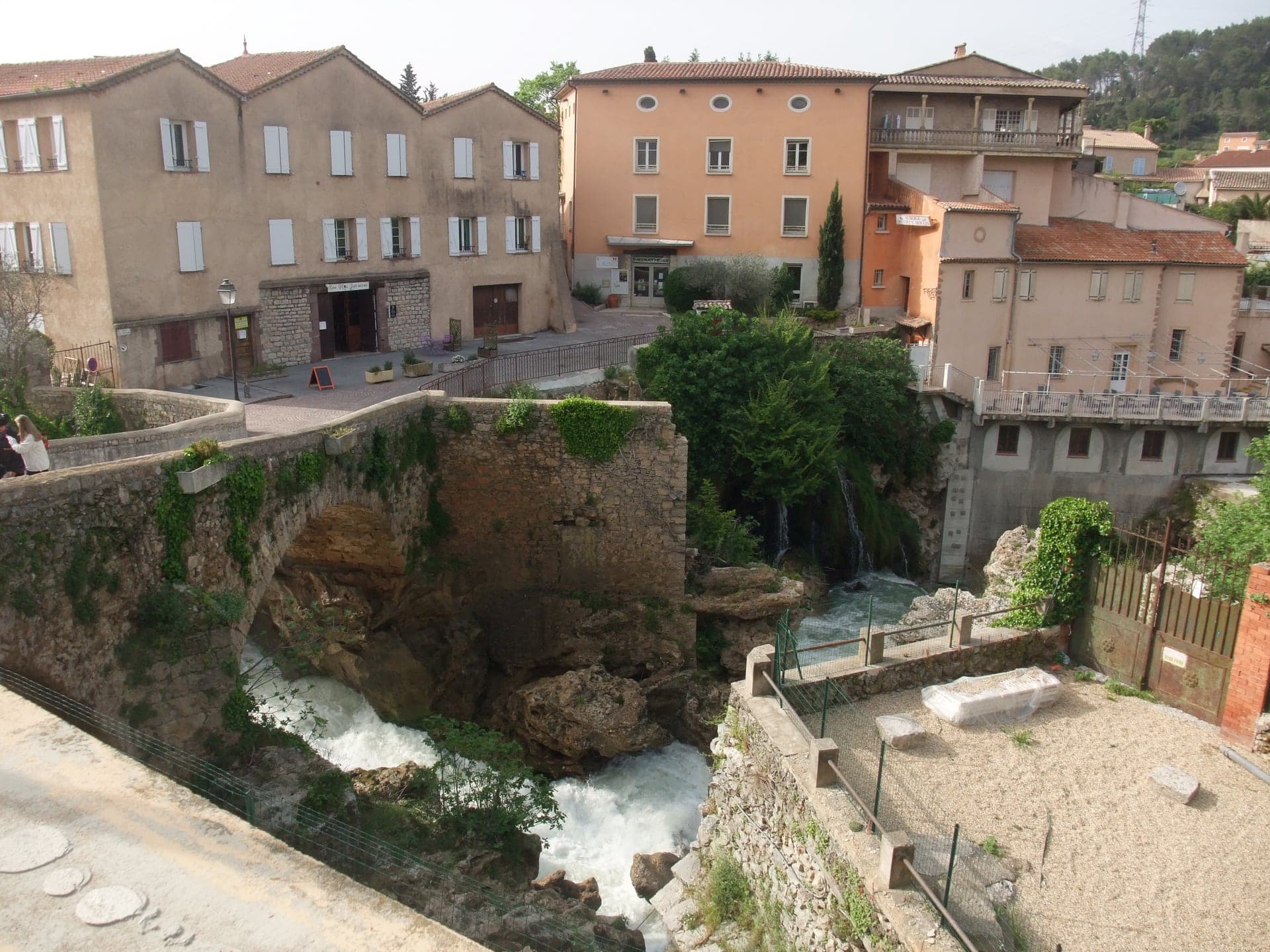
The displayed photograph shows the commune of Trans-en-Provence in 2013. It is geographic context, not the private 1981 trace site, the witness, the reported object or physical evidence. The official photographs remain in GEIPAN's archival PDFs and are not republished here because commercial reuse rights were not explicit.