
France / 1965 / DISPUTED
1965 Valensole UFO Incident
On 1 July 1965, farmer Maurice Masse said he saw a dark, matte object and two small figures in a field near Valensole, France. Gendarmerie officers recorded his account and photographed a star-shaped ground mark after the location had already attracted visitors. GEIPAN later published three gendarmerie records and retained a Category D classification by default, while noting that its predecessor had not conducted a full investigation. The surviving file confirms that a report and trace inspection occurred; it does not independently verify the figures, identify the object, or establish an extraterrestrial origin.
This case is disputed. The archive preserves the claims while separating evidence from interpretation.
- Documentation
- High documentation
- Primary location
- Valensole, Alpes-de-Haute-Provence
- Source base
- 5 linked records
- Research use
- Comparison case
What the record supports
- Confirmed record
- Maurice Masse made a report, and gendarmes interviewed him and documented a ground mark within two days.[1][2]
- Uncorroborated claim
- No second witness independently confirmed the object or figures; the reported distance and descriptive detail changed across statements.[1][2][5]
- Media boundary
- Contemporary television coverage exists in an archive catalogue, but no authenticated event photograph or original encounter film is public.[3][4]
Case dossier
What Maurice Masse reported: At about 5:45 a.m. on 1 July 1965, Masse was working in a lavender field near Valensole when he said he heard a whistling sound. His account described a dark or matte object on the ground and two small figures nearby. He said the figures entered the object, which then rose and departed obliquely toward Manosque. The GEIPAN summary gives a total observation lasting roughly four to five minutes. These details are a witness statement preserved in official records; they are not an independently observed description of a craft.
How the account developed: The surviving documents do not produce one perfectly stable viewing geometry. One early gendarmerie record places Masse about 60 metres from the object, officers later measured roughly 90 metres between his working position and the reported trace, and a more detailed statement in August described him approaching to about seven metres. Later retellings also supplied more elaborate descriptions of the figures and the object's structure. These differences do not prove fabrication, but they matter when judging precision and whether later memory or questioning expanded the original report.
When authorities learned of the event: Masse did not immediately make a formal report. He returned to the location that evening with his daughter and told other people the following day. By then visitors had entered the field and walked around the mark. The gendarmerie learned of the story through local discussion at about 7:30 p.m. on 2 July, interviewed Masse at about 8 p.m., inspected the location near 10 p.m. and took a supplementary statement later that night. This chronology establishes prompt official documentation, but not an uncontaminated scene.
What was recorded on the ground: About ten minutes after the reported departure, Masse said he found a star-shaped pattern in damp soil with a central cylindrical depression. He later said the earth had become unusually hard. Gendarmes photographed and measured the mark on 3 July and described the scene in a formal report. The trace therefore has documentary value, yet the open file does not provide a modern chain of custody, a published laboratory analysis that uniquely links it to an airborne object, or a way to exclude agricultural tools, deliberate marking or disturbance by visitors.
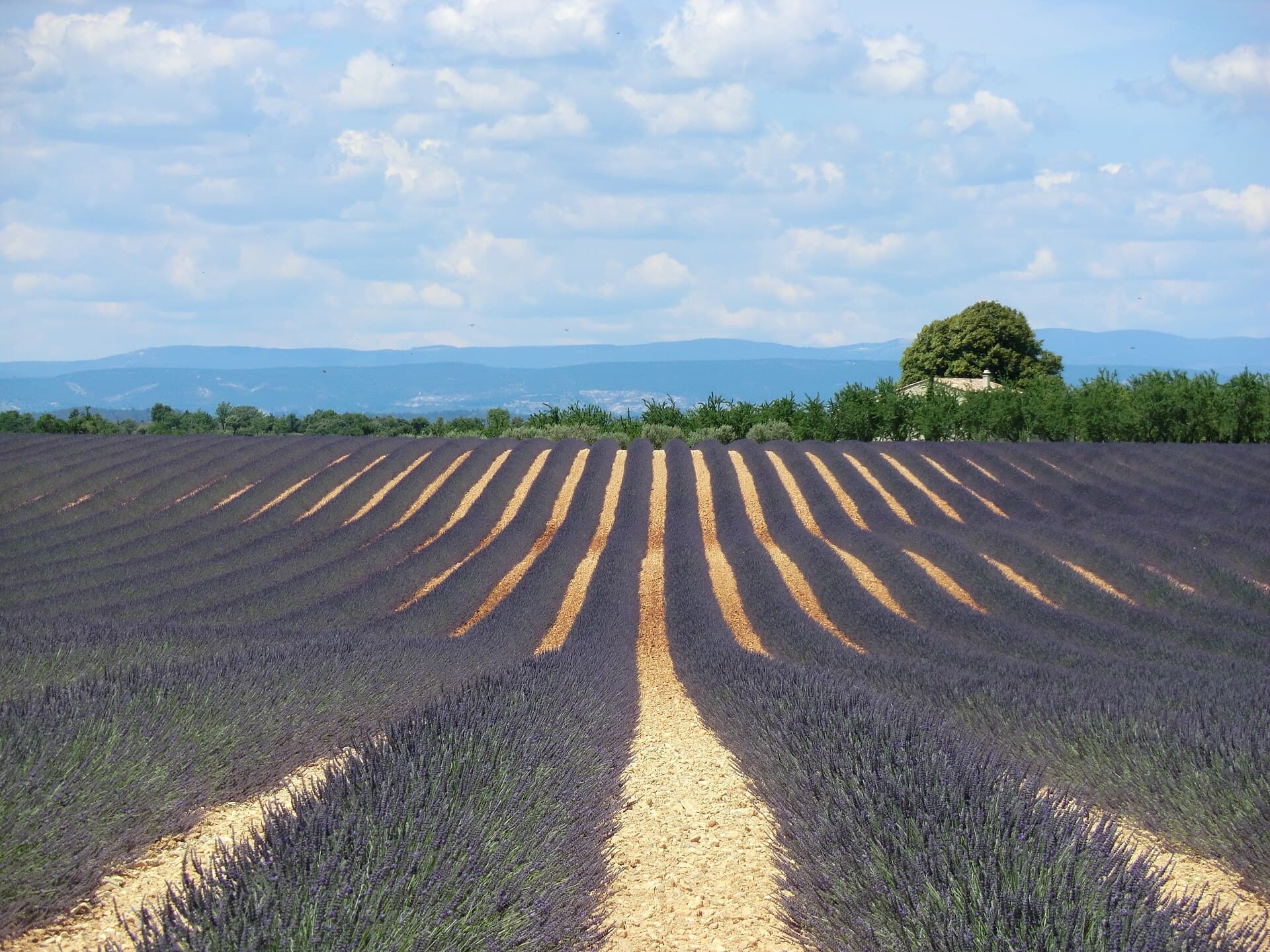
Corroboration and media limits: GEIPAN states that no second witness and no other nearby evidence were found. No authenticated photograph or film of the object or figures is present in the published file. The INA catalogue shows that French television covered the Valensole story on 3 July 1965, but the catalogue entry is evidence of contemporary reporting, not original footage of the alleged encounter. The local photograph used on this page is licensed geographic context and does not show the event site or an unidentified object.
The contemporary helicopter hypothesis: A 5 July 1965 report in Le Monde noted military exercises in Provence and suggested that a helicopter operating or landing in the area could explain the story. That was an early conventional hypothesis, not a demonstrated identification. A helicopter might account for noise, an aerial departure and activity near the field, but the publicly available material does not match a specific aircraft, crew, flight log or landing location to Masse's reported time and place.
What the French official archive says: GEPAN, the official French study group that preceded SEPRA and GEIPAN, did not exist until 1977. GEIPAN's later case page says the organizations gathered the gendarmerie documents but did not carry out a deep investigation of the 1965 event. Its synthesis calls the three gendarmerie reports the most reliable surviving records and keeps the case in Category D by default because of its reported strangeness and historical importance. A D label means unidentified in that archive; it is not official confirmation of an extraordinary vehicle.
Why Valensole belongs in the archive: The case combines a named witness, documentation created within two days, photographs and measurements of a claimed trace, contemporary national coverage and a later official archive release. It also shows the limits of classic close-encounter evidence: one witness, an evolving account, a scene visited before full documentation, no instrument record and no verified event image. The most defensible conclusion is that the report is historically well documented but its literal cause remains unproven.
Timeline
- Maurice Masse reports seeing a landed object and two figures in a field near Valensole; he says the observation lasts about four to five minutes.
- Masse says he finds a star-shaped mark and central depression in the damp soil.
- Masse returns to the location with his daughter and says the soil at the mark has become unusually hard.
- Masse tells other people; visitors enter the field before the gendarmerie completes its documentation.
- The gendarmerie learns of the story, interviews Masse, inspects the location and records a supplementary statement.
- Gendarmes photograph and measure the reported ground mark and prepare a scene report.
- French television carries a report preserved in the INA catalogue; the catalogue does not establish that original event footage exists.
- Le Monde reports on the case and presents military helicopter activity as a possible conventional explanation.
- A more detailed supplementary statement records additional descriptions and a closer claimed viewing distance.
- GEIPAN releases the three gendarmerie records and explains that Category D is retained by default without a later deep official investigation.
Frequently asked questions
What happened at Valensole in 1965?
Maurice Masse said he saw a landed object and two small figures on 1 July 1965. Gendarmes later recorded his account and a ground mark.
Did anyone else see the Valensole object?
GEIPAN reports no second witness and no additional nearby evidence. The central observation therefore depends on Masse's testimony.
Were landing traces found?
Gendarmes photographed and measured a mark in the field. Visitors had already entered the location, and the published record does not uniquely connect the mark to an aerial object.
Did the French government investigate Valensole?
The gendarmerie investigated promptly. GEPAN did not exist until 1977, and GEIPAN says no later deep official investigation was completed.
Does GEIPAN Category D prove the object was extraordinary?
No. Category D means the case remains unidentified in the archive; GEIPAN says the classification was retained by default and is not proof of extraterrestrial origin.
Is there original photo or video evidence?
No authenticated event image or original encounter film is public. An INA catalogue entry documents contemporary television coverage, not footage of the alleged object.
Could the object have been a helicopter?
Le Monde proposed a helicopter within days, during regional military exercises. It remains plausible but unproven because no matching flight or crew record is public.
Sources
- [1] Official fileVALENSOLE (04) 01.07.1965GEIPAN / CNES
- [2] Official fileValensole case synthesisGEIPAN / CNES
- [3] ArchiveFrench television archive entry for ValensoleINA
- [4] News reportThe flying saucer was probably a helicopterLe Monde
- [5] ResearchValensole case dossier and account historyRR0
The photograph is licensed geographic context near Valensole, not an image of Maurice Masse's field, the reported object or the alleged trace. No reliable, embeddable original event video was located.