
Science / Updated 2026-08-02 / 9 min read
NASA UAP Study: Findings and Remaining Questions
NASA's independent study called for better data, calibrated sensors and transparent analysis; it did not conclude that UAP are extraterrestrial.
Reviewed and maintained byGlobal UFO Archive Editorial DeskEditorial policy
Quick answer
NASA's UAP study argued for better data, calibrated sensors, and transparent analysis. It did not conclude that UAP are extraterrestrial; the report emphasized that many cases lack the high-quality data needed for firm identification.
Key points
- NASA did not present evidence that UAP are alien technology.
- Its main recommendation was better data collection and analysis.
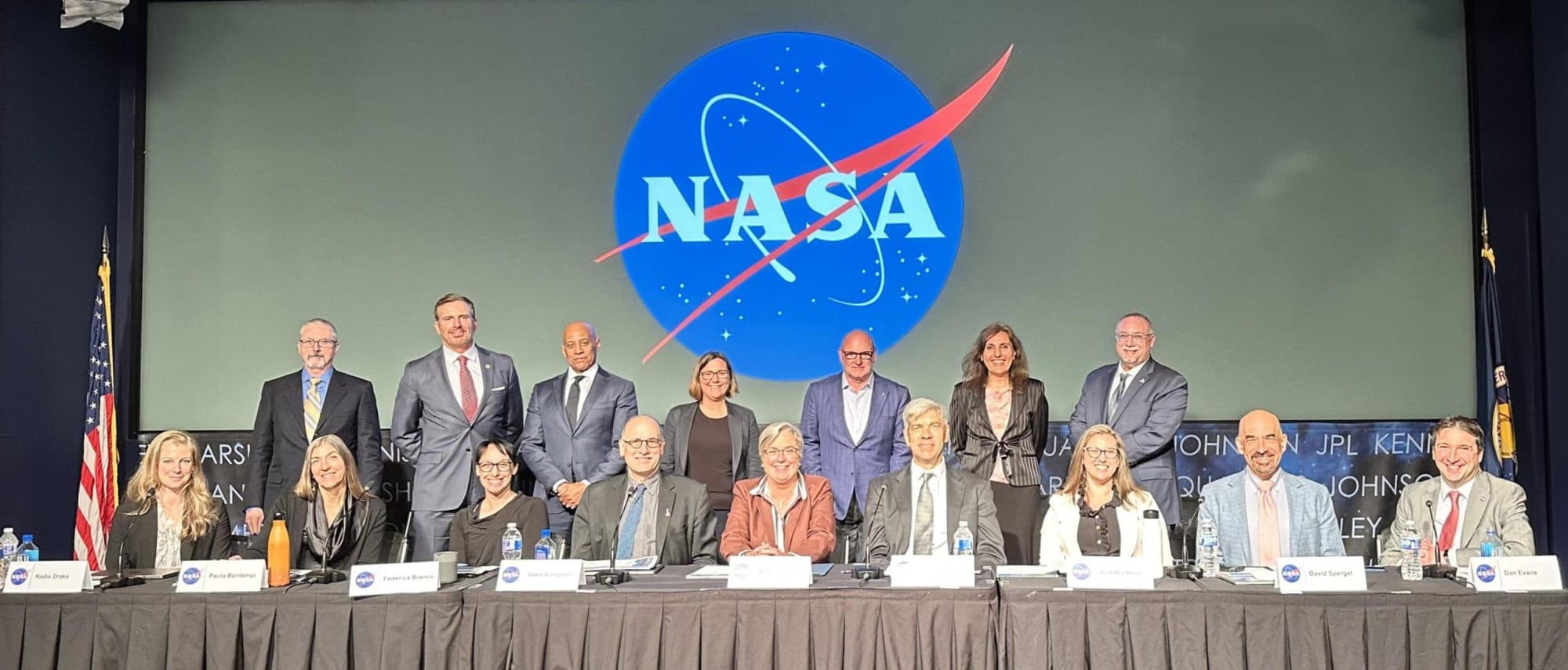
- NASA's 2023 independent study focused on methods, data quality and institutional coordination; it did not conduct a fresh resolution of every famous UFO case.
- The report found no conclusive evidence of extraterrestrial origin in the material considered, while arguing that better standardized observations could make some reports scientifically useful.
Science needs better data
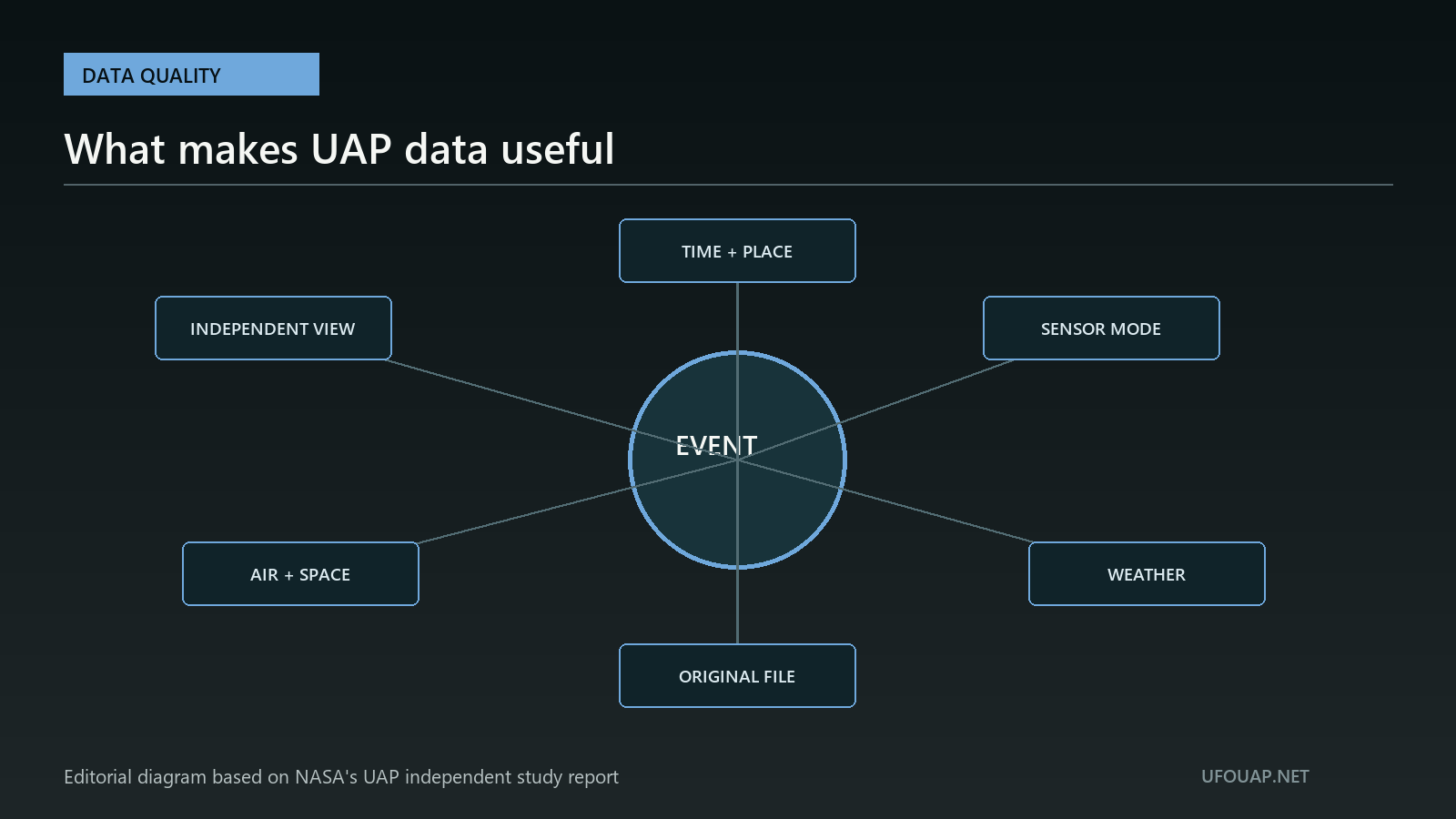
NASA's independent study framed UAP as a data problem. Many reports lack calibrated sensors, precise location, reliable timing, or multiple independent observations. The report therefore emphasized standardized collection, open scientific methods, and transparency rather than dramatic conclusions.
What the study did and did not conclude
NASA convened an independent team to recommend how the agency could use open data, scientific methods and existing observation systems to study UAP. The final report discusses aviation safety, sensor calibration, metadata, citizen reporting, artificial intelligence and cooperation across agencies. It does not endorse a recovered craft claim, identify a non-human vehicle or announce a classified NASA case archive. Its central diagnosis is a data problem: many reports lack the calibrated, multisensor and contextual information needed to distinguish an anomaly from aircraft, balloons, satellites, atmospheric effects or camera behavior.
What useful UAP data would look like
A scientifically useful record needs more than a striking clip. It should preserve exact time and coordinates, the observing platform, camera or sensor mode, field of view, range assumptions, weather, nearby air traffic and satellite context, plus the original file and chain of custody. Independent sensors are especially valuable because they can test whether an apparent motion belongs to the target, the camera platform or image processing. NASA's approach therefore supports better collection before stronger interpretation: unusual appearance is a reason to gather data, not a substitute for data.
FAQ
Did NASA find proof of aliens?
No. NASA's FAQ says there are no data supporting UAP as evidence of alien technologies.
What did NASA's UAP study conclude?
NASA emphasized the need for better data, calibrated observations and transparent methods. It did not conclude that UAP are extraterrestrial.
Did NASA say UAP are extraterrestrial?
No. The independent study report said there was no conclusive evidence in the peer-reviewed scientific literature suggesting an extraterrestrial origin for UAP, while recommending better data collection for unresolved observations.
Official sources used
- NASA ScienceUAP frequently asked questionsscience.nasa.gov
- NASAUAP Independent Study Team Final Reportscience.nasa.gov
- NASA ScienceNASA UAP research hubscience.nasa.gov